If you’ve driven through the Austin suburbs lately, there’s a good chance you’ve passed a build-to-rent community without realizing it. These developments look like ordinary subdivisions: single-family houses, a pool, maybe a dog park. The difference is that one company owns every home in the neighborhood, and none of them are for sale. Build-to-rent, usually shortened to BTR, is a real and growing part of the housing market in the Austin area, and it changes some of the usual math around renting versus buying.
I’m Robbie English, REALTOR and Broker at Uncommon Realty, and clients bring up build-to-rent often enough that it’s worth laying out plainly what it is and what it isn’t.
What Build-to-Rent Actually Is
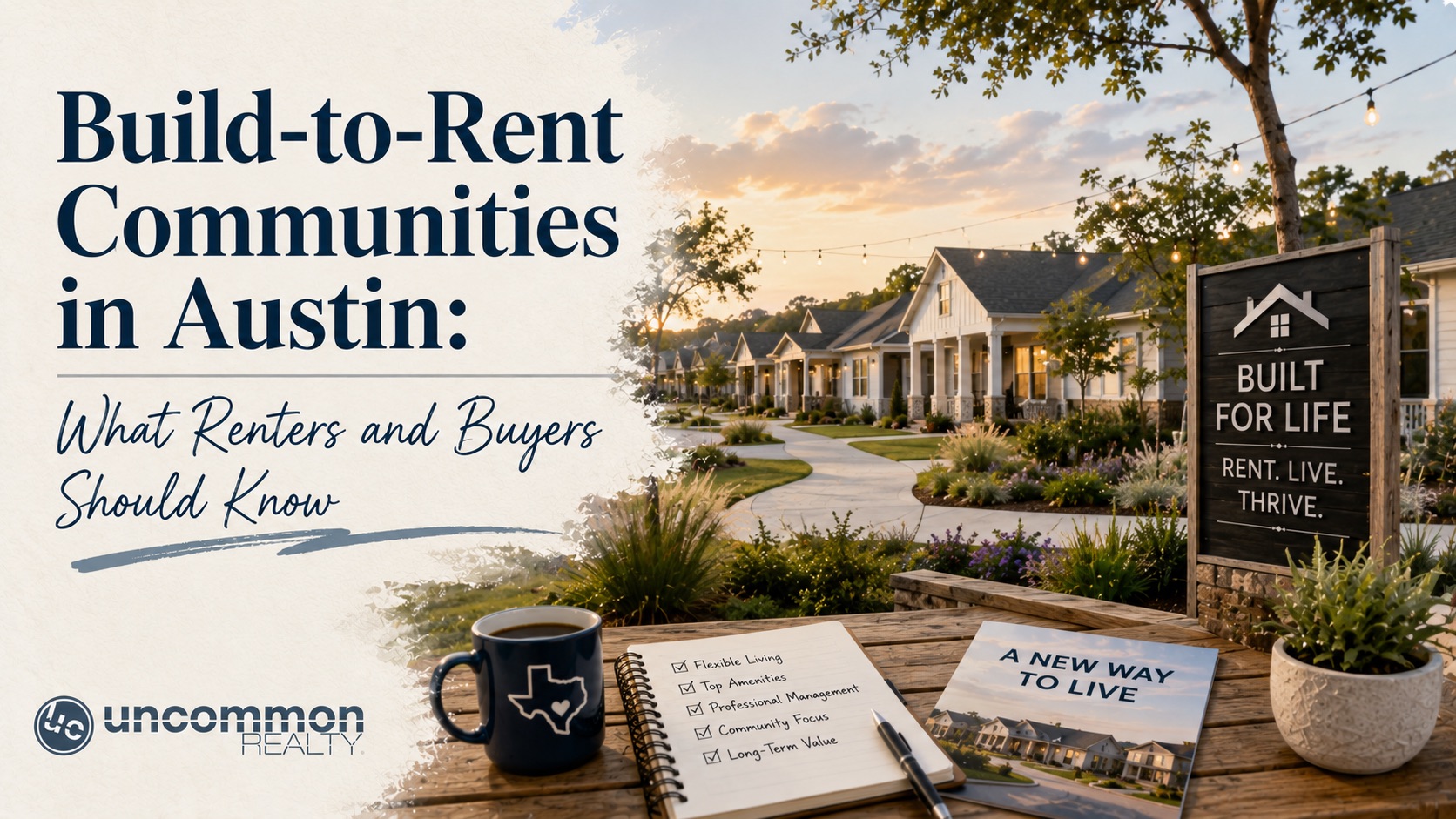
A build-to-rent community is a neighborhood of single-family homes or townhomes built specifically to be leased, not sold. A single institutional owner, often a real estate investment firm or a homebuilder’s rental division, holds every house in the community and manages them professionally, the way an apartment complex is managed. That’s different from a homeowner who buys one extra house and rents it out, or a landlord who owns a handful of scattered rental properties around town.
Because it’s built for renters from the start, a BTR community usually comes with amenities you’d expect from an apartment complex: a pool, walking trails, a dog park, sometimes a leasing office on site. The homes themselves are new construction, and maintenance runs through the management company rather than an individual landlord.
Why It’s Showing Up in the Austin Area
Austin has been one of the more active build-to-rent markets in the country. Industry data from RentCafe and Yardi Matrix showed Austin ranking among the top ten U.S. metros for build-to-rent home completions in 2022, with roughly 324 units delivered that year. That data point is a few years old now, and BTR inventory shifts by suburb and by builder, so if you’re weighing a specific community, it’s worth checking what’s currently available rather than relying on a single old count.
The broader reasons the model has spread aren’t unique to Austin. Institutional investors like the steady, long-term income a single-family rental portfolio can produce. Higher home prices and mortgage rates over the past few years have kept some households renting longer than they originally planned. And plenty of renters want a house with a yard and a garage without taking on a mortgage right now. Put those together and it’s not surprising that BTR has grown here alongside Austin’s broader building boom.
What It Means If You’re Deciding Between Renting and Buying
If you’re relocating to Austin or considering a new suburb, a build-to-rent home can be a genuinely useful way to live in a specific neighborhood or school district for a year before you commit to buying there. You get an actual feel for the commute, the schools, and the area, without the transaction costs of buying and then reselling if it turns out not to be the right fit.
The trade-offs are worth knowing going in. You’re not building any equity while you rent, the rent can go up at renewal, and decisions about paint colors, pets, or renovations belong to the management company, not you. BTR communities also tend to cluster in specific suburbs rather than being spread evenly across the metro, so your choices may be more limited than they would be on the resale market.
For someone looking at build-to-rent from the investor side, it helps to separate what institutional operators are doing from what an individual buying one or two rental houses is doing. Large operators buy at scale, finance differently, and spread management costs across hundreds of homes. An individual investor’s numbers, financing terms, maintenance costs, and management overhead, look different, so it’s worth running your own math against a specific property rather than assuming the same economics apply.
Renting versus buying isn’t a one-size answer. It depends on your timeline, what you have for a down payment, and what you’re actually trying to accomplish by living somewhere. When clients bring me a build-to-rent option they’re considering, or ask whether they should keep renting instead of buying, I look at their specific numbers and their specific goals rather than pointing them at a generic online calculator. That’s the kind of conversation worth having before you sign a year-long lease or write an offer.
If you’re weighing a build-to-rent lease against buying in the Austin area, or you just want a second opinion on what makes sense for your situation, reach out.
If that’s useful, you might also want to read What $400K, $600K, $800K, and $1M+ actually buys you in Austin right now — it covers a related angle worth knowing about.
If you want to know what you actually qualify for before you start touring homes, get pre-approved first — it changes how sellers treat your offer.