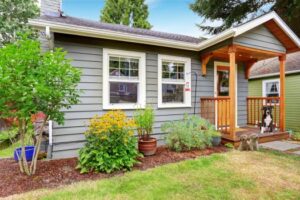
Tiny home living in Texas is genuinely appealing for the right person, but the biggest obstacle isn’t the lifestyle adjustment, it’s zoning. I’m Robbie English, REALTOR, Broker with Uncommon Realty, and here’s the practical reality most tiny home content skips.
The Regulatory Reality Most Guides Skip
“Tiny house” isn’t a formal legal category in Texas. Depending on how it’s built, a small dwelling might be classified as modular, manufactured, an RV, or an unpermitted structure, and that classification determines what you can actually do with it. Critically, RV-classified tiny homes on wheels generally cannot legally serve as a primary residence in most Texas cities. Many municipalities also still enforce minimum dwelling size requirements, commonly in the 600 to 1,200 square foot range, which rules out a legal, permanent tiny home on a standard city lot even though the state’s building code allows structures as small as 400 square feet with a 6’8″ minimum ceiling height.
Where Tiny Homes Are Actually Easiest to Live Legally
Rural counties with minimal zoning enforcement are generally the most flexible option, since many have little to no restriction on dwelling size. Spur, Texas has specifically marketed itself as “America’s first tiny house-friendly town” after removing minimum square footage requirements, and dedicated tiny home communities have become more viable following state legislation (SB 2413) that clarified rules for these developments. A new state law also caps minimum lot size requirements at 3,000 square feet for new subdivisions in Texas’s largest cities, which is gradually opening up smaller-footprint development in urban areas too.
What Actually Determines If Your Plan Is Legal
Before buying or building, confirm three things with the specific city or county: whether there’s a minimum dwelling size requirement, how the structure will be classified (permanent foundation versus RV-style), and whether the specific parcel is zoned for that classification. This varies enough between neighboring jurisdictions that “tiny homes are legal in Texas” isn’t a useful enough answer on its own.
The Genuine Financial and Lifestyle Case
Beyond the legal question, the appeal is real: lower utility costs, less to maintain, and a genuinely smaller financial commitment than a standard single-family home. That case holds up on its own merits once you’ve confirmed a specific property and jurisdiction actually allow what you’re planning to do.
Frequently Asked Questions
Is it legal to live in a tiny home in Texas?
It depends entirely on the specific city or county and how the structure is classified. Many cities still enforce minimum dwelling size requirements that a small tiny home wouldn’t meet, and RV-classified tiny homes generally can’t serve as a primary residence in most Texas cities.
Can I put a tiny house on wheels in my backyard?
Often not as a primary residence within city limits, since RV-classified structures face restrictions most cities enforce. Rural counties with minimal zoning enforcement are typically more flexible.
Are there Texas towns that specifically welcome tiny homes?
Yes. Spur, Texas markets itself as the state’s first tiny house-friendly town after removing minimum square footage requirements, and dedicated tiny home communities have grown following recent state legislation.
If you’re seriously considering a tiny home, confirming the zoning reality for a specific property before you commit to the plan is worth doing early, not after you’ve already invested in the structure.