Every few years, Central Texas gets a real freeze, and every time it happens, I hear from clients who wish they had spent an hour preparing beforehand. Austin doesn’t get the kind of winter that trains people to think about frozen pipes automatically. Most of our homes are built and plumbed for heat, not cold, which means a hard freeze here causes more damage than the same temperature would in a place that plans for it every year. This checklist covers what I actually tell my own clients and neighbors to do before a freeze hits, based on what worked and what didn’t during past cold snaps in this area.
TLDR (Too Long; Didn’t Read): Winterizing your Austin home: a freeze-prep checklist
- Know where both of your water shutoff valves are before a freeze, not during one, since fast access is what limits damage if a pipe bursts
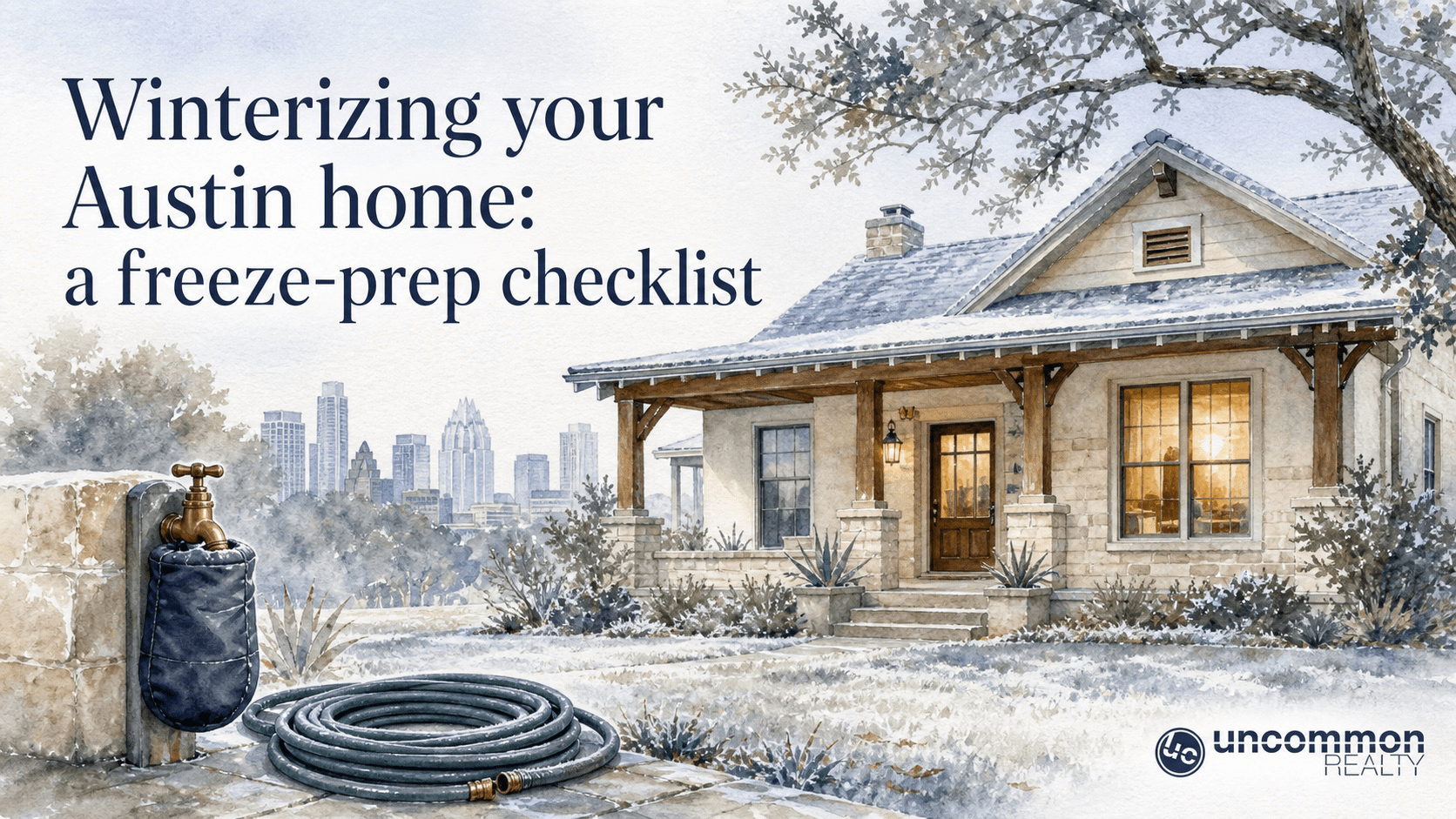
- Insulate exposed pipes in attics, garages, and crawl spaces, and cover or disconnect outdoor hose bibs before cold weather arrives
- Let a few faucets drip slowly during a hard freeze, focusing on pipes that run through unheated or exterior spaces
- Seal drafts around doors, vents, and wall penetrations, and protect outdoor plants and irrigation backflow preventers
- Service your HVAC system before winter, understand how your heat pump’s backup heat works, and keep basic supplies on hand in case of a power outage
Why this matters more here than it does up north
Homes in Austin are built for our climate. Pipes often run through attics, garages, and exterior walls with little or no insulation because freezing temperatures used to be rare and short. When a hard freeze does arrive, those pipes are exposed in a way that a home in Minnesota or Chicago simply isn’t.
February 2021 is the clearest example. Winter Storm Uri brought several days of sustained freezing temperatures across the state, and the electric grid operated by ERCOT couldn’t keep up with demand. Millions of Texas households lost power, some for multiple days, and the combination of no heat and unprotected plumbing led to widespread frozen and burst pipes across the state, including here in the Austin area. I bring this up not to alarm anyone, but because it’s the most useful real-world case study we have. The failures were specific and knowable: pipes without insulation, faucets that weren’t dripping, homeowners who didn’t know where their main shutoff valve was, and a grid that wasn’t built for that kind of sustained demand. Every item in this checklist responds directly to one of those failure points.
Know where your main water shutoff valve is
This is the single most useful thing you can do before any freeze, and it takes five minutes. If a pipe bursts while you’re asleep or away from home, the difference between minor water damage and a flooded house often comes down to how fast you can cut off the supply.
Most Austin homes have two shutoff points: the shutoff valve on your side of the water meter, usually in a box near the street or curb, and an additional shutoff valve where the water line enters the house, often in a garage, utility closet, or crawl space. Find both before winter arrives, not during an emergency. If the meter box is hard to open, a water meter key from a hardware store solves that problem cheaply. Test the interior shutoff valve by turning it, since older valves that haven’t been touched in years can seize up and need replacing before you actually need them.
Protect exposed pipes and hose bibs
Pipes fail in predictable places: attics, garages, exterior walls, and crawl spaces, plus anywhere a pipe runs close to an outside wall with minimal insulation. Walk your property and identify every pipe that isn’t inside conditioned living space.
- Wrap exposed pipes in foam pipe insulation, sold by the foot at any hardware store. It’s inexpensive and takes an afternoon to install properly.
- Cover outdoor hose bibs with insulated faucet covers, which slip on and cost only a few dollars each.
- Disconnect garden hoses before a freeze. A hose left attached traps water in the bib and against the pipe behind it, which is one of the most common ways an exterior spigot cracks.
- If you have a detached garage, workshop, or guest space with its own plumbing, check that it’s insulated the same way as the main house. These structures are often an afterthought and end up being the first pipes to freeze.
If your home has pipes running through an attic, pay particular attention there. Attic insulation protects the living space below it, but it doesn’t do much for the pipes themselves, which sit above the insulation layer and are exposed to whatever temperature the attic reaches.
Let faucets drip during a hard freeze
When the forecast calls for sustained temperatures below freezing, typically anything in the mid-20s or lower for several hours, let a few faucets drip slowly overnight. Moving water is much harder to freeze than still water, and the small trickle relieves pressure inside the pipe if ice does start to form elsewhere in the line.
Focus on faucets connected to pipes that run through unheated or exterior spaces, and pick the faucet farthest from your main shutoff valve if you’re only dripping one. A slow, steady drip is enough. You don’t need a strong stream, and running water at full force overnight wastes water without adding meaningful protection.
Seal gaps and drafts before the cold arrives
Cold air finds its way into a house through small gaps that are easy to overlook: around exterior doors, garage door seals, dryer vents, foundation vents, and where pipes or wires penetrate exterior walls. Sealing these gaps does two things. It keeps your living space warmer with less strain on your heating system, and it keeps cold air away from pipes that run near those same walls.
Weatherstripping around doors and a fresh bead of caulk around obvious gaps are inexpensive fixes that pay off all winter long. If you have a garage that houses your water heater or any exposed plumbing, check the garage door seal specifically. A gap at the bottom of the door lets in more cold air than most people expect.
Protect outdoor plants and irrigation systems
Central Texas landscaping often includes plants that aren’t built for hard freezes, along with irrigation systems that run shallow underground lines and above-ground backflow preventers. Both need attention before a freeze.
- Cover sensitive plants with frost cloth or old sheets, staked down so wind doesn’t pull them off. Avoid plastic sheeting directly on the leaves, since it can trap moisture against the plant and cause more damage than the cold alone.
- Bring potted plants indoors or into a garage if possible.
- Insulate or wrap your irrigation system’s backflow preventer, which usually sits above ground and is one of the most exposed pieces of plumbing on the whole property.
- If a hard freeze is forecast for more than a day, consider shutting off and draining your irrigation system rather than relying on insulation alone.
Heating system and heat pump considerations
Most homes in this area rely on their HVAC system for cooling far more than for heating, which means the heating side sometimes gets less attention during regular maintenance. Before winter, change the air filter, and if you haven’t had the system serviced in the past year, get it checked. A furnace or heat pump that hasn’t run since last winter can have issues that only show up once you actually need it.
If your home has a heat pump, know how it behaves in a hard freeze. Heat pumps pull warmth from outside air, and their efficiency drops as outdoor temperatures fall. Many heat pump systems include a backup electric resistance element, sometimes called auxiliary or emergency heat, that kicks in when the outdoor temperature gets low enough that the heat pump alone can’t keep up. Understand how your thermostat handles this switch, because running in emergency heat mode for an extended stretch will noticeably increase your electric bill. It’s normal and worth it during a genuine cold snap, but it shouldn’t run constantly without a reason.
Also check that your outdoor heat pump unit isn’t blocked by debris or overgrown landscaping, since airflow around it matters even more in cold weather.
Backup power and grid awareness
Winter Storm Uri showed that sustained cold weather can strain the Texas grid in ways that are hard to predict in advance. You don’t need to build a bunker, but a little basic preparation goes a long way if you lose power during a freeze.
- Keep a flashlight, a battery-powered or hand-crank radio, and extra batteries somewhere easy to find.
- Charge phones and any battery packs before a forecasted storm, and keep your car’s gas tank reasonably full.
- If you’re considering a portable or standby generator, this is a project to plan and install well before winter rather than during a storm watch. A licensed electrician can walk you through the safest setup for your home, including proper ventilation and a transfer switch so you’re not backfeeding power into the grid.
- Know how your home holds heat. If you lose power, closing off unused rooms and staying in one central space helps conserve whatever warmth is left in the house.
If you’re new to the area, it’s worth knowing that severe winter weather here is infrequent but not impossible, and the homes that come through it best are usually the ones where someone spent an afternoon preparing beforehand.
A simple pre-freeze checklist
- Locate and test both water shutoff valves.
- Insulate exposed pipes in attics, garages, and crawl spaces.
- Disconnect hoses and cover outdoor hose bibs.
- Plan which faucets you’ll drip if a hard freeze is forecast.
- Seal drafts around doors, vents, and wall penetrations.
- Cover or move sensitive outdoor plants, and protect the irrigation backflow preventer.
- Change your HVAC filter and confirm the heating side of your system works.
- Gather flashlights, batteries, and a charged phone in case of an outage.
I walk through freeze readiness with clients regularly, especially anyone moving here from a climate where this isn’t a concern. If you’re buying a home in Austin and want to understand how a specific property handles cold weather, from pipe locations to HVAC setup, it’s worth asking during your inspection period rather than finding out during the first hard freeze. You can read more about my background at my bio page, and learn about the brokerage I work with at Uncommon Realty.
Robbie English, Broker, REALTOR at Uncommon Realty.