Build-to-rent communities entire neighborhoods built specifically to be rented, not owned are one of the bigger shifts in real estate right now. They come with real perks. They’re also raising a real question: are they creating a new divide between people who own and people who rent?
That matters whether you’re a renter, an investor, or someone trying to buy a home in a market that keeps moving on you.
I’m Robbie English, a REALTOR, real estate broker, national speaker, and instructor, with Uncommon Realty, and I’ve spent years advising clients and training agents across the country. I’ve watched a lot of trends come and go in this business. This one has staying power, and I want to help you understand what it means for you.
TLDR: Do Build-to-Rent Communities Create a Class Divide?
- Build-to-rent communities are changing the housing market, and not always for the better.
- They can widen the gap between renters and homeowners.
- That has real effects on affordability and how neighborhoods function.
- Without thoughtful planning, this trend could deepen economic inequality.
- I can help you make sense of what these changes mean for your own plans.
What Is a Build-to-Rent Community?
A build-to-rent community is exactly what it sounds like: a whole neighborhood built and designed to be rented, not sold. These aren’t apartment complexes or a scattering of duplexes owned by individual landlords. They’re master-planned developments, owned and run by corporate investors, built from the ground up as long-term rental income.
They usually come loaded with amenities: resort-style pools, co-working lounges, high-end finishes, dog parks, yoga rooms. The pitch is simple: get the lifestyle of a nice home without committing to buy one.
Sounds appealing. Here’s where it gets more complicated.
Why People Like Them and Where the Divide Starts
These developments are genuinely desirable. They offer convenience, amenities, and often a stronger sense of community than older rental stock. For a lot of renters, it’s a great setup.
But it comes at a cost.
Professionally managed build-to-rent properties set a new bar for quality and price, and older rental units struggle to keep up. The effect doesn’t stay contained to the new development it pushes rents up nearby, prices out longtime residents, and shifts who can afford to live where.
Homeowners feel this too, especially in competitive markets. These well-kept rentals are pulling in demand that used to flow toward entry-level homeownership. Some buyers decide to keep renting rather than settle for a lower-quality home or a worse location, which is a reasonable call. But as build-to-rent scales up, the path to ownership gets narrower for everyone else.
A Growing Gap Between Owning and Renting
Homeownership has long been one of the main ways people build financial security. Build-to-rent communities offer a similar lifestyle without any of the equity-building that comes with owning.
Here’s what I see happening: people who can afford these communities live well, but they’re still locked out of ownership. Meanwhile homeowners watch their property values climb, but their neighborhoods can become less diverse and more split along economic lines.
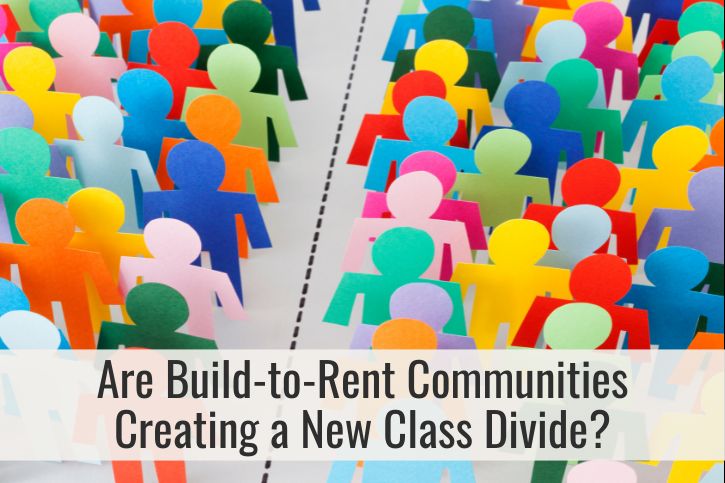
Over time that creates two groups living side by side owners and permanent renters. The amenities might be upscale, but the divide is real, and it comes down to price, structure, and access rather than exclusion.
The Role of Institutional Investors
This isn’t just supply and demand. Large investment firms are backing a lot of these developments, and their money is shaping housing markets in ways that aren’t always obvious.
These firms aren’t focused on community well-being their focus is return on investment. With control over thousands of rental units, they can influence pricing trends, tighten inventory, and consolidate control over entire neighborhoods.
The result is less local ownership, less say for residents, and a housing market that starts to look more like an investment portfolio than a community.
Why This Matters to You
Whether you’re buying, renting, investing, or selling, it helps to understand where this trend is headed.
Build-to-rent communities offer real short-term benefits, but longer term they raise questions about affordability, mobility, and access. The effects reach beyond the development itself school zoning, transportation planning, infrastructure, and how families build wealth over time.
 I tell my clients this often: your real estate decisions today are about more than just where you’ll live. They’re about how you build security and opportunity over time.
Getting the Right Guidance
This isn’t about resisting change real estate always evolves. But without someone who sees the full picture, you can end up stuck in a situation that doesn’t actually serve your goals.
I don’t just handle transactions. I help clients think through their options and make a plan that fits their situation whether that’s identifying a good investment, finding the right rental, or positioning you to buy in a competitive market. As a national real estate speaker and instructor, I’ve also trained agents around the country on how to read markets and assess trends, and that same knowledge is what I bring to my own clients.
Why This Matters Now
Build-to-rent communities creating a wider gap between owners and renters isn’t a hypothetical it’s happening now, and it’s changing where people can afford to live.
I’ve built my career on making real estate easier to understand. I take a strategic, client-first approach based on data and experience, and I care about what happens after the deal closes.
Planning Ahead
Build-to-rent isn’t inherently bad it meets a real need for a lot of renters. But without intentional planning and balanced development, it risks becoming another way people get shut out of ownership.
Planning and affordability matter here, and so does who actually gets to build wealth through housing, not just find a place to live.
My job as your agent is to protect your interests, help you find the right opportunities, and make sure your plans hold up over time.
If you want to talk through what this means for your own plans, reach out. I’m with Uncommon Realty and happy to help you think it through.