A busy open-house day can leave you with plenty of impressions and very little useful information. I use a simple process instead: define your needs, build a route, inspect the home past its staging, then compare facts before deciding. These steps will help you tour Austin open houses with a clear head and fewer surprises.
Step 1: Define What You Need Before Searching Austin Open Houses
Before you search Austin open houses, write down the facts that must fit your life. A vague search produces a long list. A short set of firm criteria gives you a useful route.
Start with your likely price range. Include the full monthly cost, not only the list price. Property taxes, insurance, HOA dues, maintenance, and any planned work can change the number that feels comfortable.
Next, separate your needs from your wants. Needs might include a certain number of bedrooms, a single-story layout, room for a home office, or a workable commute. Wants can wait until you compare the homes in person.
- Choose the areas you want to explore.
- Set a minimum and maximum home size.
- Note the condition you can accept.
- Decide how much work you can manage after closing.
- Write down any condo, townhome, acreage, or new-construction preference.
Austin covers a wide area, and the city extends into more than one county. The background on Austin’s geography and regional setting helps explain why two homes with similar prices can produce very different daily drives.
Think about time, too. If you need to be near a workplace, campus, airport, or another regular stop, test the route at the time you would actually travel. A map can show distance. It cannot tell you how that drive feels at 8 a.m. or 5 p.m.
I also ask buyers to set a tour limit. Four well-chosen homes often teach you more than ten rushed visits. If you are unsure where to begin, Robbie English, REALTOR, Broker can help you turn broad goals into a workable home search without deciding for you.
By now you should have: a price range, a short list of areas to explore, five or fewer firm needs, and a clear idea of your time limit.
Step 2: Find Current Austin Open Houses and Build a Usable Route
Current Austin open houses can change quickly, so confirm each listing before you leave home. A search page may show an event that has ended, moved, or changed its time.
Use a current listing source, then check the listing details for the date, start time, end time, address, and entry instructions. The research available for this topic found a high-level feature for viewing upcoming open houses by neighborhood, but it did not provide detailed attendance guidance. That gap is worth keeping in mind. Search results are a starting point, not a complete plan.
Build your route around geography. Group homes that sit near one another rather than chasing the most attractive listing across town. Leave space between appointments for parking, conversation, and a home that takes longer than expected.
- Place the farthest home first if its start time is fixed.
- Move through nearby listings in one direction.
- Leave at least 20 minutes between close stops.
- Mark one home as optional in case the day runs late.
- Save each address offline before you drive.
Do not assume every open house has the same access rules. In 2026, Texas buyers may see more questions about who is hosting an event and what paperwork applies, and the answer can differ between an open event and a private showing. My explanation of Texas open-house law changes in 2026 provides additional context before you plan a tour.
If you attend without an agent, be polite and clear about your purpose. You can look at the home and ask property questions. But the host may represent the seller, so do not share your maximum budget, urgency, or negotiation plan at the door.
If you are already working with a buyer’s agent, ask who will attend with you and what agreement is needed for any private tour. An open house and a private showing are different situations. Get the terms in writing before you assume access will work one way.

Keep a backup plan. A listing may be crowded, the road may be blocked, or the home may no longer be available. If a tour feels rushed, leave rather than force a decision. You can learn more from a calm second look than from a stressful first pass.
Route rule: build the day around confirmed times and nearby stops, not around a long list of addresses.
Step 3: Prepare Questions, Documents, and a Touring Checklist
A good checklist keeps Austin open houses from becoming a parade of nice kitchens. Bring a small notebook or use one note per address on your phone. Take notes before the homes start to blend together. My open-house buyer’s checklist can help you organize the details worth reviewing at each property.
Use the same headings for every property:
- Address and tour time
- List price and estimated monthly costs
- Layout and room sizes
- Roof, HVAC, windows, and major systems
- Visible repair needs
- Noise, traffic, and nearby conditions
- HOA information, if it applies
- Your strongest concern and strongest reason to return
Ask questions that lead to records or follow-up. How old are the roof and HVAC system? Have there been recent repairs? Are permits available for additions or major work? What does the HOA fee cover? Are there pending assessments or known restrictions?
Ask where the information came from. A host may know the seller’s disclosure, listing notes, or recent repair records. If the answer is uncertain, mark it for verification. A friendly answer is not the same as proof.
Bring a preapproval letter only if you already have one and feel comfortable sharing it. You do not need to hand over private financial details simply to walk through an open house. If you plan to make an offer, your agent can explain what documents are needed at that stage.
Wear shoes that are easy to remove if asked. Do not open drawers, closets, or gates unless the host permits it. Ask before taking photographs, especially when personal items are visible.
Finally, keep Fair Housing in mind. Judge the property and the area by objective features. Do not make a housing choice based on assumptions about the people who live nearby.
By now you should have: one repeatable note format, a short question list, and a way to mark facts that need later proof.
Step 4: Evaluate Each Home Without Getting Distracted by Staging
Staging helps you picture a room, but it can also hide scale and condition. When you enter Austin open houses, give yourself two passes. The first is for the overall feel. The second is for details.
First pass: test the layout
Walk the same path you would take on a normal day. Enter with groceries. Move from the bedroom to the bathroom. Stand where a desk, sofa, or dining table would go. If the room only works because the furniture is tiny, note that.
Look past paint color. Ask whether the room has the shape, light, storage, and outlets you need. A fresh coat of paint is easy to change. A poor layout is much harder.
Second pass: look for cost and condition
Check ceilings near bathrooms and exterior walls for stains. Look at baseboards for swelling or fresh patch work. Notice musty smells, soft flooring, cracked tile, and doors that do not close well.
Outside, look at drainage, grading, roof lines, gutters, visible foundation cracks, and the condition of decks or fences. You are not performing an inspection. You are deciding whether the home deserves a closer professional review.
Test the parts you are allowed to test. Turn on lights. Run a faucet briefly. Open a window if the host says it is fine. Listen after the water stops. Small observations can help you form better questions later.
Pay attention to sound and light. Visit the front, back, and side of the property when possible. A lovely living room may feel different if road noise reaches the patio or a neighboring structure blocks afternoon light.
Do not use one visit to judge every condition. A home inspection is a separate service with a different purpose. Visible cracks alone cannot tell you the full story.
Ask about improvements, but do not treat an answer as a warranty. If a seller says the roof was replaced, request the invoice, permit information, or other records during the proper review period.
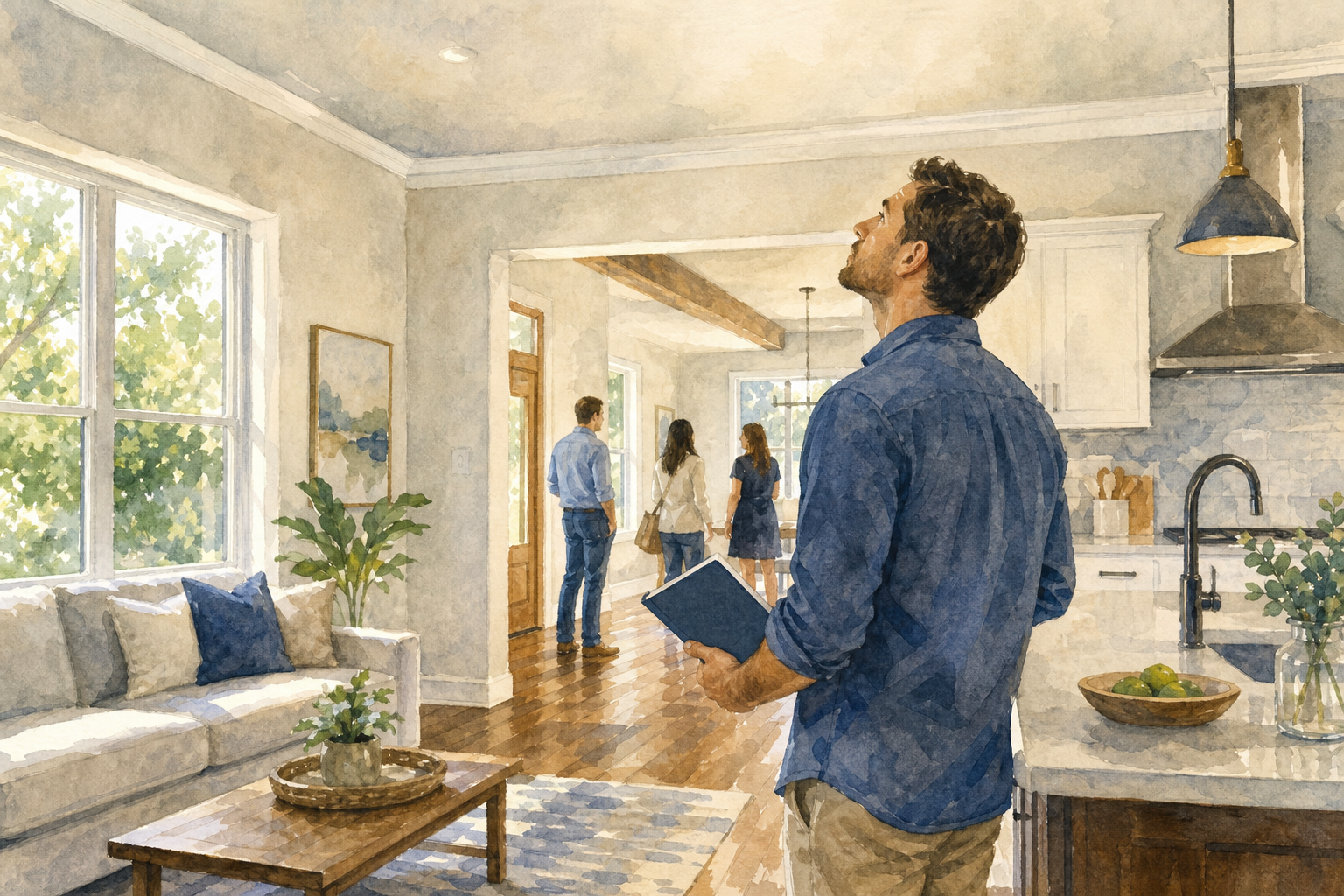
After each visit, step outside for two minutes. Write three facts before you discuss your feelings. For example: “The second bedroom fits a desk,” “the back patio faces a busy road,” or “the HVAC age needs verification.” Facts make comparison easier once the homes start to blur.
One thing I have learned over more than 40 years in real estate is that buyers often remember the staged dining room and forget the costly question they meant to ask. Slow down at the transition points. That is where useful information tends to surface.
Step 5: Compare Homes, Verify the Details, and Decide What to Do Next
After your Austin open houses, compare notes while the visits are still fresh. Do not let one dramatic feature decide the whole purchase.
Make a simple grid with one row per home. Score each item from one to five only if a score helps you think. You can also write plain notes. The method matters less than using the same questions for every property.
Then verify the details that could change your decision. Review the seller disclosure, listing history, HOA documents, tax information, and available repair records. Ask your agent to help identify what needs an inspector, lender, title professional, or insurance provider.
I have intentionally curated experienced professionals who put clients first, but you are free to select any provider you wish. A collaborative team can improve communication during inspections, financing, title work, and closing. It is still your choice.
Use local government information for objective area details rather than relying on a host’s casual description. A local government website can help you locate municipal information and public updates that may matter during your research.
If one home rises above the rest, do not rush straight to an offer. First confirm your financing range. Next review the comparable sales and likely repair costs. Then decide whether the home deserves a private showing or professional inspection.
Robbie English, REALTOR, Broker can help you review those questions and explain the Texas contract process. You remain the decision maker. My job is to make the facts easier to see and the next step easier to understand.
Decision rule: move forward when the home fits your needs and the remaining questions have a clear path to verification. If a major concern has no answer, pause.
Frequently Asked Questions About Austin Open Houses
How do I find open houses in Austin?
You can find Austin open houses through current listing pages, neighborhood searches, and local real estate professionals. Confirm the date and time before leaving because event details can change. Save the address and entry instructions. If you want a broader search, start with a few areas that fit your budget instead of scanning the entire region.
Do I need a buyer agent to attend an open house?
You generally can attend an open house on your own, but the host may represent the seller. Ask questions about the property, not your private buying plans. A private showing can involve different agreement and disclosure rules. If you are unsure, ask Robbie English, REALTOR, Broker to explain the difference before scheduling one.
What should I bring to an Austin open house?
Bring a short checklist, a way to take notes, and your list of questions. Comfortable shoes help when you visit several homes. You may bring a preapproval letter if you already have one, but you do not need to share private financial details at the door. Ask before taking photos.
How many open houses should I visit in one day?
Visit only as many Austin open houses as you can inspect without rushing. For many buyers, four well-spaced stops provide better notes than a packed schedule. Leave time for parking and delays. If every home begins to look the same, stop and review your notes before visiting another property.
What should I check first inside a home?
Check the layout first, then look for signs that need follow-up. Pay attention to room size, storage, light, ceilings, floors, windows, and visible water concerns. Outside, note drainage, roof lines, foundation cracks, and noise. An open house is not an inspection, so use your observations to plan the next review.
Choose a short route, take the same notes at every home, and verify the details that affect your budget. If you want a second set of eyes, reach out to Robbie English, REALTOR, Broker before your next tour and bring your questions with you.
You Might Also Find These Helpful
- search current homes for sale
- schedule a buyer consultation
- get pre-approved for a mortgage
- The Real Benefits of Buying a Home This Year
You might find Home Search Austin TX Infographic helpful too, since it covers related ground.