Buying a house with a pool can feel like a bonus, especially during an Austin summer. I’d weigh that appeal against the pool’s condition, safety needs, and ongoing costs before making an offer.
With over 40 years in real estate, I’ve learned that a pool’s value depends on the home and the buyer. A focused inspection and a clear ownership budget can help you judge whether it fits your plans.
What a Pool Adds to the Home—and What It Doesn’t Guarantee
A pool can add a place to swim, cool off, and spend time outdoors. It can also add repair work, utility use, and safety responsibilities. The value is personal as well as financial: a pool you’ll use often may feel worthwhile, while one you rarely use can become a costly feature to maintain.
Resale value is harder to predict. A pool doesn’t guarantee you’ll recover its full cost or attract every buyer.
I’d treat a pool as one feature among many when judging the home’s price. Compare the property with nearby homes that have similar size, condition, lot features, and pool setup. A pool’s age and repair history matter too. A worn finish or aging equipment may change what the feature is worth to you, even if the listing presents it as a selling point.
There’s also the cost of use. Ask yourself how often you expect to swim, who will handle upkeep, and whether the time and expense fit your routine. If you’re still working out the larger budget, my guide to estimating a home’s price, insurance, and taxes can help you look beyond the asking price.
For financing, talk with your loan officer before you assume the pool has no effect on approval. Ask how the appraisal and any pool-related repairs could affect your loan timeline or required funds. Also ask a tax professional or your county appraisal district about tax questions tied to the property. Don’t count on a tax break without advice based on your situation.
Pool Condition: The Inspection Questions That Matter
A standard home inspection may not include a full pool assessment. Before the option period ends, confirm what the home inspector will examine and consider hiring a pool specialist for a separate evaluation. A dedicated pool inspection can provide a closer look at the pool’s condition, and its scope and fee can vary.
I’d ask the inspector to explain what they’ll operate, what they’ll only review visually, and what needs a specialist. Pumps, filters, heaters, valves, lights, and automation can all affect how the pool works. Ask for a written report that separates safety concerns from repair items and routine wear.
My explanation of how a pool inspection differs from a home inspection can help you compare the scope of each review. Check for cracks, listen to running equipment, and look at the joint between the coping and deck.
During a showing, look for cracks that cross the pool shell, gaps between the coping and deck, loose tiles, stains, or areas where the finish looks rough or hollow. A small surface crack may be minor. A wide or changing crack, unexplained water loss, or repeated patching calls for closer review. In Central Texas, shifting soil makes movement around the deck and coping worth checking carefully.
Ask the seller about the pool’s age, past leaks, repairs, resurfacing, and equipment replacement. Request available invoices, warranties, permits, and service records. If the pool is closed or covered, ask for recent photos and a clear account of how it performed during the last swim season. A clear-looking pool at a showing doesn’t tell you what is happening below the surface.
Cracks alone don’t prove a serious structural problem. Some Central Texas buyers may hear the term concrete cancer, often used for alkali-silica reaction, or ASR. That condition can’t be confirmed from a photo or a quick visual check. My guide to concrete cancer concerns in Texas pools explains why a specialist may be needed when cracking is widespread or keeps returning.
If an inspector flags a possible leak or structural issue, ask what further testing could clarify it and how soon that work can happen. Then review the findings alongside your contract deadlines. You don’t have to reject a home because the pool needs work, but you do need enough information to make a decision you can live with.
Safety, Insurance, and Local Requirements
Before closing, check the pool’s barriers, gate, and access points. A fence alone doesn’t tell you whether the setup meets the rules that apply to that property. Ask the relevant local authority what requirements apply, then check any recorded restrictions or community rules that may affect pool use or changes to the yard.
Look at the gate latch and how the gate closes. Check whether a pool cover, alarm, or other safety feature is present and working. Treat a damaged barrier or faulty gate as an item to address, not a minor cosmetic issue. Ask the seller for records of prior safety work and any pool permits they have available.
HOA rules and deed restrictions can shape what you can change after closing. They may address fences, pool equipment, exterior work, or drainage. Read the governing documents and ask how approval works before planning an upgrade. Also confirm whether any past pool work required permits and whether the seller has records for that work.
Insurance deserves its own check. Ask your insurance agent how the pool is classified under the policy, what liability coverage applies, and whether the carrier requires specific safety measures. Have the agent review the actual property details, including any known damage or equipment concerns. A general estimate for a standard home may not account for this pool.
If a prior claim, crack, or leak appears in the records, don’t guess whether the policy covers it. Coverage depends on the policy wording and the cause of the damage. My article on home insurance and concrete cancer claims explains why buyers should ask about the actual policy before relying on future coverage.
I’d also ask your lender how a pool that needs repairs could affect appraisal or loan conditions. The answer can depend on the loan and property. Get that guidance early if an inspection finds a major defect, especially when the repair may affect the pool’s function or safety.
The Ongoing Cost of Pool Ownership in Central Texas
Pool ownership brings recurring costs after closing. Size, condition, equipment, use, and how much work you do yourself can all change the total.
Ask the seller what they spend on regular service, chemicals, and equipment upkeep. Then ask whether the pool has needed repairs in recent years. A pump or filter nearing the end of its useful life can affect your budget even if it still runs during a showing.
Utilities add another layer. Pumps use electricity, and heaters can add to energy use. A pool that stays open through much of the year may need more frequent care than one used for a shorter season. Ask your utility provider or a qualified pool professional about the equipment’s energy use instead of relying on a guess.
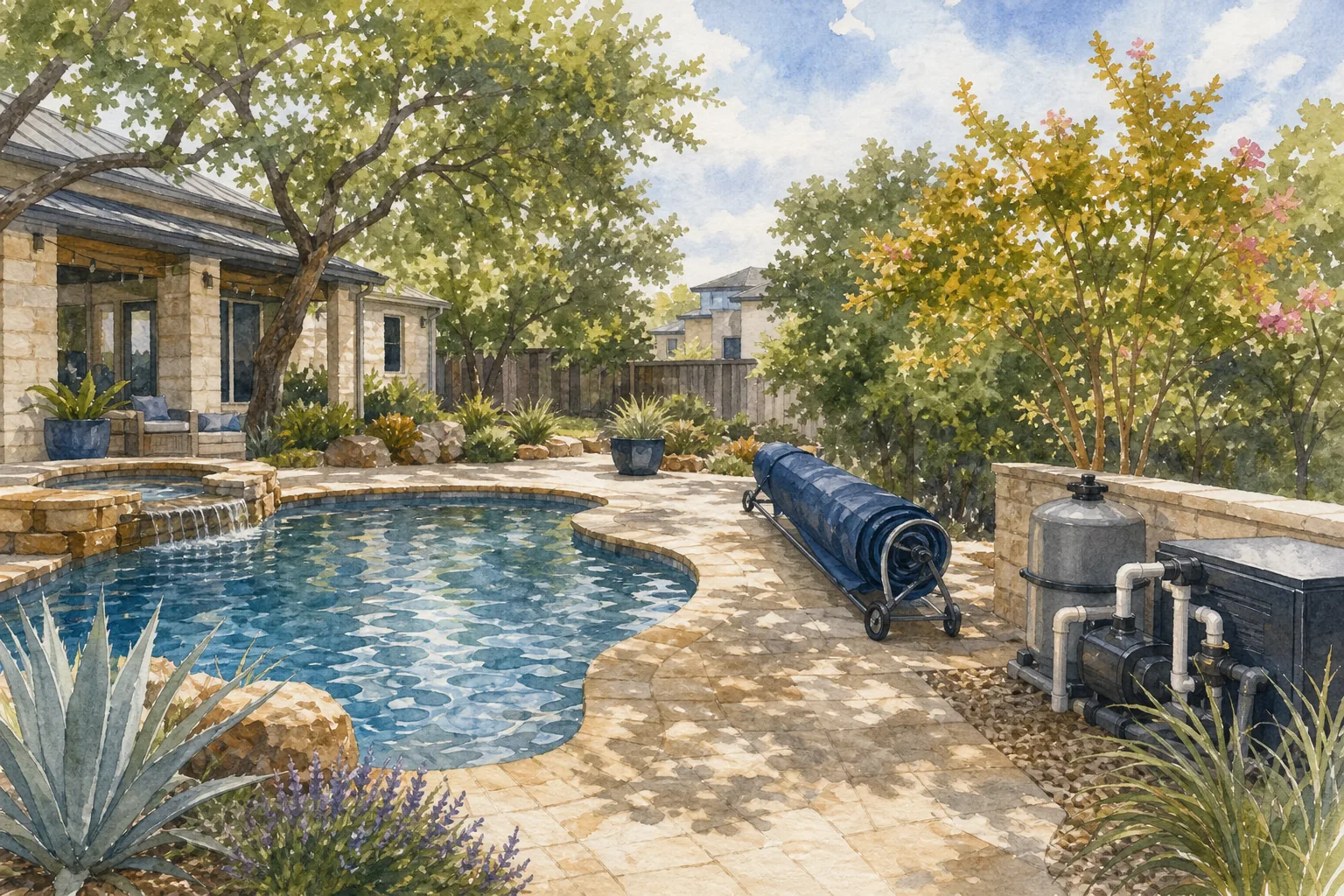
Central Texas weather also shapes upkeep. Heat can raise water loss and chemical demand. Pollen and leaves can build up after windy days or storms, while a hard freeze can put exposed equipment at risk. Ask the seller how they protect the pump and plumbing during cold snaps. If you plan to close the pool for part of the year, include the work to prepare it and reopen it in your budget.
A cover may help limit evaporation, and efficient equipment may reduce energy use, but neither removes the need for routine care. Ask which upgrades are already in place and request records for equipment changes. If you’re considering a new pump, heater, cover, or water-saving feature, get a quote before treating the change as a guaranteed saving.
Resurfacing can be a large expense. A concrete pool may need substantial work as the finish ages, and the cost depends on its condition and the scope of the job. Ask when the surface was last repaired or replaced. Get a specialist’s view if the finish is rough, stained, peeling, or showing exposed material.
I’d make a monthly budget that includes routine service, chemicals, added utility use, insurance, and a reserve for repairs. Keep those costs separate from your mortgage payment so you can see the full ownership picture. If you’d rather manage the work yourself, be honest about the time it takes to check water balance and keep equipment clean.
For a home with an older pool, ask for a written assessment of the surface and major equipment before you finalize your budget. A modest monthly cost can feel different when a large repair is due soon. The records and inspection findings help show which costs are routine and which may arrive early.
Frequently Asked Questions About Buying a House With a Pool
Does a regular home inspection include the pool?
Not always. A general inspection may note visible issues or equipment that won’t run, but the pool review can be limited. Ask the inspector to explain the written scope before you hire them. For a closer assessment of the pool shell, finish, and equipment, consider a separate inspection by a qualified pool professional.
How much does it cost to maintain a pool each year?
Annual pool maintenance costs vary. Your actual costs depend on the pool’s condition, equipment, size, use, and maintenance plan. Ask the seller for recent bills, then get current estimates for any work the inspection identifies.
Does a pool increase a home’s resale value?
A pool can add value, but the amount depends on the home and local market. Compare nearby properties and account for the pool’s age, repairs, and ongoing costs before deciding what it adds to your offer.
What should I ask about pool safety before closing?
Ask which barriers and safety features are present, whether they work, and what local rules apply to the property. Review HOA documents and ask for available permit records tied to pool work. Have your insurance agent confirm any safety conditions for coverage, and address a faulty gate or damaged barrier before relying on it.
Can a pool affect my mortgage approval?
It can be worth discussing with your loan officer, especially if the pool needs major repairs or has a safety concern. Ask how the appraisal and your loan program treat the pool’s condition. The answer depends on the loan and property, so get guidance before the relevant contract deadlines pass.
Conclusion
I’d consider a pool only after I understand its condition, safety needs, insurance terms, and likely upkeep. Before you make an offer, arrange the right inspection and ask your insurance agent and lender about the property. I’m Robbie English, REALTOR, Broker, and I help buyers in Greater Austin weigh property details against their goals and budget.