An owner occupied multifamily loan in Texas can let you buy a property with up to four units while living in one of them. FHA financing may allow 3.5% down, while eligible veterans may qualify for a VA loan with no down payment. I’ll explain the main paths, the rules that can stop a deal, and what to ask a lender before you make an offer.
Table of Contents
- What an Owner Occupied Multifamily Loan Means in Texas
- FHA Financing: Lower Down Payment for Eligible Owner-Occupants
- VA Financing: Zero-Down Potential for Eligible Veterans
- How to Qualify and Prepare Before Applying
- Texas Property, Rental, and Cash-Flow Issues to Check
- Frequently Asked Questions
- Conclusion
What an Owner Occupied Multifamily Loan Means in Texas
An owner occupied multifamily loan is financing for a property where you live in one unit as your main home. The other unit or units can be rented, subject to the loan rules and local law.
In plain terms, you become both a homeowner and a landlord. You might buy a duplex, live in one side, and rent the other. A triplex or fourplex works in a similar way. The loan treats your main residence differently from a property you buy only as an investment.
That difference matters. A non-owner-occupied rental often needs a larger down payment and may be judged more heavily on its projected rent. An owner-occupied purchase can give you access to residential loan programs instead of only commercial or investor financing.
Unit count is one of the first facts to confirm. FHA and VA financing for this type of purchase is generally discussed around one-to-four-unit residential properties. A property with five or more units may move into commercial financing, even if you plan to live there.
The property also needs to work as a residence. A building with major code problems, an unusual layout, or a business use may not fit a standard mortgage. Ask the lender to review the property before you spend money on inspections or an appraisal.
Texas adds its own layer of review. Property taxes can change the payment estimate. Insurance may be harder to price for an older multifamily building. Local rules can affect the way you rent a unit, especially if you plan to use short stays.
When I help an Austin buyer review a duplex, I look at the loan plan and the property plan together. A buyer can qualify on paper yet find that the building’s rent, repairs, or layout makes the deal too tight. You can compare available properties through Central Austin duplex listings while you test those numbers.
Key Takeaway: Owner occupancy may open residential financing, but the property still has to meet lender, appraisal, insurance, and local requirements.
FHA Financing: Lower Down Payment for Eligible Owner-Occupants
For an owner occupied multifamily loan in Texas, FHA financing is often discussed because the published minimum down payment can be as low as 3.5% for eligible borrowers. The buyer must live in one unit as the principal residence.
That figure is only the down payment. You still need money for closing costs, prepaid items, moving costs, and early repairs. Mortgage insurance can also add to the monthly payment. Ask the lender for a full cash-to-close estimate rather than focusing on the down payment alone.
The FHA path can fit a buyer who has limited cash but steady income. It may also help when a conventional lender’s credit rules are harder to meet. The exact approval decision depends on the borrower, the property, the lender, and current FHA rules.
Review the available loan information, but your lender remains the person who confirms current underwriting rules and documents what your specific file needs.
Owner occupancy is not a box to check only at closing. You should plan to move into the unit and keep it as your main home under the program’s occupancy rules. Do not assume you can buy the property as a rental and later claim that you intended to occupy it.
FHA financing can work for a duplex, triplex, or fourplex, but the appraisal still matters. The appraiser will review the condition and value of the property. If repairs are required, the lender may need those repairs handled before closing or may require a different loan structure.
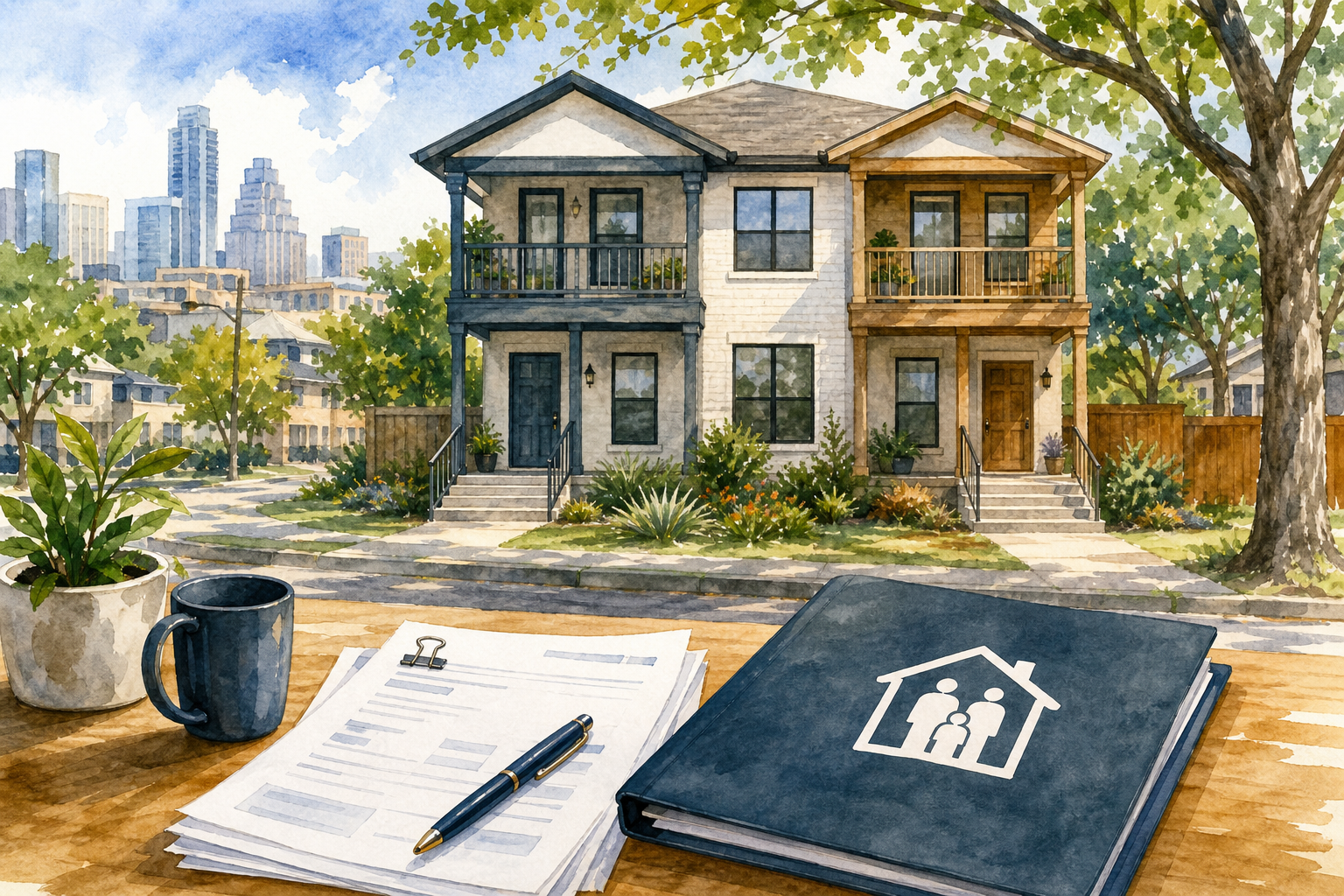 One issue I discuss early with buyers is the rent estimate. Lenders may count rental income only under specific rules, and they may use an appraiser’s rent schedule rather than the seller’s claim. Build your budget so the deal still works if the lender credits less rent than expected.
For a plain-language look at related FHA owner-occupied rental strategies, to investing in rental property with an owner-occupied unit. Then ask a qualified FHA lender to confirm the current program details before you write an offer.
VA Financing: Zero-Down Potential for Eligible Veterans
A VA loan may provide zero-down financing for an eligible veteran or service member buying a qualifying owner occupied multifamily property. The buyer still must live in one unit as the primary residence.
The zero-down feature can preserve cash for repairs and reserves. It does not mean the purchase requires no cash at all. Closing costs, prepaid taxes, insurance, inspections, and appraisal charges may still apply. Seller contributions may be possible in some transactions, but your lender must explain the limits.
The VA program also depends on eligibility and a valid Certificate of Eligibility. The lender will review your income, debt, credit history, assets, and the property. A VA appraisal is not a substitute for a full home inspection, so I encourage buyers to keep those roles separate.
Use the available loan information as background, and ask your lender whether the specific unit count and property setup fit the program.
| Loan path | Disclosed down-payment feature | Occupancy question | What to confirm with the lender |
|---|---|---|---|
| FHA | As little as 3.5% for eligible borrowers | Will you live in one unit as your main home? | Mortgage insurance, property condition, rental-income treatment |
| VA | Zero down for eligible veterans | Does the property qualify as your primary residence? | Eligibility, entitlement, appraisal, closing-cost limits |
| Owner-Occupied Loan (Principal Residence Loan) | Not publicly disclosed | Is this your principal residence? | Availability for borrowers with tarnished credit, difficult-to-prove income, or a problem property |
The reviewed information leaves several loan terms unspecified. It does not give a maximum loan amount, interest-rate range, or loan-term length. That gap is important. Treat every online estimate as a starting point until a lender gives you a written quote.
How to Qualify and Prepare Before Applying
Before applying for an owner occupied multifamily loan in Texas, prepare your borrower file and your property file at the same time. A strong income file cannot fix a property that does not meet the loan rules.
1. Confirm your occupancy plan
Write down which unit you will occupy. Make sure it functions as a legal residence. If you plan to move after a year, ask the lender how that change affects the loan terms. Do not base the plan on a casual conversation with the seller.
2. Gather income and asset records
Expect questions about your employment, debts, credit, and cash. Gather recent pay records, tax returns when requested, bank statements, investment statements, and identification. Self-employed borrowers may need business records as well.
My mortgage pre-approval checklist explains the records lenders commonly review. Your lender may ask for more, especially when rental income or a complex ownership structure enters the file.
3. Ask for a property-specific review
Give the lender the listing details, unit count, current leases, tax record, and known repair history. Ask whether the lender can review the property before you make an offer. This can expose a problem with condition, zoning, or rental documentation early.
4. Compare the full loan cost
Ask for the interest rate, annual percentage rate, loan term, mortgage insurance, lender fees, required reserves, and estimated cash to close. If the lender cannot yet provide a final figure, ask what remains unknown and when it will be confirmed.
When you compare lenders, look at communication as well as the quote. A lender who explains the rent calculation and appraisal process may reduce surprises during underwriting. You are free to choose any provider. I can share experienced professionals I have intentionally curated, but the decision remains yours.
5. Stress-test the budget
Run the payment with one unit vacant. Add a repair reserve. Include property taxes, insurance, utilities, lawn care, and management if you will not handle those tasks yourself.
Pro Tip: Ask for two budgets, one based on the lender’s approved rent figure and one with no rental income for several months. If only the first budget works, the purchase may leave too little room for error.
For help comparing lender questions, I also keep a guide on how to choose a mortgage lender. The goal is not to find a lender who promises approval. It is to find out what the loan really requires.
Texas Property, Rental, and Cash-Flow Issues to Check
The loan is only one part of the decision. A Texas multifamily property has operating risks that can change your monthly cash flow.
Start with taxes and insurance. Pull the current tax record, then ask how the lender is estimating future taxes. Insurance quotes can vary based on the building’s age, roof, wiring, plumbing, and claims history. Do not rely on the seller’s current premium as a promise of your future cost.
Next, inspect each unit and the shared areas. Look for separate utility meters, water leaks, foundation concerns, HVAC age, roof wear, and signs of deferred work. A duplex can look simple until one major system serves both units.
Review every lease. Confirm rent, deposit, lease dates, utility duties, and renewal terms. If a unit is vacant, use a supportable market-rent estimate. The lender may not accept projected rent in the same way you do.
Austin buyers also need to check local rental rules. Short-term rentals have separate licensing and operating requirements. A plan based on nightly rent should not be treated like a normal long-term lease plan.
 Keep reserves after closing. A low down payment can help you buy sooner, but it can also leave less cash for a broken air conditioner or a vacant unit. I would rather see a buyer delay than close with a budget that depends on every month going perfectly.
Closing costs deserve their own line in the budget. They can include lender fees, title charges, prepaid taxes, insurance, and other settlement items. A separate explanation of Texas closing costs can help you see why the down payment is only part of the cash needed.
Some investors later move from an owner-occupied property into a larger rental portfolio. A future sale may raise tax questions, including whether a 1031 exchange could apply. That decision requires a tax adviser, and the rules and deadlines need review before a sale.
Key Takeaway: Count the cost of vacancy, repairs, taxes, insurance, and management before you decide how much house you can afford.
Frequently Asked Questions
What is an owner occupied multifamily loan in Texas?
It is a loan for a one-to-four-unit property where you live in one unit as your primary residence. You may rent the other units if the loan and local rules allow it. FHA and VA financing are common paths to investigate, but a lender must confirm current unit, occupancy, borrower, and property requirements.
Can I buy a duplex with an FHA loan in Texas?
Yes, an FHA loan may be used for an eligible owner-occupied duplex, and the published minimum down payment can be as low as 3.5%. The lender still reviews the property condition, your finances, and the occupancy plan. Mortgage insurance and closing costs may add to the monthly payment and cash needed at closing.
Can a VA loan finance a multifamily property?
A VA loan may finance an eligible owner-occupied multifamily property, with zero down payment possible for qualified veterans. You must occupy one unit as your primary residence. Confirm the property’s unit count, appraisal results, eligibility, entitlement, and closing-cost rules with a VA-approved lender before relying on that structure.
How many units can I buy with an owner-occupied loan?
Many residential owner-occupied programs focus on properties with up to four units. A five-unit property may require commercial financing instead. Unit count alone does not decide approval. Legal use, condition, zoning, appraisal value, rental documentation, and your ability to occupy one unit also matter.
Do lenders count rent from the other units?
Lenders may count rental income, but they apply program-specific rules and documentation standards. They may use current leases, an appraisal rent schedule, or a reduced qualifying amount. Ask for the exact income figure the lender will use. Build a second budget that assumes a vacancy so your plan does not depend on full occupancy.
Conclusion
I recommend starting with a lender who has handled owner-occupied duplex, triplex, or fourplex loans, then having that lender review a specific Texas property before you offer. FHA may fit a buyer with limited cash, while VA may fit an eligible veteran who wants to preserve cash. Bring me the property details when you are ready, and I can help you examine the layout, rent plan, and Austin-area market facts without choosing a lender for you. I’m Robbie English, REALTOR, Broker, with over 40 years of experience helping Texas buyers make informed choices.