Robbie English, Broker and REALTOR

Helping Austin Home Buyers and Sellers Make Confident Real Estate Decisions

  • Buy
    • Search Homes For Sale
    • Featured Listings
    • Get Pre-Approved
    • Schedule a Buyer Consultation
    • Hire Me As Your Buyer’s Agent
    • Buyer Guides
      • Austin Home Buyer’s Guide
      • Austin Real Estate Guide
      • Austin Relocation Guide
      • Making an Offer
      • What Are Closing Costs?
      • Closing: Now What?
      • Financial Terms Glossary
    • Download The App
    • Neighborhood Guides
      • Neighborhood Guides
      • Highland Lakes Neighborhood Guides
    • Event Guides
      • Austin Metro Event Guides
      • Highland Lakes Event Guides
  • Sell
    • Sell With Me
    • Get Your Home’s Value
    • Schedule a Seller Consultation
    • Off-Market Representation
    • Market Snapshot
    • Seller’s Guide
      • Austin Home Sellers Guide
      • 11 Steps To Selling Your Home
      • Pricing Your Home
      • Marketing Your Home
      • Adding Value To Your Home
      • Showing Your Home
  • Rentals
    • Owner Portal
    • Featured Rentals
    • Rent
      • Resident Resources
      • Resident Portal
      • Tenant FAQ
      • Resident Benefit Package
      • Wear and Tear vs. Damage
  • Service Area
  • Blog
    • Find By Topic
    • Real Estate Resource Center
    • All Blog Posts
  • About
    • Testimonials
    • Robbie
    • Robbie’s Advanced Education
    • Uncommon Realty
    • Uncommon Diversity
    • Uncommon Path
  • Contact
Home » What to Look for During a Home Walkthrough

What to Look for During a Home Walkthrough

September 28, 2026 by Robbie English, REALTOR, Broker, ABR, AHWD, BBA, C2EX, CRB, E-PRO, GRI, MRP, PSA, RENE, RPR, SFR, SRS, TAHS, TBS, TLS

Walking through a home right before closing can feel like a final exam. One missed crack or a leaky faucet can turn joy into costly repairs. Here’s a step‑by‑step guide that shows exactly what to look for, how to test systems, and how to record any concerns.

Table of Contents

  • Step 1: Prepare Before You Walk Through
  • Step 2: Start Outside With the Lot, Drainage, and Exterior
  • Step 3: Walk Room by Room and Check Visible Systems
  • Step 4: Test Fixtures, Doors, Windows, and Included Items
  • Step 5: Document Concerns and Decide What Needs Follow‑Up
  • Frequently Asked Questions

Step 1: Prepare Before You Walk Through

The final walkthrough is your last chance to verify that the property matches the contract. Review the purchase agreement and any repair addenda so you know what should be in place. Schedule the visit with the seller’s agent and make sure utilities are turned on; you can’t test a furnace that isn’t getting power. Bring a notebook, a smartphone for photos, and a copy of the original home‑inspection report. If you’re unsure what counts as a repair, Your Final Walkthrough Success Guide walks you through the most common items.

Before you step inside, walk around the entire lot. Look for new damage that could have happened after the last inspection, hail dents, fresh cracks, or standing water. Knowing the exact condition of the exterior helps you focus your indoor time where it matters most.

Step 2: Start Outside With the Lot, Drainage, and Exterior

Good drainage is the first line of defense against foundation problems. The ground should slope away from the house. Residential building code generally calls for about 6 inches of fall over the first 10 feet from the foundation. Check for low spots, swales, or standing water near the foundation after a rain. If the home sits in a flood‑plain, confirm that the finished‑floor elevation meets applicable requirements.

Next, inspect the roof from ground level. Missing or lifted shingles, damaged flashing, and clogged gutters are all red flags. Look for signs of wear and ask about the roof’s age and recent repairs. Roof information can help you consider its condition.

Open and close every exterior door and window. They should latch cleanly, seal without gaps, and glide without sticking. Fogged glass often means a broken seal, which can let moisture into the frame.
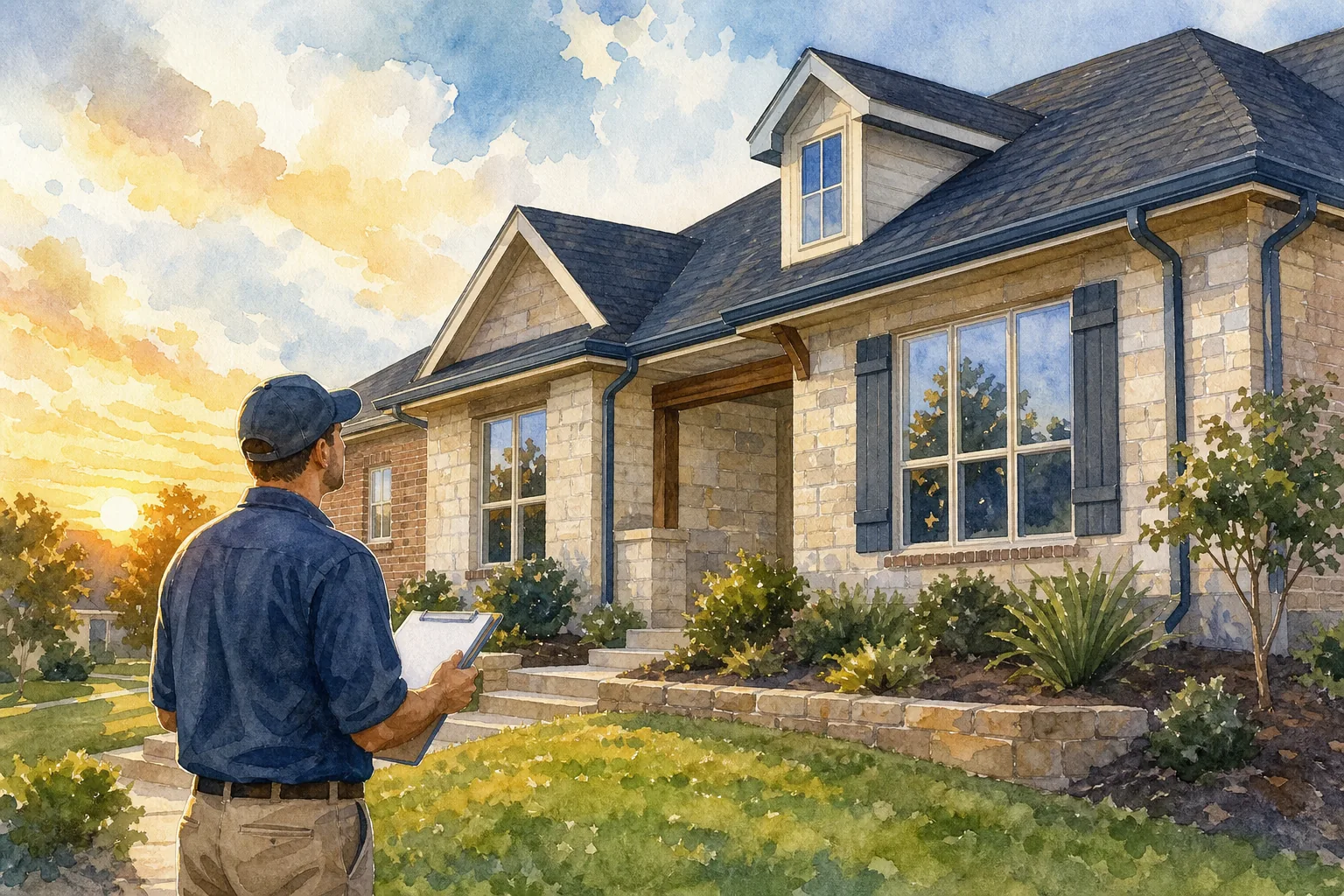
Home walkthrough exterior drainage and roof inspection

Finally, take a quick look at the garage door opener and safety sensors. A malfunctioning opener can become a safety issue once you move in.

Step 3: Walk Room by Room and Check Visible Systems

Start at the front door and move methodically through each space. If you’re still comparing properties rather than checking one before closing, the same room-by-room approach in my open-house checklist can help you spot items to investigate. In every room, look for cracks in walls, ceilings, or floors. Foundation cracks can indicate serious structural issues; ask an inspector to evaluate them.

Test every light switch and outlet. Flip the switch, feel for warmth, and make sure the outlet powers a lamp or phone charger. Look for ungrounded outlets or an outdated electrical panel.

Run hot and cold water at each faucet. Watch how quickly the water drains; slow drainage can point to hidden clogs or pipe corrosion. Check under sinks for drips or water stains, a tiny leak today can become a flood tomorrow.

While you’re in the kitchen, turn on the range‑hood fan and the dishwasher. Listen for unusual noises and make sure the dishwasher completes a short cycle without leaking.
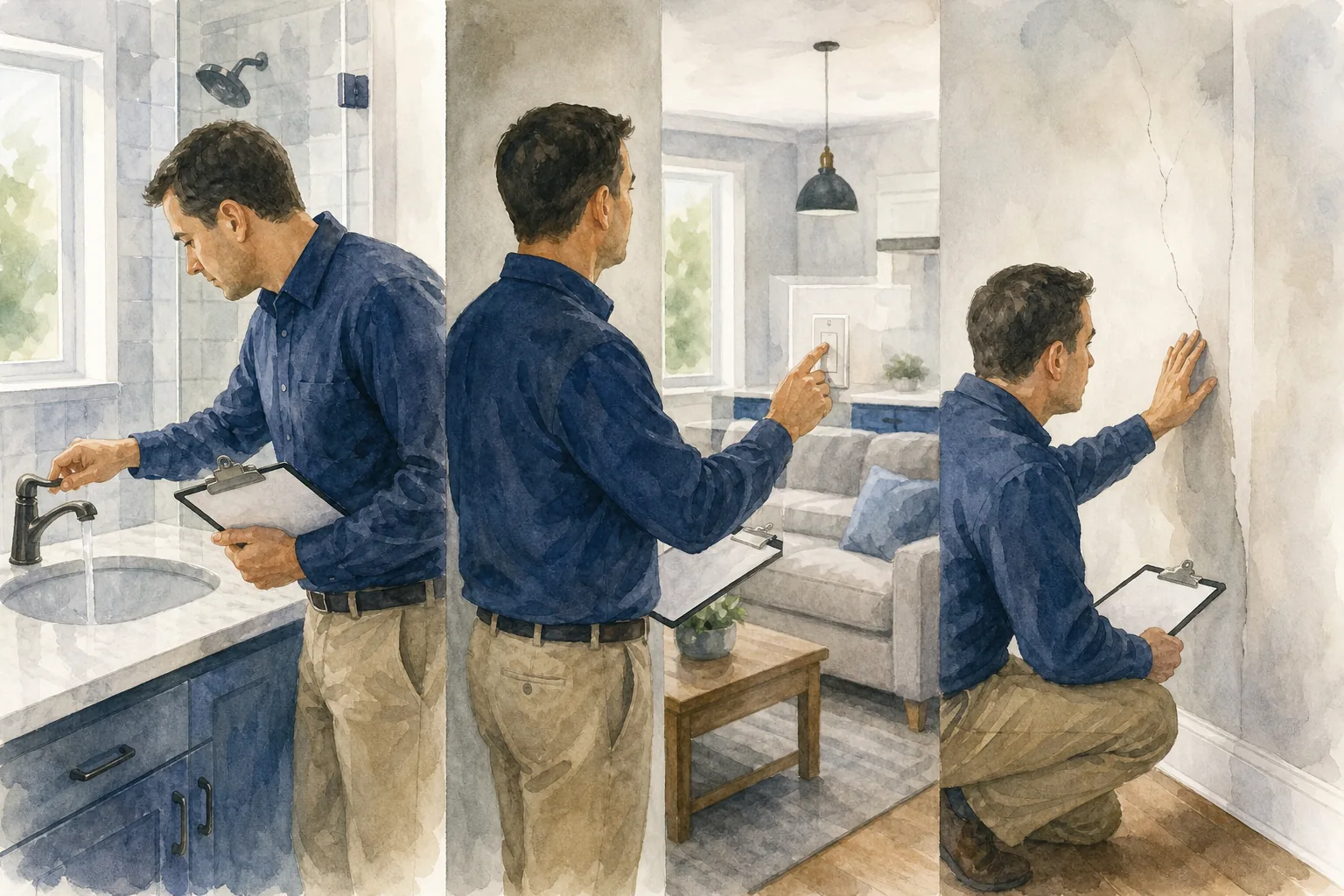
Home walkthrough interior inspection of plumbing and electrical

In the bathroom, flush every toilet and run the shower. Look for water pooling on the floor or around the tub base, that often signals a seal problem.

Step 4: Test Fixtures, Doors, Windows, and Included Items

All built‑in appliances and fixtures listed in the contract should be operational. Run the oven, stovetop, and microwave for a minute each. Verify that the dishwasher’s spray arm moves freely. If a washer or dryer is included, spin a quick cycle to check for vibrations.

Check door hardware. Locks should engage smoothly, and deadbolts should turn without resistance. Window tracks should glide without binding; any difficulty may require adjustment.

Make sure any items that were part of the sale, such as ceiling fans, a built‑in grill, or a security system, are still present and functional. If a promised fixture is missing, note it right away.

Step 5: Document Concerns and Decide What Needs Follow‑Up

Take clear photos of every issue you spot. A photo of a cracked wall, a leaking faucet, or a damaged roof shingle is more persuasive than a note alone. Write a brief description next to each photo, noting the location and why it matters.

Prioritize the items. Safety‑related problems (electrical, gas, structural) go first. Then address functional issues (non‑working appliances). Cosmetic concerns (paint chips, minor scratches) can be negotiated later or left for you to fix after closing. For issues that need a repair request after the inspection, my guide to negotiating repairs after a home inspection in Texas explains how to prioritize and discuss them.

Share the photo log with your REALTOR. If I’m representing you, I’ll use it to help you draft a repair request or ask the seller for a credit. If a repair requires a licensed professional, ask for proof of completion before you sign the final paperwork.

When you’ve collected all the data, compare it to the repair addendum in your contract. Anything that doesn’t match should be flagged for the seller to fix or credit.

Frequently Asked Questions

What is the purpose of a final walkthrough?

The purpose is to confirm that the home’s condition matches the contract and that any agreed‑upon repairs are completed before you close.

How far in advance should I schedule the walkthrough?

Schedule it as close to closing as possible, typically 24‑48 hours, so there’s little time for new damage to occur but enough time to address any issues.

Do I need to bring the original inspection report?

Yes, having the original report lets you compare current conditions with what the inspector noted, making it easier to spot new problems.

What if I find a problem after I’ve signed the contract?

If the issue is a breach of the repair addendum, you can request a repair credit or ask the seller to fix it before closing; otherwise, you may need to negotiate a post‑closing repair agreement.

Can I do the walkthrough myself, or should I hire a professional?

You can do a basic walkthrough yourself, but a licensed inspector can catch hidden hazards like structural deficiencies, mold, or faulty wiring that are hard to see.

Should I test the HVAC system during the walkthrough?

Yes. Turn on heating and cooling, check that the thermostat responds, and listen for odd noises. A malfunctioning system can be a major expense.

If you want a smooth closing, follow these steps, document everything, and lean on your REALTOR for any follow‑up. If you have questions about your own walkthrough, I’m always happy to talk it through with you.

Robbie English, REALTOR, Broker at Uncommon Realty

Key Takeaway: A thorough walkthrough catches missed repairs, protects your investment, and gives you leverage before you sign.
Pro Tip: Use the same checklist you used for the original home inspection. It helps you spot new issues that may have appeared since that first visit.

Y'all Might Want To Check These Out Too...

How to Choose the Right Home Inspector for YouHow to Choose the Right Home Inspector for You How Old is the Roof? A Buyers Guide to Roof Inspections When Buying A HomeA Buyers Guide to Roof Inspections When Buying A Home Buyer Beware: Identifying Health and Safety Hazards in Your Potential HomeIdentifying Health and Safety Hazards in Your Potential Home Sellers Beware: More Contracts Are Falling ThroughSellers Beware: More Contracts Are Falling Through

Filed Under: blog, Home Inspection

your dream home starts here
download closely
sell your home

Disclaimer: The content on this website is provided for general informational and educational purposes only. It is not legal, tax, accounting, financial, appraisal, or other professional advice. Reading these articles or contacting me through this website does not create a broker-client relationship. I am not an attorney, tax advisor, accountant, financial advisor, or licensed real estate appraiser. Only a licensed or certified real estate appraiser can provide a real estate appraisal. Only a licensed and certified appraiser can set a property’s value. Real estate laws, contracts, market conditions, and individual circumstances vary, so you should seek advice from the appropriate licensed professionals before making decisions.

start your home search

download closely

sell your home

Real Estate Resource Center by Robbie English

Pick a Topic:

Find Answers To Real Estate Questions Asked on Reddit

You may also like

How to Choose the Right Home Inspector for YouHow to Choose the Right Home Inspector for You How Old is the Roof? A Buyers Guide to Roof Inspections When Buying A HomeA Buyers Guide to Roof Inspections When Buying A Home Buyer Beware: Identifying Health and Safety Hazards in Your Potential HomeIdentifying Health and Safety Hazards in Your Potential Home Sellers Beware: More Contracts Are Falling ThroughSellers Beware: More Contracts Are Falling Through

Blog Article Topics

Absentee Owners • Austin Area Housing Market • Austin Real Estate • Austin Landlord Service • Build to Rent • Building A Home •  Cedar Park • Compensation • Distressed Homeowners • Downsizing • Financially Motivated • Find Your Place • First Time Home Buyers • For Sale By Owner • Greater Austin Housing Market • Green-Energy Efficiency • Homeowners Associations • Home Buying • Home Improvements • Home Pricing • Home Staging and Depersonalization • Home Values • Homeownership • Interest Rates • Investment and Vacation Rentals • Leander • Lifestyle • Living in Austin • Living in Cedar Park • Living in Central Texas • Living in San Antonio • Luxury Real Estate • Market Updates • Mortgage Financing • Moving to Austin • Moving to San Antonio • Moving to Texas • Multi-Generational Housing • My Advanced Education •  Negotiations • Off-Market Representation • Preparing for Closing • Probate and Estate Sales • Property Taxes • Real Estate • Refinancing Your Mortgage • Renting and Leasing •  Representation •  San Antonio Housing Market • San Antonio Real Estate • Selling Your Home • Selling Your Luxury Home • Short Term Rentals • Supply and Demand • Texas Property Management •  Trends

Search By Category

Blog Posts

Understanding What Are Closing Costs in Real Estate Transactions

Understanding What Are Closing Costs in Real Estate Transactions

Preparing Your Home for Sale: A Proven Strategy for Success

Preparing Your Home for Sale: A Proven Strategy for Success

Buying a Home Shouldn’t Feel Like a Sales Pitch

Buying a Home Shouldn’t Feel Like a Sales Pitch

Is It a Good Time to Buy a House in Austin?

Is It a Good Time to Buy a House in Austin?

The Influence of Hybrid Work on Housing Choices

The Influence of Hybrid Work on Housing Choices

Should I Buy an Austin Home Before or After Interest Rates Change?

Should I Buy an Austin Home Before or After Interest Rates Change? As Asked On Reddit

First-Time Homebuyer Tips for 2025: What’s Changed?

First-Time Homebuyer Tips for 2025: What’s Changed?

Robbie English, REALTOR, Broker

512-910-HOME (4663)

512-400-3082

830-953-5571

Uncommon Realty

Main Office:
5114 Balcones Woods Dr. Ste 307, Austin, TX 78759

Download My App
download my app

Common sense is a flower that doesn’t grow in everyone’s garden. That’s why we’re Uncommon!

I look forward to representing you! -Robbie

Robbie English Texas Real Estate Education Expert     Unlock MLS  Austin Board of REALTORS  Texas REALTORS  National Association of REALTORS  Highland Lakes Association of REALTORS

Find Homes For Sale in: Austin TX • Bee Cave TX • Burnet TX • Cedar Park TX • Cottonwood Shores, TX • Georgetown TX • Granite Shoals TX •  Highland Haven • Highland Lakes • Horseshoe Bay, TX • Hutto TX • Jonestown TX • Lago Vista TX • Lakeway TX • Leander TX • Marble Falls, TX • Manor TX • Pflugerville TX • Round Rock TX

My website uses state-of-the-art property search, including an interactive map search, to find homes for sale in the Central Texas Hill Country.

  • Buy
  • Sell
  • What’s My Home’s Value?
  • Search Properties
  • Service Area
  • Download App
  • Infographics
  • Real Estate Resource Center

© Copyright 2026 · All Rights Reserved · Robbie English, Broker, Property Manager, and REALTOR, National Instructor, Speaker

Privacy Policy • DCMA • Texas Real Estate Commission Information About Brokerage Services • Texas Real Estate Commission Consumer Protection Notice • Web Accessibility Help
All information deemed correct but not guaranteed.

Accessibility Adjustments

Powered by OneTap

How long do you want to hide the toolbar?
Hide Toolbar Duration
Select your accessibility profile
Vision Impaired Mode
Enhances website's visuals
Seizure Safe Profile
Clear flashes & reduces color
ADHD Friendly Mode
Focused browsing, distraction-free
Blindness Mode
Reduces distractions, improves focus
Epilepsy Safe Mode
Dims colors and stops blinking
Content Modules
Font Size

Default

Line Height

Default

Color Modules
Orientation Modules