A home inspection is one of the most valuable steps in the home buying process because it gives you a clearer picture of a property’s condition before you finalize the purchase. While every home will have a list of maintenance items, some inspection findings deserve much closer attention. The goal isn’t to find a perfect house, it’s to understand whether the problems are reasonable to address or signs of much larger concerns.
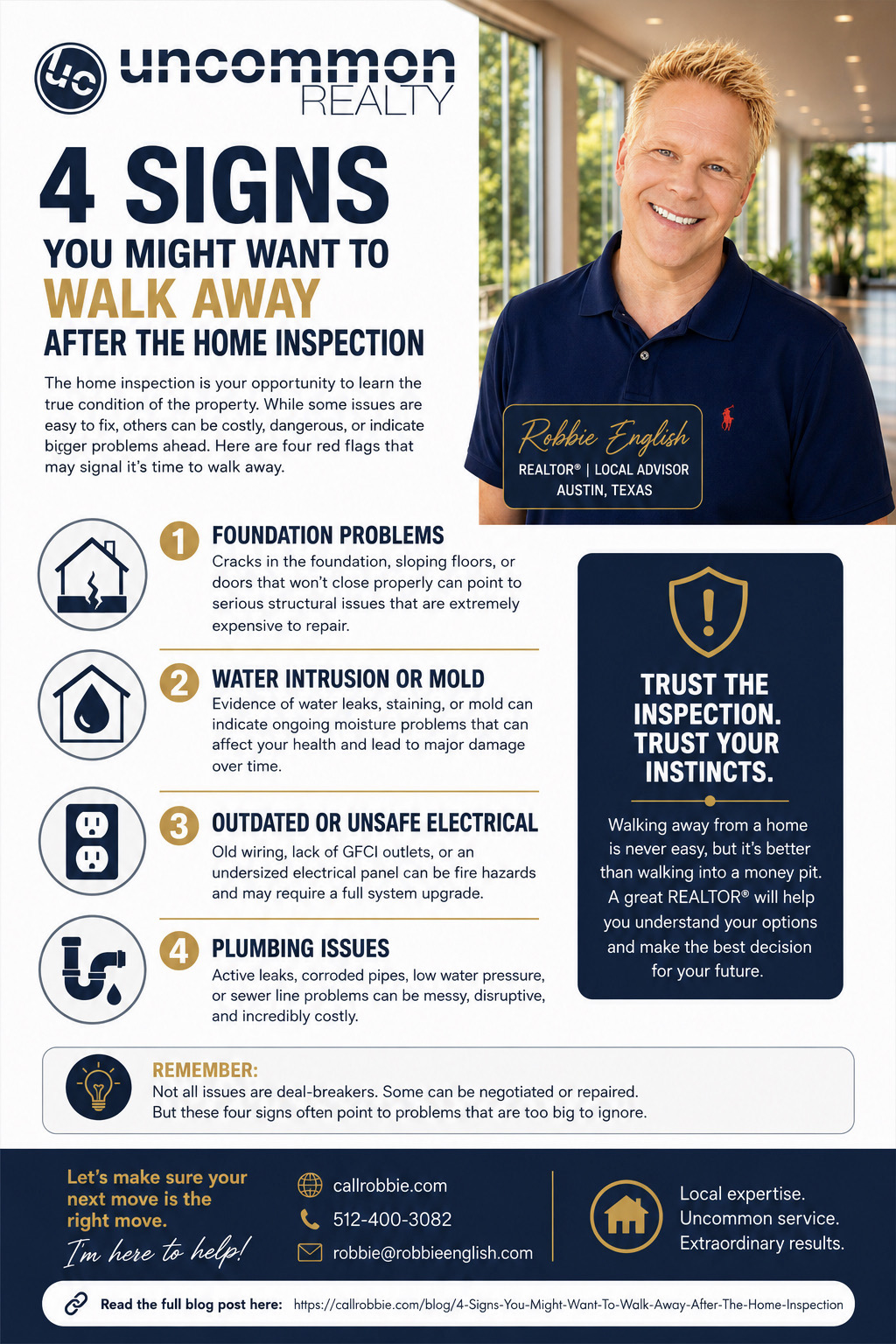
One of the biggest warning signs is significant foundation damage. Large cracks, uneven floors, sticking doors or windows, and evidence of structural movement may point to expensive repairs. While not every foundation issue is a deal breaker, serious structural concerns should always be evaluated by a qualified specialist.
Another major concern is water intrusion or mold. Water stains, active leaks, musty odors, or visible mold can indicate ongoing moisture problems that may damage the home and create health concerns. It’s important to determine both the source of the moisture and the cost of correcting it.
The inspection should also identify outdated or unsafe electrical systems. Older wiring, missing GFCI protection, overloaded electrical panels, or other code-related safety issues can increase fire risks and lead to costly upgrades. Electrical concerns should always be taken seriously.
Finally, major plumbing problems can become expensive very quickly. Active leaks, aging or corroded pipes, sewer line issues, or poor water pressure may require significant repairs after closing if not addressed beforehand.
It’s important to remember that these issues don’t automatically mean you should walk away from the purchase. In many cases, repairs can be negotiated with the seller, credits can be provided, or the purchase price can be adjusted to reflect needed improvements. The key is understanding the true scope of the problem before making a final decision.
An experienced REALTOR® can help you interpret the inspection report, negotiate repairs when appropriate, and determine whether moving forward or walking away is the smartest financial decision for your future.
Read the full article: https://callrobbie.com/blog/4-Signs-You-Might-Want-To-Walk-Away-After-The-Home-Inspection
Frequently Asked Questions
Should I always walk away if the inspection finds problems?
No. Most homes have inspection items. The key is determining whether the issues are manageable or represent significant financial or safety concerns.
Can I negotiate repairs after the inspection?
Yes. Buyers often negotiate repairs, request seller credits, or adjust the purchase price based on inspection findings.
Are foundation problems always expensive?
Not necessarily. Some are minor, while others require substantial structural repairs. A professional evaluation is often recommended.
Is mold always a deal breaker?
No. The source of the moisture should be identified first. Some mold issues are relatively easy to remediate, while others indicate larger problems.
How can my REALTOR® help after the inspection?
Your REALTOR® can help you understand the inspection findings, coordinate additional evaluations if needed, negotiate with the seller, and help you decide whether moving forward makes financial sense.
About Robbie English
I’m Robbie English, ABR, AHWD, BBA, C2EX, CRB, E-PRO, GRI, MRP, PSA, RENE, RPR, SFR, SRS, TAHS, TBS, TLS, REALTOR and real estate broker with Uncommon Realty.
With more than 40 years of real estate experience, I’ve helped buyers, sellers, and investors make informed real estate decisions throughout the greater Austin area. I’m also a national real estate educator and instructor, teaching real estate professionals across the country on contracts, negotiations, agency, inspections, pricing strategies, and risk management. That experience allows me to help clients understand not only what an inspection report says, but what it actually means for their transaction.
Every home and every buyer are different. I work closely with my clients to identify the neighborhoods that best fit their lifestyle, budget, commute, and long-term goals. Throughout the buying process, I help evaluate properties, interpret inspection findings, compare repair costs, negotiate effectively, and make decisions based on facts rather than emotion. My goal is to position every client for long-term success by helping them purchase a home they can enjoy with confidence for years to come.
Worth a look if you’re still researching this: Why You Don’t Want To Skip Your Home Inspection.
If you want to know what you actually qualify for before you start touring homes, get pre-approved first — it changes how sellers treat your offer.