If you’ve driven through a quiet Austin neighborhood and spotted a driveway wedged between two houses leading to a home that seems to disappear from the street, you’ve seen one of these setups in person. The lived experience of owning or selling a property like this is what this article is really about: not whether to buy one in the abstract, but what daily life and the ownership process actually look like once you’re in it.
I’m Robbie English, a seasoned REALTOR and Broker at Uncommon Realty. I’ve spent decades helping clients handle these specialized properties. I don’t just read about real estate. I live it, I teach it, and I train agents across the country on how to truly master it. That experience shapes everything I share here.
Quick Reference: What to Expect from a Tucked-Away Property
- Privacy and quiet are genuine benefits, but they come with access trade-offs that show up in daily life.
- Shared driveways can create friction between neighbors over maintenance costs and parking.
- Finding your address is harder than it sounds, and that affects deliveries, guests, and emergency response.
- The specific layout, whether you share access or hold it exclusively, changes the ownership experience significantly.
- Robbie English, REALTOR and Broker at Uncommon Realty, brings the strategic depth these properties require.
The Short Version on What These Properties Are
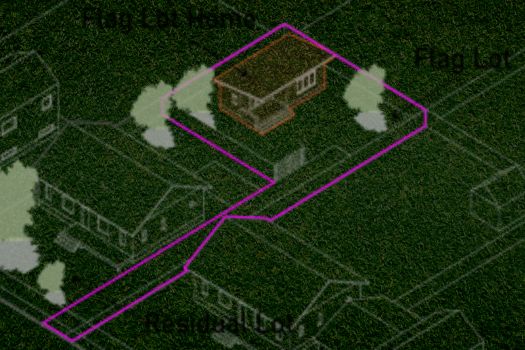
Picture a flag on a pole. The pole is the long, narrow driveway. The flag is the property itself, sitting behind one or more homes, away from the main road. That’s the shape of it.
These lots emerged as cities like Austin grew denser. Builders needed to activate land that lacked street frontage, so they carved access through existing lots, creating tucked-away homes with long driveways. The arrangement can feel like a private retreat. It can also feel isolated, depending on who you are and how you live.
If you want a deeper look at how these properties perform as investments, including resale value and financial considerations, I’ve covered that in detail separately: Are Flag Lots a Good Investment? Pros, Cons & Resale Value. What this article focuses on is the day-to-day ownership experience and what you actually handle once you’ve moved in or decided to sell.
Privacy Is the Biggest Perk
The most consistent thing buyers tell me when they’re drawn to these homes is that they want to stop feeling like they’re on display. No rush of cars outside the window. No steady stream of foot traffic past the front porch. Just a home that sits apart from the road and gives you room to breathe.
That buffer is real. Want to enjoy a quiet evening outside without street noise? Want to let a dog out without worrying about traffic? The long driveway creates separation that front-facing homes simply can’t replicate.
The privacy is legitimate. The question is whether it fits how you actually live, because those same characteristics that feel like peace and quiet when you move in can feel like inconvenience six months later if your lifestyle pulls in the opposite direction.
Handling Shared Driveways and Limited Space
Here’s where things get complicated. In many of these arrangements, that long access strip is shared with one or more neighboring properties. That means shared maintenance, shared costs, and shared decision-making with people you may barely know.
Gravel needs grading. Asphalt needs sealing. When a neighbor refuses to contribute, or disagrees about timing, those conversations get uncomfortable fast. I’ve watched clients find their ideal home and then spend the first two years of ownership in a low-grade dispute with the neighbor next door about repaving costs.
Emergency vehicle access is another issue that doesn’t get enough attention. A narrow or poorly marked drive can slow down a fire truck or ambulance response. If the access point isn’t clearly visible from the road, that delay is real.
When I advise clients on these properties, I always ask about their lifestyle before we get into any details. Hosting guests regularly? Working from home with frequent deliveries? Those aren’t minor considerations. They’re the difference between a home that works for you and one that quietly frustrates you every week.
Layout Matters More Than You Know
Not all of these arrangements are structured the same way. Some share a driveway with two or three other homes. Others have exclusive access. Some sit directly behind one property, while others are part of a small cluster of tucked-away residences reached by a longer shared lane.
These variations change everything about the ownership experience.
Sole access to a private driveway means no neighbors to negotiate with, but it also means full responsibility when something cracks, floods, or needs resurfacing. Shared access spreads the cost, but you’re at the mercy of others’ choices and financial situation when maintenance is overdue.
Before my clients make any decisions, I encourage them to request copies of plat maps and recorded easements. Not just to look at them, but to actually understand what they grant, what they require, and what disputes they’ve already been involved in. That’s the kind of detail that separates a smooth ownership experience from a difficult one.
The Hidden Cost of Being Hard to Find
Visibility is something you don’t think about until it’s gone. When your address isn’t obvious from the street, even simple tasks become a recurring problem. Delivery drivers miss you. Rideshare apps drop passengers at the wrong house. Furniture movers add a service charge because access is difficult.
Individually, none of these inconveniences is dramatic. Over the course of a year, they accumulate into a pattern that some owners adjust to and others find genuinely irritating.
On the selling side, the hidden location compresses your buyer pool. Some buyers actively seek out the seclusion. Others eliminate these properties from consideration the moment they see the address isn’t visible from the curb. You won’t run out of buyers, but you will need a more deliberate strategy to reach them. The marketing story matters as much as the price.
A Tucked-Away Retreat: With Real Trade-Offs
These properties have a loyal following, and the appeal is genuine. A different rhythm of living, quieter and more removed, is exactly what certain buyers want. But the ownership reality involves trade-offs that aren’t always obvious from the outside.
You give up some day-to-day convenience in exchange for seclusion. You take on a type of ownership that may involve shared rights, recorded easements, and neighborly negotiations that standard homeownership doesn’t typically require. Some people adapt quickly. Others never fully settle into it.
That’s why buyers and sellers of these properties need more than a generalist. They need someone who has worked through these transactions specifically, who knows where problems surface and how to address them before they become expensive.
Why Use Robbie English to Buy or Sell This Type of Property?

I’m Robbie English, REALTOR and Broker at Uncommon Realty. I don’t treat homes like checkboxes. These are puzzles, and I’ve spent decades learning how to solve the specific kind that tucked-away properties present. On top of working with clients directly, I train agents across the country on how to handle complex transactions. That background informs every piece of advice I give.
When I work with a buyer on one of these properties, I’m reviewing easements, flagging maintenance obligations, asking about lifestyle fit, and building a clear picture of what ownership will actually look like on a Tuesday afternoon. When I work with a seller, I’m building the marketing strategy that reaches the right buyers and positions the seclusion as a selling point, not a liability.
There’s no substitute for having worked through a lot of these. And I have.
What I Want You to Take Away
Buying or selling a tucked-away property is as much a lifestyle decision as a financial one. If privacy, quiet, and separation from street activity matter to you, this kind of home may be an ideal match. If visibility and easy access are priorities, you’ll want to go in with a clear-eyed plan for the friction points.
With the right guidance, the challenges are workable. I offer strategic thinking built on seasoned experience, and a ground-level understanding of what it really means to own and transact on properties like these.
Whether you’re considering a move, weighing a sale, or trying to make sense of what you’ve already committed to, I’m here to help. I’ll walk you through every easement, every access question, every nuance of the layout.
The details make all the difference. That’s exactly what I’ve spent my career learning. Let’s talk, let’s plan, and let’s use my experience to your advantage.