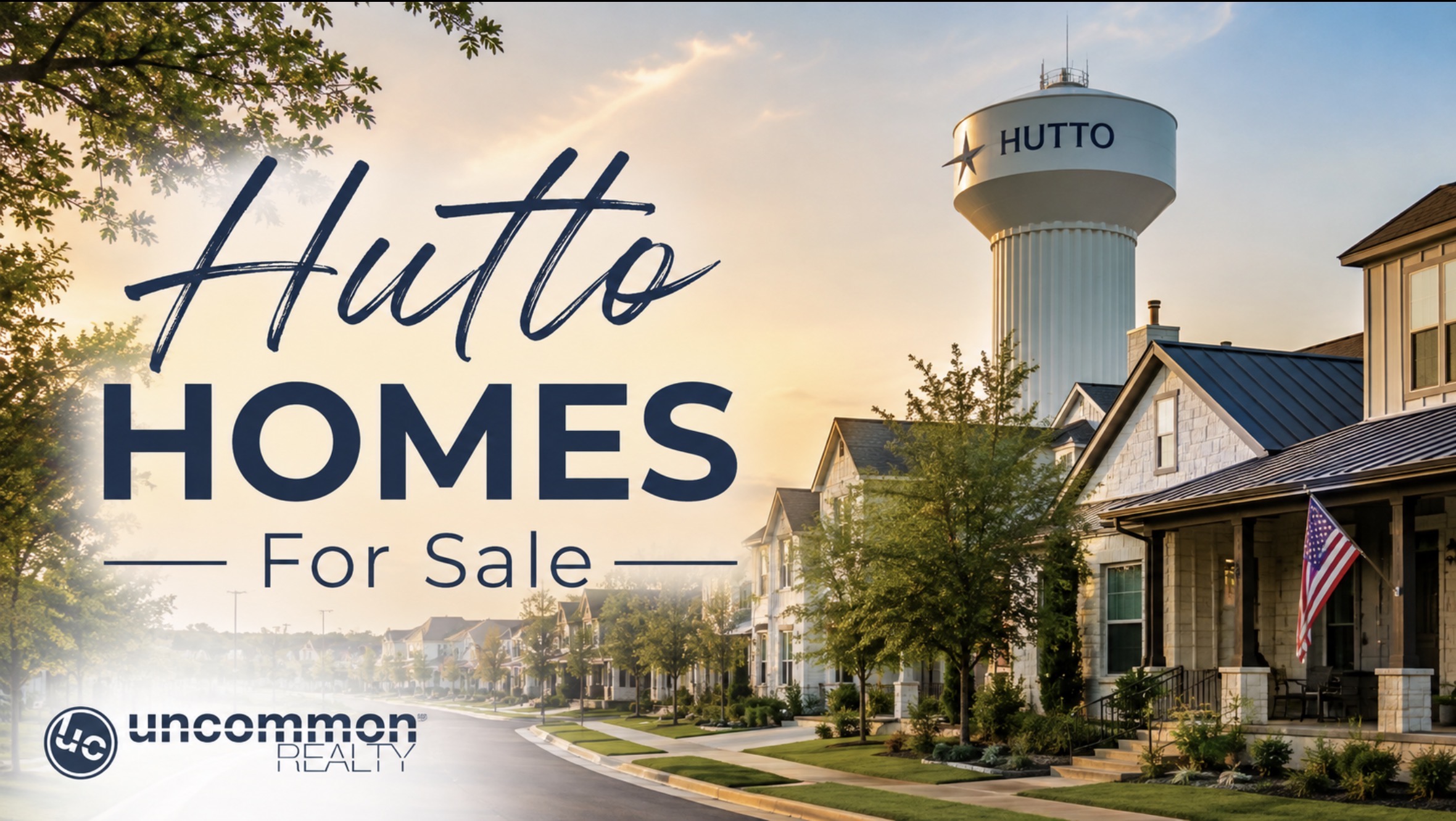
Hutto comes up a lot lately, usually from buyers who got priced out of Round Rock or Georgetown and started widening their search radius. What do I think? I think it’s one of the more interesting value plays left in the Austin suburbs right now, and I also think most people underestimate how fast it’s changing. Let’s get into what’s actually true, what’s driving it, and where I’d tell a friend to look first.
Too Long, Didn’t Read
- Hutto sits in Williamson County along the US-79 corridor, and it’s one of the fastest-growing cities in the entire country, jumping from roughly 28,000 residents in 2020 to nearly 50,000 by 2026.
- Home prices have run in the low $300,000s to low $400,000s through 2026 depending on the month and source, which still makes Hutto one of the more affordable entry points into the Austin metro.
- Samsung’s massive semiconductor fab plant in nearby Taylor is a genuine economic driver behind the growth, not just marketing copy, and it’s pulling jobs and housing demand into Hutto specifically.
- Hutto ISD is currently a single high school district, meaning every zoned student ends up at Hutto High School, home of the Hippos, which makes school planning simpler even if the district isn’t the top academic performer in the region.
- Downtown’s Co-Op District, built on a former cotton gin site, has turned into a genuine walkable hub with restaurants and civic buildings, and it’s still expanding.
Is Hutto a Good Place to Buy Right Now?
Yes, particularly if price point matters more to you than being first in line on school ratings or having an established downtown feel. Hutto is still in the middle of becoming whatever it’s going to become, and that’s exactly the appeal for a lot of buyers. You’re getting in before the Co-Op District fully build out, before the Samsung plant’s full economic ripple effect has played out, and at a price point that’s still noticeably below Round Rock or Georgetown for a comparable new-construction home.
What’s Actually Driving the Growth
Hutto sits in Williamson County along US-79, roughly midway between Round Rock and Taylor. The population numbers tell the real story here. The city recorded about 28,091 residents in the 2020 census, grew to roughly 42,661 by 2024, and estimates put it near 49,696 in 2026. That’s a growth rate that puts Hutto among the fastest-growing cities in the country, not just the region, and it happened in a handful of years.
The biggest driver isn’t a mystery. Samsung’s semiconductor fabrication plant in neighboring Taylor represents one of the largest single corporate investments in Texas history, and the ripple effects on housing demand in Hutto have been real and measurable. Workers, contractors, and support businesses tied to that plant and its supply chain have been steadily filling in Hutto’s newer neighborhoods, and that demand isn’t slowing down as the plant continues to ramp toward full production.
The city’s nickname, Hippo Capital of Texas, comes from a genuinely odd bit of local history: a hippo reportedly escaped from a circus train passing through town back in 1915, causing enough of a stir that the story stuck for over a century. Hutto High School’s mascot is the Hippo, and you’ll see hippo statues and murals around town. It’s a small thing, but it gives a fast-growing, fairly new suburb a sense of identity that a lot of comparably young communities don’t have.
Where the New Construction Is
Cottonwood Farms, Highlands North, Carmel Creek, and Durango Farms are the names that come up most often when buyers start touring new construction in Hutto. Each has its own builder lineup and price tiers, and the honest answer is that they’re all still evolving, so what’s available and what it costs can shift meaningfully month to month depending on which phase a builder has released. This is a market where working with an agent who’s tracking current inventory matters more than usual, because a listing site snapshot can be out of date within a few weeks.
Land for sale is also a real category here in a way it isn’t in more built-out suburbs. If you want to build custom rather than buy a production home, Hutto still has meaningful inventory of buildable lots, particularly toward the edges of the city where development hasn’t fully caught up yet.
Downtown and the Co-Op District
The most underrated part of Hutto right now, in my opinion, is what’s happening downtown. The Co-Op District is a roughly 35 acre mixed-use development built on the site of a former cotton gin cooperative, with the original grain silos from 1937 still standing at the entrance as a nod to the area’s agricultural roots. It’s now home to Hutto City Hall and the Hutto Public Library, along with restaurants like Jack Allen’s Kitchen, Southside Market and Barbecue, Top Notch Hamburgers, and Casa Jalisco. Future plans reportedly include additional residential, retail, an amphitheater, and a movie theater, which would make it a genuine entertainment and civic anchor for a city that, frankly, hasn’t had much of a traditional downtown before now.
If you’re the kind of buyer who wants a walkable core to your city, not just a subdivision, this is the piece of Hutto worth watching closely over the next few years.
Being Honest About the Schools
I’d rather tell you the real picture than oversell it. Hutto ISD is currently a single high school district, meaning every student zoned into the district ultimately attends Hutto High School. That has a practical upside: you don’t need to research multiple high school zones the way you would in a bigger district, since there’s only one outcome regardless of which Hutto neighborhood you choose. Academically, the district’s public ratings run more in the middle of the pack compared to some neighboring districts that get more attention for top rankings. That doesn’t mean the schools are weak, it means Hutto isn’t trading primarily on school reputation the way Dripping Springs or some Round Rock neighborhoods do. If school ranking is your top priority, go in with realistic expectations and do your own research on the specific campus your address would be zoned to, since ratings can vary meaningfully by individual school even within one district.
Hutto vs. Round Rock and Georgetown
This is the comparison I get asked about most, since a lot of Hutto buyers started their search in one of those two cities first. The honest breakdown: Round Rock generally costs more and gives you a more established suburb with more retail and dining already built out. Georgetown gives you a genuinely strong historic downtown and, if that’s a priority, the Sun City active adult community, at a price point that’s climbed a lot in recent years. Hutto costs less than both right now for comparable new construction, but you’re trading some of that established infrastructure and school district reputation for the lower price and the growth trajectory.
If you’re buying primarily as a long-term hold and you believe the Samsung plant’s economic impact will keep compounding, Hutto’s relative affordability today looks like an opportunity. If your priority is an established, finished neighborhood with mature trees and a settled feel right now, Round Rock or Georgetown will get you there faster, at a higher price.
Common Misconceptions I Hear
The first is that Hutto is too far out to be a serious option. On a map it can look like it’s in a different world from downtown Austin, but the US-79 corridor and the broader Williamson County job market, including the Samsung plant itself, mean a lot of Hutto residents aren’t actually commuting into Austin at all. Their jobs are increasingly local to the corridor.
The second misconception is that all of Hutto is brand new production housing with nothing else on offer. There’s a genuine mix here: newer master-planned neighborhoods, older established pockets closer to the historic downtown, and buildable land on the fringes if you want something custom. It’s not a one-note market, even though the growth headlines make it sound that way.
Practical Application: How to Shop This Market
Because Hutto is changing fast, treat any price you see online as a starting point for a conversation, not a firm number. Ask your agent to pull what’s actually closed in the last 30 days in the specific neighborhood you’re considering, not a citywide average, since new phases releasing in Cottonwood Farms or Carmel Creek can shift the comparable sales meaningfully from one month to the next.
If the Samsung plant’s proximity to a specific neighborhood matters to you, whether for a shorter commute or simply because you expect continued demand to support your home’s value, ask about drive times at actual shift-change hours, not off-peak. Traffic patterns tied to a major employer can be very different from general daily traffic.
One more thing worth doing before you tour: pull up a satellite map of the specific lot alongside the neighborhood’s build-out plan, if the builder or HOA will share one. In a fast-growing community, what’s an open field behind your backyard today can become the next phase of homes, a retention pond, or a future road within a year or two. Knowing which one you’re likely getting matters as much as the finishes inside the house.
Additional Considerations Before You Write an Offer
As with most newer Williamson County communities, check whether the specific property carries a MUD or PID tax on top of your standard county and school district tax. It’s common in Hutto’s newer neighborhoods and it directly affects your real monthly payment, not just the sticker price of the home.
Also worth checking: with growth this fast, infrastructure sometimes lags behind rooftops. Ask about planned road expansions, new schools under construction, and utility capacity for the specific neighborhood you’re considering, especially if you’re buying in one of the newest phases of a large master-planned community.
Resale timelines are worth thinking through too. In a market growing this quickly, new phases of a community can sometimes compete with your own resale down the line if a builder is still actively selling similar floor plans nearby at a discount to move inventory. That’s not a reason to avoid buying here, but it’s a reason to ask your agent how many additional phases a specific community has left before you assume your home will be the newest thing on the block indefinitely.
If you’re relocating for a job tied to the Samsung plant or its supply chain specifically, it’s worth having a conversation with your employer’s relocation coordinator, if one exists, about which Hutto neighborhoods other transferees have landed in. That kind of on-the-ground pattern often tells you more about day-to-day livability near a specific employer than any online ranking will.
I’d also encourage buyers to think a few years out rather than just at closing. A community growing this fast tends to keep adding amenities, retail, and infrastructure well after your closing date, which can be a genuine upside for long-term value even if it means a few years of construction noise nearby. That’s a real trade-off, not a hidden downside, and it’s worth deciding upfront whether you’re comfortable with a neighborhood that’s still actively under construction around you for a while.
Summary
Hutto is a genuine growth story backed by a real economic driver in the Samsung plant, not just cheap land and marketing. Prices are still meaningfully below Round Rock and Georgetown, the Co-Op District is turning into a real downtown, and the school district, while not a top academic performer, is at least simple to plan around with a single high school. Go in with realistic expectations on schools, get the real tax number on any new-construction lot, and work with someone tracking current inventory, not last month’s listings.
Frequently Asked Questions
Why is Hutto growing so fast?
The biggest driver is Samsung’s semiconductor fabrication plant in neighboring Taylor, one of the largest corporate investments in Texas history. It has pulled jobs, contractors, and support businesses into the surrounding area, with Hutto absorbing a large share of that housing demand.
Is Hutto too far from Austin for a normal commute?
It depends entirely on where your job is. If you work in downtown Austin, it’s a real commute along US-79 and I-35. If your job is anywhere along the Round Rock, Taylor, or greater Williamson County corridor, including the Samsung plant itself, Hutto is actually well positioned.
What is the Co-Op District?
It’s a roughly 35 acre mixed-use development in downtown Hutto, built on the site of a former cotton gin cooperative. It currently includes Hutto City Hall, the Hutto Public Library, and several restaurants, with more residential and entertainment space planned.
Is Hutto ISD a good school district?
It’s currently a single high school district, so every zoned student attends Hutto High School, which simplifies planning. Academically it isn’t a top-ranked district compared to some neighbors, so if school rankings are a top priority, research the specific campus your address would be zoned to rather than relying on the district’s reputation alone.
Are there still affordable options in Hutto?
Yes, relative to Round Rock or Georgetown. Recent 2026 sales have ranged roughly from the low $300,000s to the low $400,000s depending on the neighborhood and month, making it one of the more accessible entry points into the greater Austin metro right now.
Can I still buy land and build custom in Hutto?
Yes, particularly toward the edges of the city where development hasn’t fully caught up. There’s meaningful buildable-lot inventory here compared to more built-out suburbs, though availability and pricing shift as new phases of the larger master-planned communities get released.
Will a MUD or PID tax apply to a Hutto home?
Often, yes, if you’re buying in one of the newer master-planned communities like Cottonwood Farms, Highlands North, Carmel Creek, or Durango Farms. Ask for the property’s full effective tax rate, not just the base county and school tax, before you make an offer.
If you’re weighing Hutto against other Williamson County options, it’s worth seeing the real trade-offs side by side rather than guessing from listing photos. Georgetown and Leander both come up in the same searches, and each trades off price, schools, and commute differently than Hutto does. And if you’re specifically comparing new construction between these areas, it’s worth understanding how new construction actually works before you sit down with a builder’s sales office anywhere in the corridor.
Robbie English, REALTOR, Broker at Uncommon Realty.