I’m Robbie English, REALTOR and broker at Uncommon Realty here in Austin, and I want to walk you through something I’ve been fielding a lot of questions about lately: the zoning changes the state legislature passed last year. If you’ve seen a headline about Texas “overriding” local zoning and wondered what it actually means for your street, your lot, or your next rezoning notice, this is meant to clear that up. I read through the actual bill text and several legal and journalism sources rather than just repeat what’s floating around online, because this is the kind of topic where the details matter more than the headline.
TLDR (Too Long; Didn’t Read): What Texas’s New 2025 Zoning Laws Mean for Austin Homeowners
- Three Texas zoning bills from the 2025 legislative session took effect September 1, 2025, and each one shifts a piece of local control away from Austin City Hall.
- Senate Bill 15 caps minimum lot sizes for new subdivisions at 3,000 square feet in large cities, but Austin already allows lots as small as 1,800 square feet under its own 2024 rules, so this particular law changes little inside city limits.
- Senate Bill 840 lets developers build apartments and mixed-use housing on land zoned for office, retail, or warehouse use without going through a rezoning case.
- House Bill 24 raises the bar for neighbors to formally block a rezoning request, moving the protest petition threshold from 20 percent to 60 percent of nearby property owners.
- None of these laws touch deed restrictions, HOA rules, or your existing platted lot directly, so the real-world effect on you depends heavily on what’s zoned near your property.
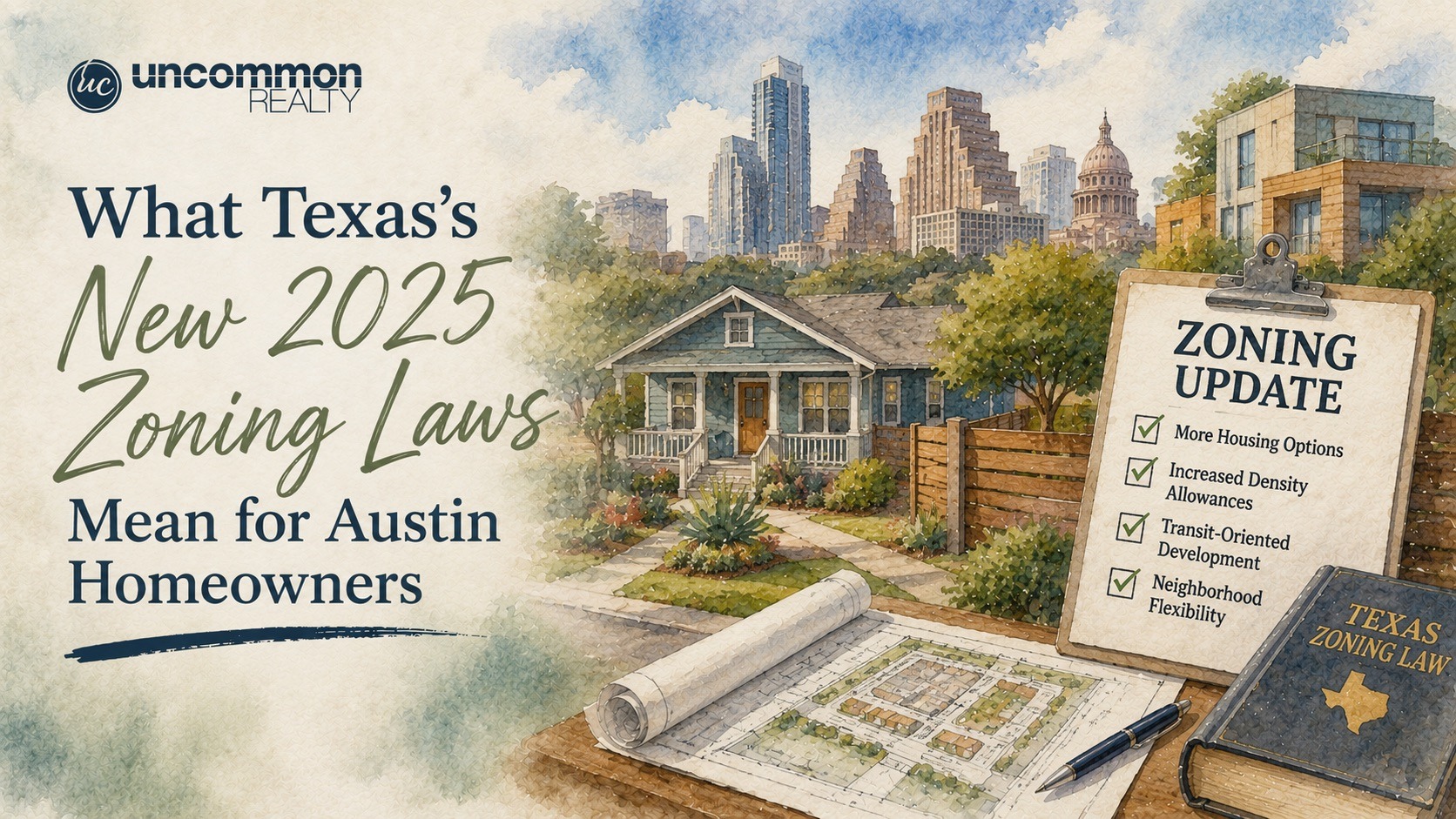
Three New State Laws Took Effect September 1, 2025
During the 2025 regular session of the Texas Legislature, three bills specifically aimed at local zoning authority passed both chambers and were signed by Governor Greg Abbott on June 20, 2025. All three took effect September 1, 2025: Senate Bill 15, Senate Bill 840, and House Bill 24. Each one applies to Texas cities with a population over 150,000 that sit wholly or partly in a county with a population over 300,000. That threshold covers roughly 19 of the state’s largest cities, and Austin, sitting inside Travis County, is one of them.
The stated goal behind all three bills was housing supply and affordability. Texas has grown fast, and lawmakers argued that local zoning rules in big cities were adding cost and delay to new housing at a time when the state needs more of it. Whether you agree with that reasoning or not, it’s worth understanding what each law actually does, because they don’t all work the same way and they don’t all affect Austin the same way.
Senate Bill 15: A New Ceiling on Minimum Lot Sizes (Austin Already Cleared It)
SB 15 prevents a qualifying city from requiring a residential lot in a new subdivision to be larger than 3,000 square feet, wider than 30 feet, or deeper than 75 feet. That’s a meaningful number. The bill’s early version, debated in Senate committee back in March 2025, proposed a floor as low as 1,400 square feet, but that number was negotiated upward to 3,000 square feet as a compromise between the House and Senate before final passage in June.
Two limits matter here. First, SB 15 only applies to tracts of land five acres or larger that are unplatted, meaning it’s aimed at new subdivisions being carved out of raw land, not at rezoning or subdividing an existing platted neighborhood. Second, it carves out exceptions near military installations, airports, and aquifer recharge zones, where cities can still enforce stricter standards.
Here’s the part that surprises people: Austin already went further than SB 15 requires. Back in May 2024, the Austin City Council passed the second phase of its HOME ordinance, cutting the citywide minimum lot size from 5,750 square feet down to 1,800 square feet for a single housing unit, effective that August. Since Austin’s own rule already allows smaller lots than the new 3,000-square-foot state ceiling, SB 15 doesn’t force any change inside Austin city limits. It matters more as a statewide floor going forward, and for other Texas cities that haven’t loosened their own subdivision rules the way Austin already has. If you own a home in an existing, already-platted Austin neighborhood, SB 15 doesn’t touch your lot at all.
Senate Bill 840: Housing Allowed on Old Office, Retail, and Warehouse Land
This is the one I’d pay closest attention to if you live near a commercial corridor. SB 840 requires qualifying cities, Austin included, to allow mixed-use and multifamily residential development on land zoned for office, retail, warehouse, or mixed-use purposes without requiring a rezoning case, a variance, or a special permit. In practice, that means a property owner with land zoned for an office park or a strip retail center can build apartments or mixed-use housing there without the public rezoning hearing process that used to apply.
The law also limits how much a city can restrict density, height, setbacks, and parking on these qualifying projects, and it addresses adaptive reuse specifically: an existing building at least five years old can convert to residential use if at least 65 percent of the building’s floor area is devoted to housing, and cities can’t pile on impact fees, new traffic studies, or utility upgrade requirements as a condition of that conversion.
Austin City Council members raised concerns about this one when it was moving through the legislature, worried that overriding local density, height, and parking rules could complicate the city’s own locally crafted affordable housing programs. Whether that plays out remains to be seen, but the practical takeaway for homeowners is this: if there’s a vacant office building, an aging strip center, or warehouse-zoned land near your property, it now has a more direct legal path to becoming housing than it did before September 2025.
House Bill 24: Neighbors Have a Higher Bar to Stop a Rezoning
Before HB 24, Texas law gave nearby property owners a specific tool sometimes nicknamed the “tyrant’s veto.” If owners of at least 20 percent of the land within 200 feet of a proposed rezoning signed a valid protest petition, state law required the city council to approve that rezoning by a three-fourths supermajority instead of a simple majority. In a contentious rezoning case, that higher bar was often enough to kill a project.
HB 24 raises the protest petition threshold from 20 percent to 60 percent of nearby property owners for rezoning cases that would increase residential capacity, and it restores the city council’s ability to approve those cases with a simple majority vote even when the higher petition threshold is met. That’s a real shift in leverage. Neighbors can still show up, speak at hearings, and organize opposition, but the formal legal mechanism that used to force a supermajority vote is much harder to trigger and, even when triggered, no longer guarantees the outcome it used to.
If you get a mailed notice about a rezoning case near your home going forward, know that the process behind it looks different than it did a year ago. I’d still encourage showing up to comment, since public input still matters to how council members vote, but the automatic procedural roadblock that used to exist is significantly weaker.
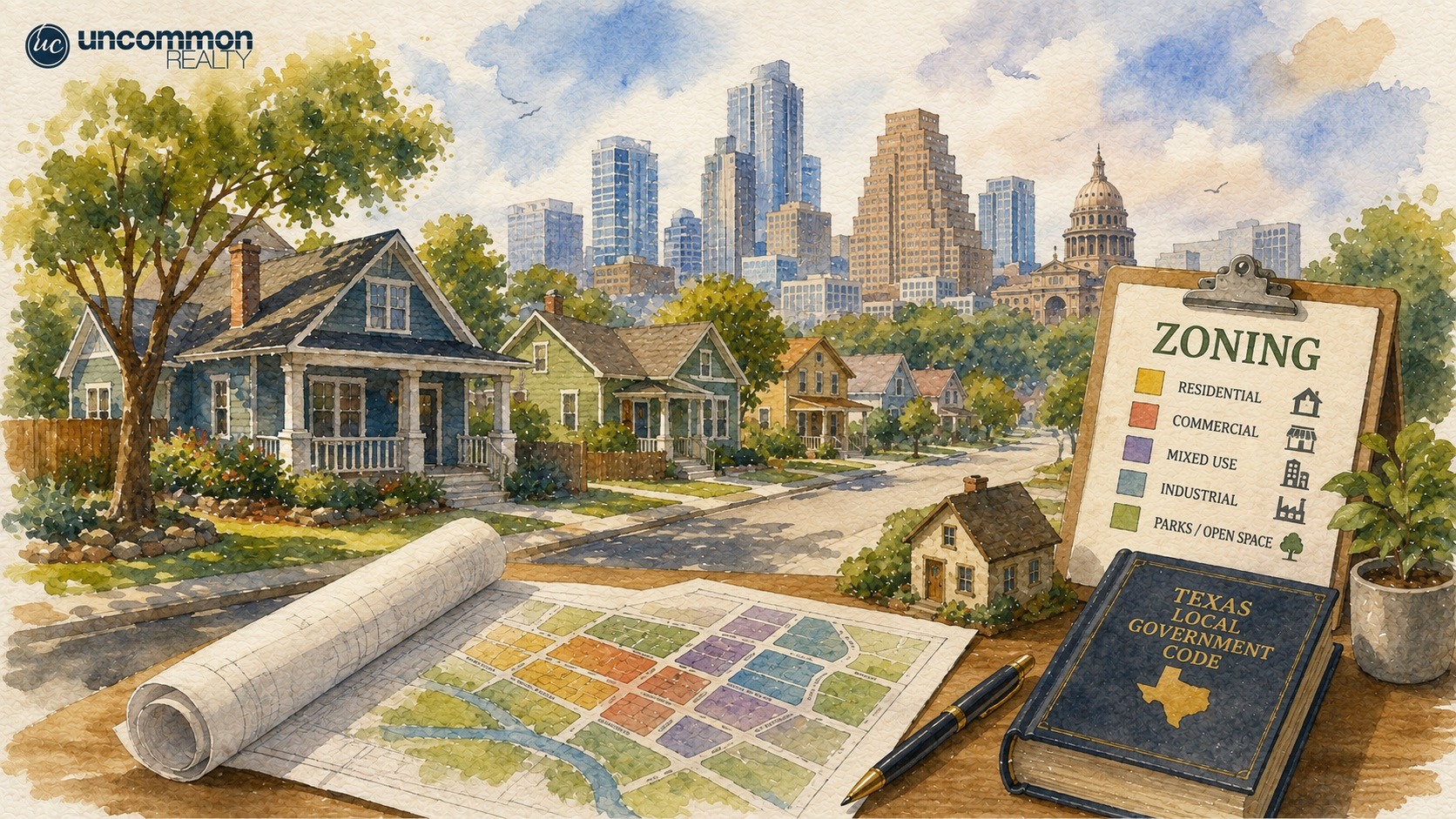
What These Laws Don’t Do
It’s worth being just as clear about the limits here, because I’ve heard some inaccurate versions of this story:
- None of these laws override deed restrictions or homeowners association covenants. Those are private contracts between property owners, and the state didn’t touch them.
- SB 15 doesn’t rezone or split your existing lot. It only applies to new subdivisions on unplatted land five acres or larger.
- SB 840 doesn’t apply to land already zoned single-family residential. It’s specifically about commercially zoned and mixed-use land.
- Austin still writes and administers its own zoning code. These laws remove specific tools the city used to have, primarily around subdivision minimums, commercial-to-residential conversions, and protest procedure, but they don’t hand the state direct control over day-to-day zoning decisions.
- Certain areas, including some near military bases, airports, and aquifer recharge zones, and adaptive reuse projects near heavy industrial sites, keep additional protections or exemptions under these bills.
What This Means If You’re Buying, Selling, or Staying Put
If you’re thinking about selling a property near a commercial corridor, particularly land zoned office, retail, or warehouse, it’s worth understanding that parcel’s redevelopment potential has changed under SB 840. That can be a meaningful factor in how a property is valued or marketed.
If you’re buying, especially outside Austin’s urban core in one of the newer subdivisions going up on formerly raw land, don’t assume the lot sizes and subdivision patterns you’re used to seeing will hold going forward. Builders now have more flexibility on lot dimensions in qualifying cities, subject to the 3,000-square-foot floor.
And if a rezoning notice ever lands in your mailbox for a property near you, I’m always glad to help you understand what it actually proposes and what your realistic options are for responding. I cover neighborhoods across the metro, and you can see more about the areas I work in on my Austin, TX area page.
My Take
These are recent laws, all barely a year old as of this writing, and cities are still working through exactly how to administer them. Some of the practical effects will show up gradually rather than overnight, especially with construction costs and interest rates still shaping what actually gets built regardless of what zoning now allows. My job as your broker isn’t to tell you these changes are good or bad. It’s to help you understand what’s actually different about the rules governing property near you, separate from the noise, so you can make a clear decision whether you’re buying, selling, or just want to understand what’s happening in your own neighborhood. If you want to talk through how any of this applies to a specific address, reach out any time. You can read more about my background on my About page.
Robbie English, REALTOR, Broker at Uncommon Realty.
You Might Also Find These Helpful
- get in touch with Robbie English
- Subagency in Texas After 2026
- Texas Is A Non-Disclosure State
- Debunking Myths About Real Estate Fees & Commission