Thinking about buying a home but not sure if your credit score is high enough? The numbers matter, but there’s a clear range for each loan type. Below you’ll see the exact scores you need, why those scores matter, and what you can do if yours falls short.
What Credit Score Do You Need to Buy a House?
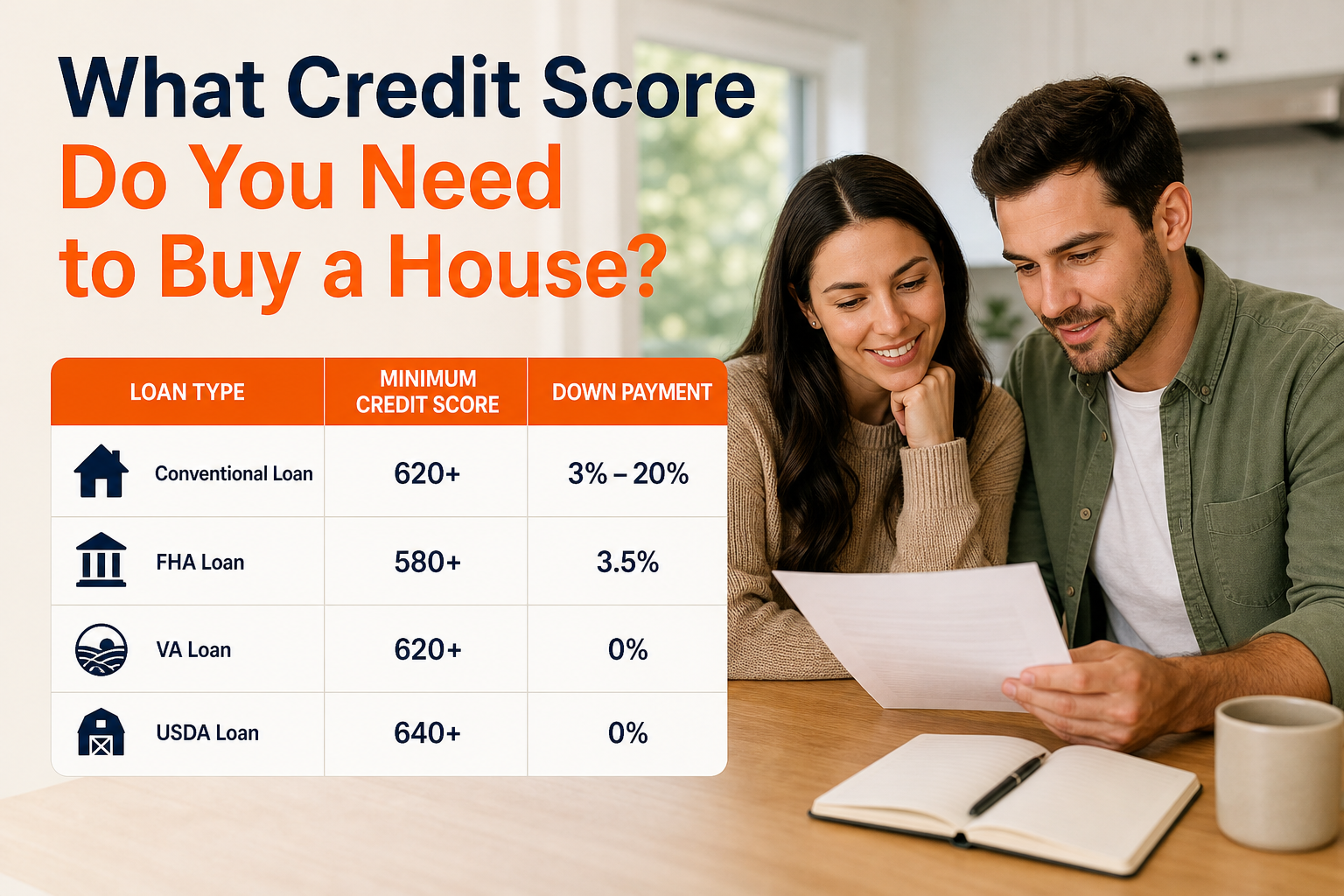
At a bare minimum, government‑backed loans let you qualify with a score as low as 500. The FHA, for example, will consider borrowers at 500 if they can put down at least 10% of the purchase price; with a 3.5% down payment the floor rises to 580. The USDA requires at least 640, while the VA looks for 620, though many lenders prefer 720 for the best rates. Conventional loans usually start accepting applications around 620, but a score of 740 or higher gets you the most favorable interest rates.
These thresholds come from the same data set that shows the sweet spot for low rates sits roughly 200 points higher than the absolute minimums. That means you might qualify with a 580 score, but you’ll likely pay a higher rate than a borrower at 760.
For a deeper look at how credit scores affect mortgage eligibility, check out the detailed breakdown on What Type of Credit Score Is Needed to Apply for a Mortgage Loan?. It walks through the fair‑credit bands and how they line up with different loan products.
For more information about FHA loan options, visit the loan information page.
Credit Score Requirements by Mortgage Loan Type
Below is a quick reference that lines up the most common loan programs with their minimum scores, typical down‑payment percentages, and any special notes. This matrix helps you spot the options that match your credit profile.
| Loan Type | Minimum Credit Score | Typical Down‑Payment | Key Note |
|---|---|---|---|
| FHA 203(b) Loan | 500 | 3.5% | Allows borrowing up to 96.5% of the purchase price, including repair costs |
| FHA Manufactured/Home Mobile Loan | — | — | Financing available for mobile homes and factory‑built housing, both land‑owned and park‑located |
| FHA 203(k) Loan | — | — | Borrow full cost of fixer‑upper plus renovation costs up to FHA loan limit |
| HomeReady loan | — (no hard floor listed) | 3% | Offers $2,500 credit toward down payment and closing costs |
| Conventional Loan | — (recommended 740 for best rates) | — | Mentioned only as a comparison example; no specific credit score or down‑payment requirements are provided |
Notice how loan programs can differ in credit requirements and down‑payment structure. Understanding that trade‑off can help you plan for moving costs, repairs, or an emergency fund.
For a side‑by‑side look at how conventional loans stack up against FHA, see Conventional vs FHA Loan. It breaks out the credit and payment differences in plain language.
Why Your Credit Score Is Only One Part of Mortgage Approval
Lenders look at more than a single number. Your debt‑to‑income (DTI) ratio, employment stability, cash reserves, and the property’s appraised value all weigh heavily in the decision.
For example, a borrower with a 630 score but a low DTI (under 30%) and a sizable down payment might receive a better rate than someone with a 680 score but a high DTI and a thin cash cushion. The risk profile shifts when you bring more cash to the table; it shows you can handle the loan even if your credit isn’t perfect.
Lenders often ask for a larger down payment to offset a lower score. A bigger down payment reduces the loan‑to‑value (LTV) ratio, which makes the loan less risky for the bank.
Besides the score, lenders examine your payment history, total debt balances, and the length of your credit accounts. Those factors together paint a picture of how reliably you manage credit over time.

What to Do If Your Credit Score Is Too Low to Buy a House
If your score lands below the minimum for the loan you want, you still have options. First, focus on the quick wins that can raise your score in a matter of months.
Pay down high‑interest credit‑card balances to bring utilization under 30%. Set up automatic payments so you never miss a due date; payment history is the biggest driver of your score. If you have old accounts you’re not using, keep them open, the length of credit history matters.
Another lever is to add positive payment data that isn’t automatically reported. Experian notes that services now let you report rent, utility, and streaming‑service payments to the bureaus, which can add several points.
Consider a credit-building product. These products let you demonstrate responsible usage without risking a hard pull on a regular credit card.
While you work on your score, you can also explore loan programs that tolerate lower numbers. The FHA’s 500‑score route, for instance, only requires a 3.5% down payment, which might be doable if you have savings ready. The VA and USDA also accept scores in the low‑600s for qualified borrowers.
Finally, get a free credit report from each of the three major bureaus and dispute any errors. A single mistaken late payment can knock off dozens of points.
Need a step‑by‑step plan for picking the right lender? Check out How to Choose a Mortgage Lender in 2026. It walks you through questions to ask, documents to gather, and red flags to avoid.
FAQ
What is the lowest credit score I can have and still buy a house?
The absolute lowest score accepted by FHA loans is 500, with a typical down payment of 3.5%.
Do government-backed loans have a minimum credit score?
Some government-backed loans have minimum credit-score requirements, while others may depend on the lender and the overall application.
Can I get a government-backed loan with a credit score under the lender’s minimum?
Eligibility depends on the loan type, lender, and the rest of your application.
How does my credit score affect my mortgage interest rate?
Higher scores generally lead to lower interest rates, but the rate you receive depends on your overall application and lender.
If I have a low credit score, should I save for a larger down payment?
Yes. A larger down payment reduces the loan‑to‑value ratio, which can offset a low score and help you qualify for a better rate.
Where can I check my credit score for free?
All three major bureaus, Experian, Equifax, and TransUnion, provide a free annual credit report; many banks also offer free score views on their online dashboards.
Conclusion
If you’re ready to move forward, start by pinpointing which loan program matches your current score and down‑payment ability. Then grab a free credit report, fix any errors, and begin the small‑step credit‑boosting actions that can lift you into a better rate bracket. When you feel confident about your numbers, schedule a pre‑approval with a lender, it’s the fastest way to know exactly how much house you can afford.
For a next‑step guide on handling the pre‑approval process, head over to Get Pre‑Approved! – Robbie English, Broker and REALTOR.
Ready to put this into practice? Robbie English, REALTOR, Broker was built for exactly this.