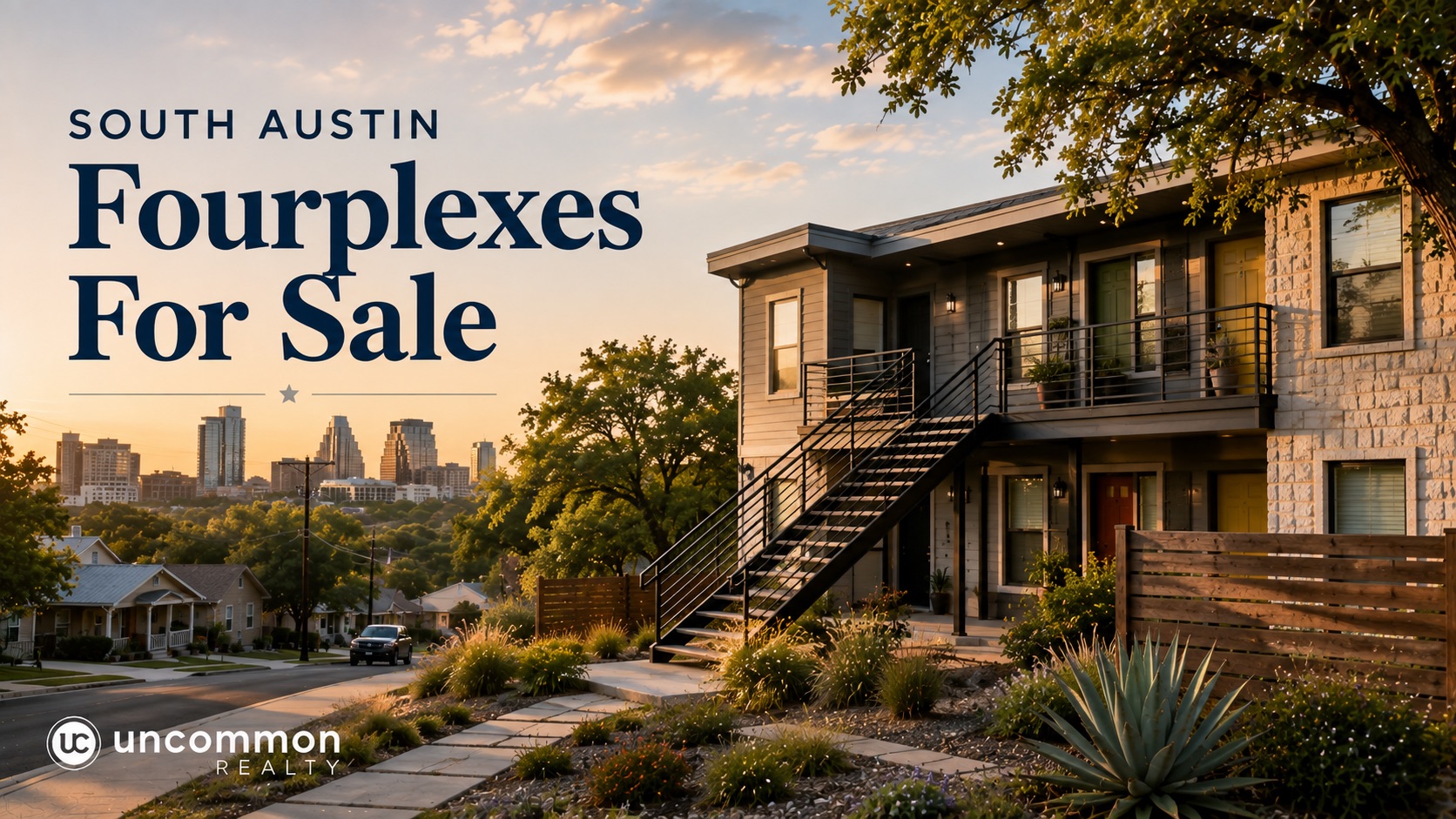
I’ve sold multifamily property all over Austin, and South Austin is one of the few parts of town where the fourplex is still a normal, everyday thing to see on a residential street, not a novelty. Walk the blocks around South Austin‘s older neighborhoods near South Lamar and South Congress and you’ll find fourplexes from the 1960s, 70s, and 80s sitting right next to single-family bungalows, a leftover of zoning decisions made decades before “missing middle housing” was a phrase anyone used. That older stock is exactly what makes a fourplex here interesting if you’re looking to house-hack or hold a rental. You get four doors on one loan, in a part of town where renter demand has stayed strong for years thanks to the walkability, the bar and restaurant scene, and the short commute into downtown. It’s not a strategy that works everywhere in Austin, but South Austin’s mix of established multifamily-zoned pockets and steady renter demand from both young professionals and families looking for a shorter lease term makes it one of the better places in the city to actually find one for sale.
Fourplexes for Sale in South Austin
Below is a live feed of fourplexes currently listed for sale in South Austin, pulled straight from the MLS. New listings show up here as soon as they hit the market, so check back often if you’re actively shopping.
Buying a Fourplex in South Austin
Most of the fourplexes you’ll find for sale in South Austin were built before the city’s current single-family zoning rules existed, and they sit on lots zoned for multifamily use (MF-1, MF-2, or similar designations) rather than on standard SF-zoned lots. That matters, because it means the four-unit use is already established and legal on those parcels; you’re not trying to create a fourplex from scratch, you’re buying one that’s already recognized by the city. Austin has also loosened its rules on single-family lots in recent years through the HOME initiative, which now allows up to three units on most SF-zoned lots as of early 2024, and expanded that further in August 2024 by lowering minimum lot sizes and opening the door to four or five units on some smaller lots. That’s worth knowing if you’re comparing a legacy fourplex to the idea of building new, but for anyone buying an existing fourplex in South Austin, the more relevant question is simply confirming the property’s current zoning and permitted use match what’s actually built on the lot. City records and a zoning verification letter will tell you that.
On the financing side, a fourplex is still considered residential property for lending purposes. Conventional financing through Fannie Mae or Freddie Mac covers properties with up to four units, whether you plan to live in one unit and rent the other three or buy it purely as a rental. Once you’re looking at five units or more, you’re into commercial multifamily financing, which works differently on rates, terms, and down payment. Loan requirements shift depending on whether you’ll occupy a unit yourself, so talk to a lender early and confirm current guidelines before you get attached to a property. The rules on down payments and reserves change often enough that I’d rather you hear them straight from a lender than from me.
Because so much of South Austin’s fourplex stock is older, due diligence matters more here than it would on new construction. Start with the basics: verify the legal unit count with the city matches what’s physically on the property, and pull permit history to make sure additions or renovations were done with permits rather than added on quietly over the years. Ask for copies of all existing leases so you know what you’re inheriting in terms of tenants, rent, and lease-end dates. And walk the property with an eye for deferred maintenance that’s common in older multifamily buildings, things like foundation movement, roof age, aging electrical panels, and plumbing that may still be original. None of this is disqualifying, but it should shape your offer and your inspection period.
Who a Fourplex Fits
A fourplex tends to make the most sense for two kinds of buyers. The first is someone who wants to live in South Austin but needs the rental income from the other three units to make the numbers work, a form of house hacking that lets you get into a walkable, in-demand part of town you might not afford as a standalone single-family purchase. The second is an investor who already owns rental property and wants to add units without stepping up into commercial financing and management. Either way, it helps to go in comfortable with being a landlord, or with lining up a property manager, since four units means four sets of tenants, four leases, and ongoing maintenance across the whole building. If that fits how you want to use your money and your time, South Austin’s older multifamily pockets are worth a serious look.