A temporary rate buydown can make your first mortgage payments easier, but the lower payment does not last. I’ll explain how the math works, who usually funds it, which loans may allow it, and what happens when the payment reaches the full note rate.
With over 40 years in Texas real estate, I’ve learned to judge a buydown by the payment you can handle after the discount ends, not by the first payment on the worksheet.
What Is a Temporary Rate Buydown?
A temporary rate buydown uses a funded account to cover part of your scheduled mortgage payments for a limited period. Your mortgage note keeps its agreed terms. The subsidy lowers the amount you pay during the opening years; it does not change the note rate.
Take a 2-1 buydown. With a fixed note rate of 7%, a 2-1 subsidy can make your payment equivalent to a payment calculated at 5% in year one and 6% in year two. You pay the full 7%-based amount from year three onward. The note rate remains 7% throughout.
Common structures include:
- 1-0: payments are calculated using a rate one percentage point below the note rate during year one.
- 1-1 Temporary Rate Buydown: payments are calculated using a rate one percentage point below the note rate during each of the first two years.
- 2-1: payments use a rate two percentage points below the note rate in year one and one percentage point below it in year two.
- 3-2-1: payments use a rate three, two, then one percentage point below the note rate over the first three years.
Compare the written payment schedule for each offer. Check the length of its subsidy, the funding source, and the full payment you will owe afterward.
Funding rules depend on the loan program. For VA loans, the VA’s temporary buydown guidance lists the seller, lender, builder, or veteran as possible funding sources. Ask your lender which rules apply to your loan.
A buydown agreement also matters after closing. It should explain where the funds sit, how the servicer applies them, and what happens if you sell or refinance early. Read that agreement before you treat the savings as yours.
| Structure | Rate discount pattern | Payment question to ask |
|---|---|---|
| 1-0 | Payment based on a rate one percentage point below the note rate in year one | Can I handle the full payment next year? |
| 1-1 Temporary Rate Buydown | Two-year temporary period; qualification uses the full interest rate | Can my budget handle the full payment after the temporary period? |
| 2-1 | Payment based on a rate two percentage points below the note rate in year one, then one point below in year two | What income or cash reserve covers the step-up? |
| 3-2-1 | Payment based on a rate three, two, then one percentage point below the note rate | Can I handle the largest payment jump after year three? |
How to Calculate Savings, Total Cost, and Break-Even
The cost of a temporary rate buydown equals the payment subsidy during the discounted period. The lender calculates the difference between the full payment and each reduced payment, then adds those monthly differences together.
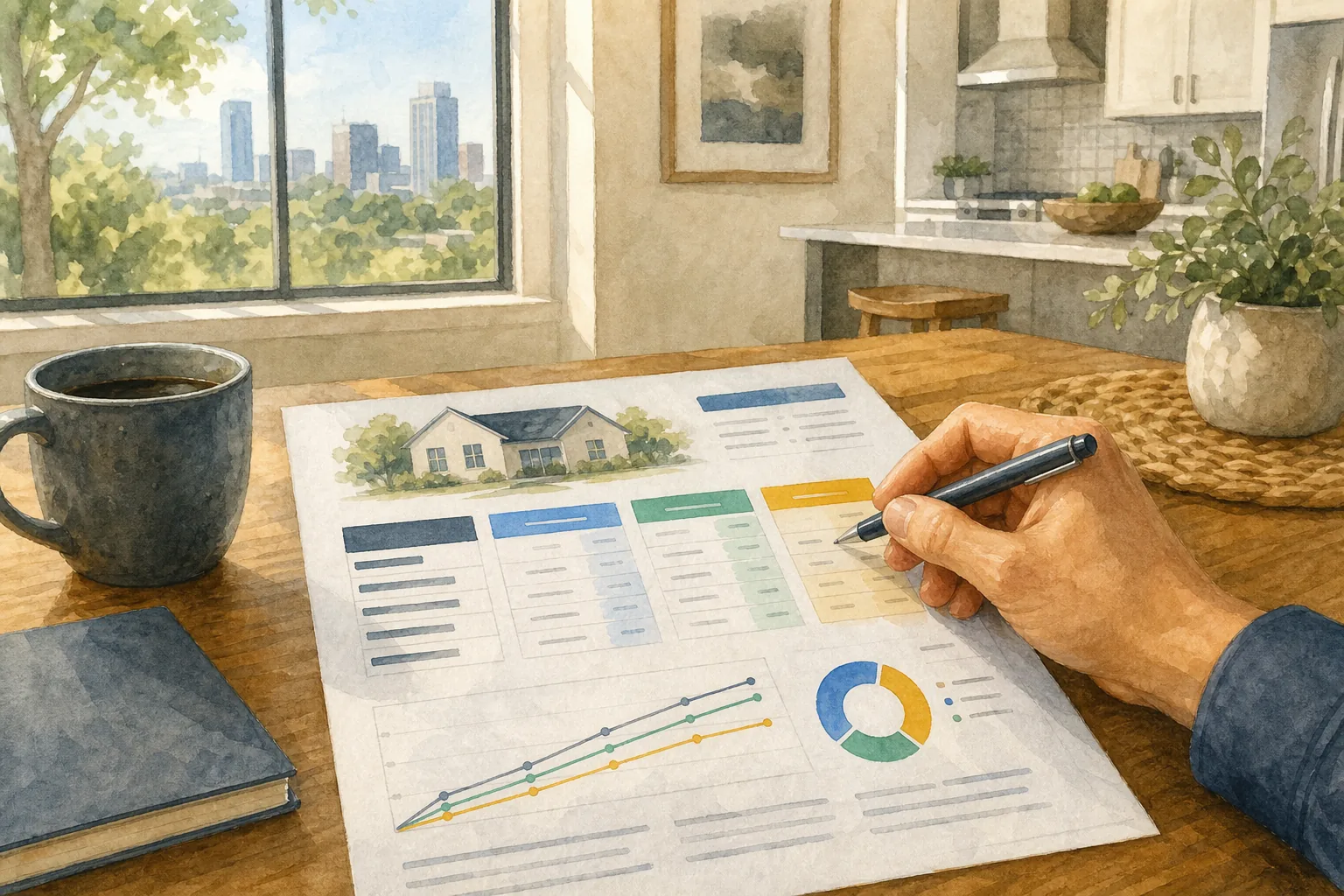
Here’s a simple example. Compare the full principal-and-interest payment with the reduced payment for each year of the buydown. The difference between those payments represents the monthly savings. Multiply each monthly difference by the number of months in that period, then add the yearly subsidies together to estimate the buydown cost.
That figure covers principal and interest only. Property taxes, homeowners insurance, mortgage insurance, and association dues may not change at all. Your total monthly housing payment can therefore remain higher than the buydown illustration suggests.
Use this sequence when reviewing the lender’s worksheet:
- Write down the full note rate and payment.
- Record the reduced payment for each year.
- Subtract each reduced payment from the full payment.
- Multiply each monthly difference by the months in that period.
- Add the yearly subsidies together.
Then compare the buydown with other uses for the same seller credit. The money might instead reduce closing costs, cover prepaid items, or help preserve your emergency reserve. My guide to closing costs explains why the cash due at closing can include more than the down payment.
Break-even works differently when you pay for a permanent rate reduction. If you use discount points, divide the upfront cost by the monthly savings to estimate how long it may take to recover that cost. A refinance or sale before that point may prevent you from recovering the expense.
With a temporary buydown, compare the funded subsidy with other uses for that money. If you supply the funds yourself, you are setting aside money for future payments; that alone does not reduce the note rate or create the continuing savings of discount points. Compare total costs and the agreement’s unused-fund terms before choosing.
Tax treatment deserves a separate question. Buydown funds may relate to prepaid interest, but the tax result depends on how the transaction is structured and your circumstances. Ask a qualified tax professional before assuming the cost is deductible.
Who Pays for a Buydown and Which Loans Allow One?
The seller or builder most often pays for a temporary rate buydown. In a resale transaction, the request becomes part of the offer. In new construction, the builder may present a buydown as an incentive. Either way, the credit must fit the loan program’s limits and the contract terms.
Some lenders fund temporary promotions. Those offers can have strict eligibility dates, property limits, or occupancy rules. The lender still has to approve the full loan, and the offer may not be available for every borrower.
For certain temporary buydown structures, the seller, lender, builder, or veteran may be a possible payer. That does not mean every loan permits every structure. Your lender must confirm the current rule, the required agreement, and the treatment of unused funds.
Other loan programs may allow temporary subsidy plans when the structure meets investor requirements. Government-backed programs can have their own rules. Loan type alone does not answer the question. The property, occupancy, seller credit, loan amount, and underwriting file all matter.
Seller credits also have limits. A credit cannot simply become cash back for any purpose. If the buydown costs more than the permitted contribution, the structure may need to change or the parties may need to negotiate another use for the funds.
Before you make an offer, ask the lender for written answers to these questions:
- Is the buydown allowed for this loan type?
- Who may fund it?
- What is the maximum seller or builder contribution?
- What happens to unused funds if I sell or refinance?
- Does the appraisal or purchase price affect the credit?
I also recommend reviewing how to choose a mortgage lender before you compare buydown offers. A low first-year payment means little if the lender cannot explain the note rate, fees, credit limits, and later payment in plain English.
Underwriting, Qualification, and the Risk of Payment Shock
A temporary rate buydown usually does not let you qualify using the lower payment. The lender generally underwrites the loan at the full note rate. That rule protects you from qualifying for a payment that exists only for a short time.
Imagine qualifying at the 7% payment while paying the first year at the 5% payment. The difference can help your cash flow, but it does not remove the 7% obligation. Your budget needs to pass both tests.
Payment shock arrives when the subsidy ends. A 2-1 structure creates one increase after year one and another after year two. A 3-2-1 structure spreads the subsidy over three years. Review every scheduled payment increase, including the move to the full payment.
Before choosing a structure, build your budget around the permanent payment. Then test it against likely changes such as a new insurance premium, a property tax adjustment, repairs, or a temporary drop in income. Do not count on refinancing. Rates may not fall, your home may not appraise as hoped, or your credit and income may change.
Set aside part of the early savings if you can. That reserve can help you absorb the later increase. It is usually safer than spending every discounted dollar on furniture or upgrades during the first months of ownership.
A buydown also does not fix an unaffordable home. If the full payment only works under perfect conditions, the lower opening payment may hide the problem. I would rather see you buy a home with a payment you can manage now than depend on a future raise or refinance.
In Texas, I also want buyers to separate the mortgage payment from ownership costs. Taxes and insurance can change independently of the buydown. Review the full estimate, not only the principal-and-interest line.
Temporary vs. Permanent Buydowns: Which Approach Fits?
A temporary rate buydown lowers the payment for a short opening period. A permanent buydown uses discount points to lower the interest rate for the full loan term. They may look similar on a payment quote, but they solve different problems.
| Question | Temporary buydown | Permanent buydown |
|---|---|---|
| Who often pays? | Seller or builder | Usually the buyer |
| How long does the payment benefit last? | Usually one to three years | For the loan term |
| What happens later? | Payment returns to the note-rate amount | Payment stays lower |
| Main planning test | Can you handle the later increase? | Will you stay long enough to recover the points? |
Temporary relief may fit a buyer who expects a clear income change or plans to move before the payment reaches its full level. It can also give a seller a way to negotiate without cutting the contract price.
Permanent points may fit a buyer who has extra cash and expects to keep the mortgage for many years. But the rate reduction per point varies. Never assume that one point always produces the same rate change.
That distinction is the heart of the decision.
Start by comparing the full payment. Then look at the credit, the cash needed at closing, the likely holding period, and the risk of a refinance plan. The right choice depends on those facts, not on the most attractive first-year number.
If you are preparing an Austin-area offer, the Texas home offer process can help you think through seller-paid costs alongside price and other terms. You are free to choose any lender or provider. My role is to help you understand the tradeoffs.
FAQ
Is a temporary rate buydown worth it?
A temporary rate buydown may be worth it when another party funds it and you can afford the full payment later. It may help with early cash flow, but it does not permanently reduce your note rate. Compare the full payment with your budget before accepting the lower opening payment.
Who usually pays for a temporary rate buydown?
The seller or builder usually pays for a temporary rate buydown through a negotiated credit. Some lenders fund special programs, and some loan structures may allow the borrower to contribute. Your lender must confirm who may pay and whether the contribution fits the loan rules.
Does a temporary buydown lower the payment forever?
No, a temporary rate buydown lowers the payment only during the agreed period. After that period, the payment returns to the amount based on the permanent note rate. Taxes, insurance, and mortgage insurance may also affect your total payment, so review the complete estimate.
Can I qualify using the lower buydown payment?
Usually, no. Underwriting generally uses the full note-rate payment rather than the discounted payment. That means you must qualify for the later obligation even though your first payments are lower. Ask the lender to show both figures before you make a purchase decision.
What happens if I refinance or sell during the buydown?
If you refinance or sell during a temporary rate buydown, unused funds may be handled under the buydown agreement. They might be applied, returned, or transferred under the applicable rules. Ask for that clause before closing, and do not assume you will receive the remaining balance.
Conclusion
I’d consider a temporary rate buydown when the full payment already fits your budget and the seller or builder funds meaningful early relief. Before signing, ask your lender for the full payment schedule, total subsidy, contribution limits, and unused-fund rules. Then review those numbers with your Texas real estate professional and make the choice that still works after the discount ends.
If you want to discuss how a buydown fits your Austin-area offer, bring the lender’s payment schedule and credit estimate to our conversation. Robbie English, REALTOR, Broker at Uncommon Realty.