Robbie English, Broker and REALTOR

Helping Austin Home Buyers and Sellers Make Confident Real Estate Decisions

  • Buy
    • Search Homes For Sale
    • Featured Listings
    • Get Pre-Approved
    • Schedule a Buyer Consultation
    • Hire Me As Your Buyer’s Agent
    • Buyer Guides
      • Austin Home Buyer’s Guide
      • Austin Real Estate Guide
      • Austin Relocation Guide
      • Making an Offer
      • What Are Closing Costs?
      • Closing: Now What?
      • Financial Terms Glossary
    • Download The App
    • Neighborhood Guides
      • Neighborhood Guides
      • Highland Lakes Neighborhood Guides
    • Event Guides
      • Austin Metro Event Guides
      • Highland Lakes Event Guides
  • Sell
    • Sell With Me
    • Get Your Home’s Value
    • Schedule a Seller Consultation
    • Off-Market Representation
    • Market Snapshot
    • Seller’s Guide
      • Austin Home Sellers Guide
      • 11 Steps To Selling Your Home
      • Pricing Your Home
      • Marketing Your Home
      • Adding Value To Your Home
      • Showing Your Home
  • Rentals
    • Owner Portal
    • Featured Rentals
    • Rent
      • Resident Resources
      • Resident Portal
      • Tenant FAQ
      • Resident Benefit Package
      • Wear and Tear vs. Damage
  • Service Area
  • Blog
    • Find By Topic
    • Real Estate Resource Center
    • All Blog Posts
  • About
    • Testimonials
    • Robbie
    • Robbie’s Advanced Education
    • Uncommon Realty
    • Uncommon Diversity
    • Uncommon Path
  • Contact
Home » Step‑by‑Step Guide to Prepare Your Home for a Home Inspection

Step‑by‑Step Guide to Prepare Your Home for a Home Inspection

September 17, 2026 by Robbie English, REALTOR, Broker, ABR, AHWD, BBA, C2EX, CRB, E-PRO, GRI, MRP, PSA, RENE, RPR, SFR, SRS, TAHS, TBS, TLS

Got an inspection on the calendar? A tidy, accessible house with working systems and paperwork ready will keep the process smooth and the buyer happy. Below is a step‑by‑step guide that walks you through everything you need to do before the inspector walks through the front door.

Table of Contents

  • Step 1: Clean, Declutter, and Make Every Area Accessible
  • Step 2: Check the Exterior, Roof, Drainage, and Foundation Runoff
  • Step 3: Find Leaks, Plumbing Problems, Electrical Concerns, and Odors
  • Step 4: Test HVAC, Lights, Smoke Detectors, and Carbon Monoxide Alarms
  • Step 5: Document Repairs and Prepare for Inspection Day
  • FAQ

Step 1: Clean, Declutter, and Make Every Area Accessible

Start with the rooms the inspector will see first, the living room, kitchen, and bathrooms. Pick up toys, magazines, and pet gear. Put shoes in a rack, store away personal photos, and clear countertops. A clean surface shows that the home has been cared for, and it gives the inspector a clear view of walls, flooring, and fixtures.

Next, tackle closets, utility rooms, and the garage. Pull boxes away from the water‑heater, HVAC unit, and electrical panel. Open the garage door fully so the inspector can see the foundation wall. If you have a crawl‑space access panel, remove any stored items and set the hatch open.

By clearing pathways, you reduce the chance of a “cannot access” note on the report.

And here’s a quick tip: keep a basket in each hallway for any stray items you discover while you clean. When the basket is full, toss the contents into a storage bin, the inspector never sees the mess, and you stay organized.

When you’re done, you’ll have a home that looks presentable and a floor plan that lets the inspector move freely. Top Ways to Stage a Home for Sale offers more ideas on how a tidy space can boost buyer perception.

Step 2: Check the Exterior, Roof, Drainage, and Foundation Runoff

The inspector will walk around the house first, so give the curb appeal a quick once‑over. Pick up leaves, twigs, and debris from the porch and steps. Trim back shrubs that hug the siding, they can hide rot or pest damage.

Inspect the roof from the ground if you can safely see it. Look for missing shingles, cracked flashing, or sagging areas. If you spot a loose shingle, tap it down with a hammer and a roofing nail.

Gutters should be clear of leaves and debris. A clogged gutter can cause water to back up and pool near the foundation, a common red flag. Run a garden hose through the downspouts to confirm they discharge away from the house; add a splash block if needed.

Finally, walk the perimeter and check the grading. The soil should slope at least six inches in the first ten feet away from the foundation. If it doesn’t, add a layer of compacted soil or a French drain to guide water away.

Key Takeaway: A well‑maintained exterior not only pleases the inspector but also prevents future moisture problems that could lower your home’s value.

For Austin‑specific guidance on exterior upkeep, see the Austin Home Sellers Guide – Robbie English, Broker and REALTOR.

Home inspection exterior preparation guide

Step 3: Find Leaks, Plumbing Problems, Electrical Concerns, and Odors

Start under sinks. Look for water stains, corrosion on pipes, and drips from faucet joints. Tighten any loose connections with a wrench and replace worn‑out washers. Test each faucet for proper water pressure by turning it on full blast, you should see a steady stream without sputtering.

Check the toilets. A running toilet can waste gallons a day and show up as a plumbing defect. If the water never stops, adjust the flapper or replace it entirely; it’s an inexpensive fix.

Run the dishwasher and washing machine on a short cycle. After the cycle ends, inspect the floor for any pooling water. Leaking appliances are a frequent cause of mold growth.

Electrical safety is next. Ensure all outlets are firmly seated and that GFCI outlets in the kitchen and bathrooms test “OK” when you press the reset button. Look for any exposed wires or scorch marks around switches.

Finally, sniff for odors. A musty smell often signals hidden mold. Mold thrives on moisture and will return if the water source isn’t fixed. If you find a persistent musty scent, locate the moisture source and clean the area lines.

Home‑inspection failures often stem from these hidden issues. Spotting and fixing them early saves you negotiation headaches later.

Step 4: Test HVAC, Lights, Smoke Detectors, and Carbon Monoxide Alarms

Swap out the furnace filter with a new one; a clean filter shows the system has been maintained. Turn on the heat and the air conditioner to confirm both blow air and that the thermostat responds correctly.

Walk through each room and flip every light switch. Replace any burnt‑out bulbs with the same wattage to avoid mismatched lighting. While you’re at it, check that ceiling fans spin freely and that any exhaust fans in bathrooms run.

Open the electrical panel and make sure the labels match the circuit breakers. A clearly labeled panel speeds up the inspector’s work and avoids confusion.

Test smoke detectors by pressing the “test” button. If they chirp, replace the battery. Do the same for carbon monoxide alarms; a fresh battery and audible beep are essential for safety compliance.

Pro Tip: Keep a small toolbox with a spare thermostat battery, a few replacement bulbs, and a new furnace filter by the front door on inspection day. You’ll be ready for any last‑minute fix.

The InterNACHI guide recommends confirming these systems before the inspector arrives (InterNACHI). I always walk the home with a checklist to make sure nothing is missed.
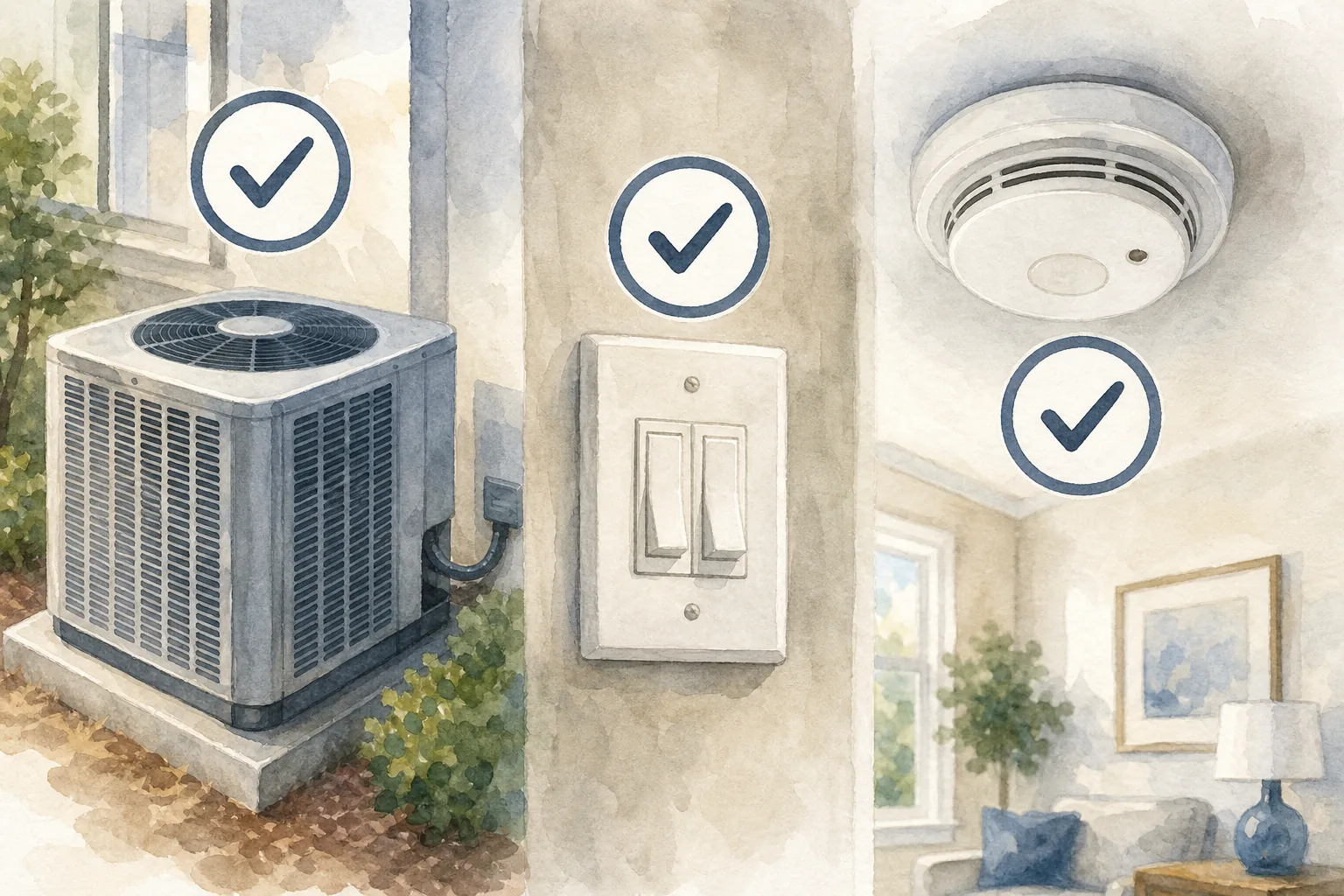
Home inspection interior systems checklist

Step 5: Document Repairs and Prepare for Inspection Day

Gather all receipts, warranties, and permits for recent work, new roof shingles, a repainted deck, or a repaired pipe. Put them in a folder labeled “Home Repairs” and leave it on the kitchen counter where the inspector can find it easily.

If you’ve had a pre‑listing inspection, include that report too. It shows transparency and can speed up negotiations.

Make sure utilities are on, water, electricity, gas, and sewer. The inspector will need power for the HVAC test and water for the plumbing check. Turn on the water heater pilot if it’s been off for a season.

Finally, plan for pets and personal items. Move cats, dogs, and aquarium tanks to a neighbor’s house or a secure room. Remove valuables and family photos that could distract the inspector or raise privacy concerns.

When you’re ready, give me a shout. I can walk the home with you and point out any last details that often slip past a busy homeowner. For a deeper dive on paperwork, see my Best Tips: How to Prepare for a Home Appraisal guide.

And if you’re curious which upgrades add the most resale value in Austin, check out What Home Improvements Add Resale Value in Austin?. Knowing the ROI can help you prioritize fixes before the inspection.

FAQ

What should I do if I discover a leak right before the inspection?

Fix it immediately if you can; tighten the connection or replace a damaged washer. If the leak is major, call a plumber and let the inspector know you’ve scheduled a repair, most buyers appreciate honesty.

Do I need to be home during the inspection?

No, you should leave the house so the inspector can work without interruptions. Just make sure all doors are unlocked and the alarm system is off.

How far in advance should I replace HVAC filters?

Swap the filter a day or two before the inspector arrives. A fresh filter shows the system has been maintained and avoids a “dirty filter” note.

Can I hide minor cosmetic issues like a small paint chip?

Minor cosmetic flaws are usually not a deal‑breaker, but fixing them can prevent the inspector from noting “unfinished surface” and keep the buyer’s mind focused on the home’s strengths.

What paperwork should I bring?

Bring receipts for any recent repairs, warranties for appliances, and the most recent home‑inspection report if you have one. A simple folder keeps everything tidy and accessible.

Ready to make your home inspection a smooth step toward closing? Start with the checklist above, and when you’re set, explore additional resources for tools that help Austin sellers succeed.

Ready to put this into practice? Robbie English, REALTOR, Broker was built for exactly this.

Y'all Might Want To Check These Out Too...

The Perils of Being an Unrepresented Home Buyer: Why Competency MattersThe Perils of Being an Unrepresented Home Buyer: Why Competency Matters The Future of Real Estate Commissions: NAR Settlement AgreementThe Future of Real Estate Commissions: NAR Settlement Agreement Unlocking the Door to Second Home Investment: A Comprehensive AnalysisUnlocking the Door to Second Home Investment: A Comprehensive Analysis New Texas Homestead Exemption Regulations: What Homeowners Need to KnowNew Texas Homestead Exemption Regulations: What Homeowners Need to Know

Filed Under: blog

your dream home starts here
download closely
sell your home

Disclaimer: The content on this website is provided for general informational and educational purposes only. It is not legal, tax, accounting, financial, appraisal, or other professional advice. Reading these articles or contacting me through this website does not create a broker-client relationship. I am not an attorney, tax advisor, accountant, financial advisor, or licensed real estate appraiser. Only a licensed or certified real estate appraiser can provide a real estate appraisal. Only a licensed and certified appraiser can set a property’s value. Real estate laws, contracts, market conditions, and individual circumstances vary, so you should seek advice from the appropriate licensed professionals before making decisions.

start your home search

download closely

sell your home

Real Estate Resource Center by Robbie English

Pick a Topic:

Find Answers To Real Estate Questions Asked on Reddit

You may also like

The Perils of Being an Unrepresented Home Buyer: Why Competency MattersThe Perils of Being an Unrepresented Home Buyer: Why Competency Matters The Future of Real Estate Commissions: NAR Settlement AgreementThe Future of Real Estate Commissions: NAR Settlement Agreement Unlocking the Door to Second Home Investment: A Comprehensive AnalysisUnlocking the Door to Second Home Investment: A Comprehensive Analysis New Texas Homestead Exemption Regulations: What Homeowners Need to KnowNew Texas Homestead Exemption Regulations: What Homeowners Need to Know

Blog Article Topics

Absentee Owners • Austin Area Housing Market • Austin Real Estate • Austin Landlord Service • Build to Rent • Building A Home •  Cedar Park • Compensation • Distressed Homeowners • Downsizing • Financially Motivated • Find Your Place • First Time Home Buyers • For Sale By Owner • Greater Austin Housing Market • Green-Energy Efficiency • Homeowners Associations • Home Buying • Home Improvements • Home Pricing • Home Staging and Depersonalization • Home Values • Homeownership • Interest Rates • Investment and Vacation Rentals • Leander • Lifestyle • Living in Austin • Living in Cedar Park • Living in Central Texas • Living in San Antonio • Luxury Real Estate • Market Updates • Mortgage Financing • Moving to Austin • Moving to San Antonio • Moving to Texas • Multi-Generational Housing • My Advanced Education •  Negotiations • Off-Market Representation • Preparing for Closing • Probate and Estate Sales • Property Taxes • Real Estate • Refinancing Your Mortgage • Renting and Leasing •  Representation •  San Antonio Housing Market • San Antonio Real Estate • Selling Your Home • Selling Your Luxury Home • Short Term Rentals • Supply and Demand • Texas Property Management •  Trends

Search By Category

Blog Posts

The Future of Real Estate Commissions: NAR Settlement Agreement

The Future of Real Estate Commissions: NAR Settlement Agreement

Have You Bought a Home Before? Exclusive Buyer's Guide

Have You Bought a Home Before? Exclusive Buyer’s Guide

Eeyore's Birthday Party in Austin

Your Guide to Eeyore’s Birthday Party in Austin

Advantages of Buying a Newly Built Home

Advantages of Buying a Newly Built Home

Unlocking the Dream: Understanding the Allure of Vacation Homes

What to Know Before Buying a Vacation Home

What does the home inspection process involve?

What does the home inspection process involve?

Maximizing Investments: A Guide to Purchasing Second Homes for Student Children

Maximizing Investments: A Guide to Purchasing Second Homes for Student Children

Robbie English, REALTOR, Broker

512-910-HOME (4663)

512-400-3082

830-953-5571

Uncommon Realty

Main Office:
5114 Balcones Woods Dr. Ste 307, Austin, TX 78759

Download My App
download my app

Common sense is a flower that doesn’t grow in everyone’s garden. That’s why we’re Uncommon!

I look forward to representing you! -Robbie

Robbie English Texas Real Estate Education Expert     Unlock MLS  Austin Board of REALTORS  Texas REALTORS  National Association of REALTORS  Highland Lakes Association of REALTORS

Find Homes For Sale in: Austin TX • Bee Cave TX • Burnet TX • Cedar Park TX • Cottonwood Shores, TX • Georgetown TX • Granite Shoals TX •  Highland Haven • Highland Lakes • Horseshoe Bay, TX • Hutto TX • Jonestown TX • Lago Vista TX • Lakeway TX • Leander TX • Marble Falls, TX • Manor TX • Pflugerville TX • Round Rock TX

My website uses state-of-the-art property search, including an interactive map search, to find homes for sale in the Central Texas Hill Country.

  • Buy
  • Sell
  • What’s My Home’s Value?
  • Search Properties
  • Service Area
  • Download App
  • Infographics
  • Real Estate Resource Center

© Copyright 2026 · All Rights Reserved · Robbie English, Broker, Property Manager, and REALTOR, National Instructor, Speaker

Privacy Policy • DCMA • Texas Real Estate Commission Information About Brokerage Services • Texas Real Estate Commission Consumer Protection Notice • Web Accessibility Help
All information deemed correct but not guaranteed.

Accessibility Adjustments

Powered by OneTap

How long do you want to hide the toolbar?
Hide Toolbar Duration
Select your accessibility profile
Vision Impaired Mode
Enhances website's visuals
Seizure Safe Profile
Clear flashes & reduces color
ADHD Friendly Mode
Focused browsing, distraction-free
Blindness Mode
Reduces distractions, improves focus
Epilepsy Safe Mode
Dims colors and stops blinking
Content Modules
Font Size

Default

Line Height

Default

Color Modules
Orientation Modules