Texas property taxes can feel like a surprise on your mortgage statement. The good news is you can predict the number and plan for it. Below is a step‑by‑step guide that breaks down what you’ll pay, how the bill is built, why it varies, and where you can shave dollars off.
Texas Property Taxes at a Glance: What You May Pay
Property taxes are an important source of funding for schools, roads, and emergency services. Texas property taxes can be higher than in places where local governments rely more heavily on income taxes. More information on property taxes can help explain how bills vary by location.
Because each taxing unit, schools, cities, counties, special districts, sets its own rate, the total you owe can swing dramatically from one neighborhood to the next. In Houston‑Harris County, property taxes can be significant, while a similar home in a rural county could be lower.
Keep in mind that the numbers you see online are estimates. Your actual bill depends on the appraised value of your property, the exact mix of taxing units, and any exemptions you qualify for.
Key Takeaway: Expect to pay a few thousand dollars each year, but the exact amount hinges on where you live and what exemptions apply.
Austin Property Tax Rates by Area breaks down the rates for the Austin metro region, giving you a concrete example of how local variation works.
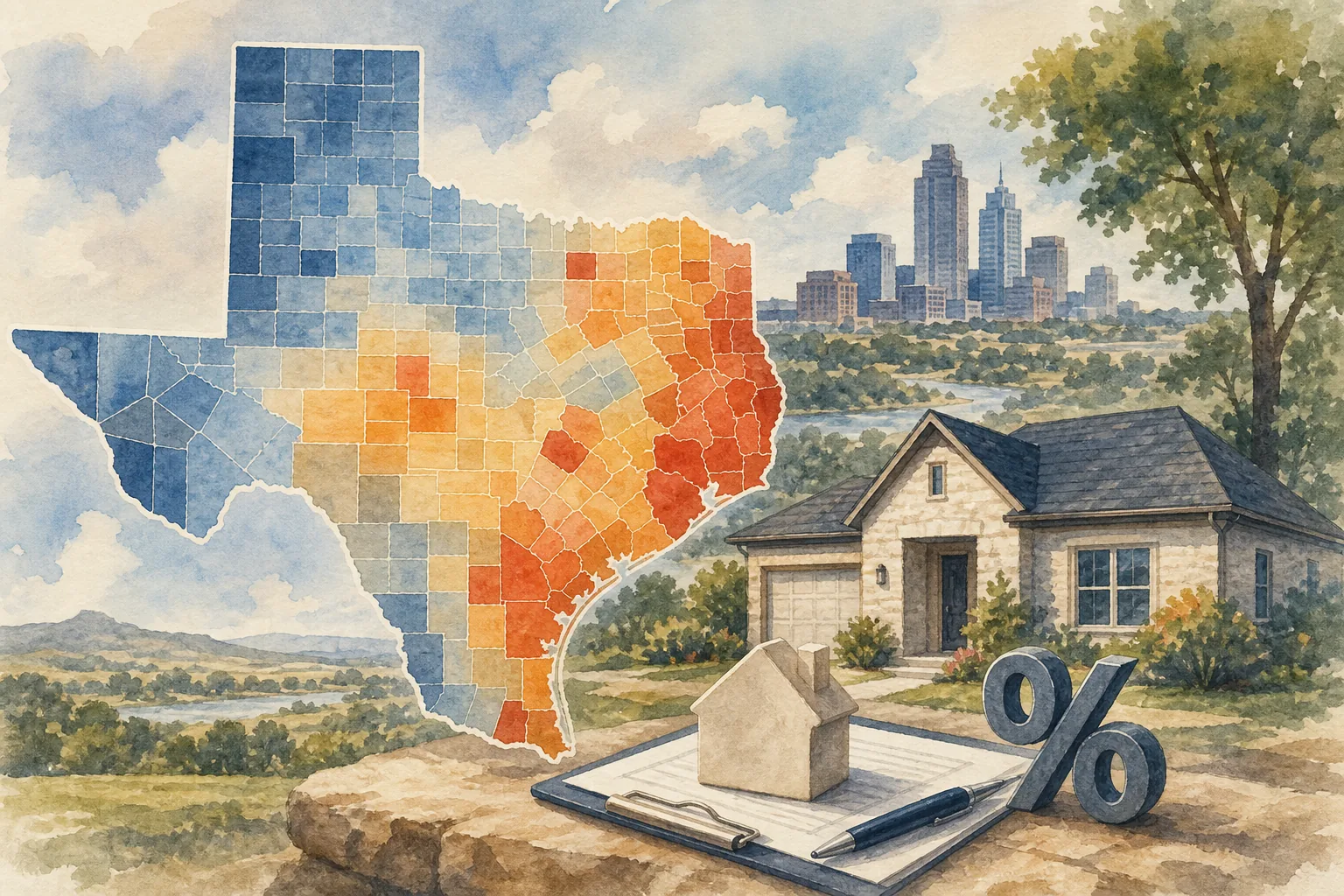
How Texas Calculates Your Property Tax Bill
The process starts with your county appraisal district. They determine the market value of your land and structures, then apply any eligible exemptions to arrive at the taxable value.
Next, each taxing unit reports its millage rate, the amount of tax per $1,000 of taxable value. You can review applicable rates through this property-tax resource: property tax rates.
To calculate the bill, you multiply the taxable value by the combined millage rate, then divide by 1,000. For example, a $300,000 home with a $25,000 general homestead exemption drops to a taxable value of $275,000. If the total millage rate in your area is 2.5%, the tax due is $6,875 (275,000 × 2.5% ÷ 1,000).
Most owners receive a single consolidated bill from the county tax assessor‑collector, which bundles school, city, and county portions together. If you have a mortgage, the lender usually pays the bill from an escrow account.
Pro Tip: Review the millage rates each summer; a new school bond or city project can raise the rate for the next tax year.
What Is an Escrow Account? A Plain‑English Home Buyer Guide explains how escrow protects you from surprise tax spikes.
Why Property Taxes Differ Across Texas Cities and Counties
Texas has over 250 taxing units, each with its own budget needs. School districts are part of the local tax picture because they fund K‑12 education. Education funding is one factor behind that variation. Additional property-tax context is available here.
Urban areas tend to have higher property values, so even a modest millage rate can generate large dollar amounts. Rural counties may have lower values but sometimes higher rates to meet service costs.
Special districts, such as hospital, flood control, or community college districts, add another layer. A county that hosts a large hospital district will see an extra line item on every bill.
Political decisions also matter. Voter‑approved bonds for road improvements or school construction raise the “no‑new‑revenue” rate for the next cycle.
Note: The data‑gap problem is real. In a recent review, only half of sampled counties posted any exemption amounts, and none listed effective tax rates or millage figures, making it harder to compare.
Austin Real Estate Guide | Robbie English, Broker and REALTOR dives deeper into how city growth and bond votes shape tax bills.
Texas Property Tax Exemptions That Can Lower Your Bill
Exemptions are the primary tool homeowners use to trim their tax bill. The state mandates a $25,000 general homestead exemption for school taxes, and many counties add a local option exemption up to 20% of the appraised value. Official exemption guidance outlines the full list.
Age‑65 or older owners receive an extra $60,000 exemption on school taxes, plus any local option exemption the county chooses to offer. Disabled homeowners qualify for a $25,000 exemption on school taxes and may get additional local exemptions.
Veterans with a service‑connected disability can claim a partial or total exemption based on their disability rating. A 100% disabled veteran may have the entire residence value removed from taxation.
To claim an exemption, you must file an application with your county appraisal district, usually by April 30. Missing the deadline means you’ll pay the full amount for that year, though you can still apply later for a partial credit.
Pro Tip: Keep an eye on the annual postcard the local appraisal district sends. If it’s returned undeliverable, your exemption is cancelled and you’ll need to re‑apply.
Best Homestead Exemption Texas Options walks you through the paperwork and deadlines.

What Buyers and Sellers Should Know Before Closing
Property taxes are prorated at closing. The seller pays taxes up to the day before closing; the buyer assumes responsibility from the closing date forward. The escrow agent usually handles the math and transfers the appropriate amount.
Because the tax bill is based on the prior year’s appraisal, you may receive an estimated amount at closing that differs from the final bill you’ll see in October. That estimate is called a “prorated tax” and is calculated using the county’s posted tax rate.
If the seller has a homestead exemption, it stays in place for the remainder of the tax year. The new owner must apply for their own exemption for the following year. Missing this step can leave you paying the full tax amount for a year.
One common pitfall is forgetting the “tax ceiling” that applies to over‑65 or disabled owners. Once qualified, school taxes won’t increase unless you improve the home. Sellers often overlook this benefit, which can be a selling point for retirees.
Finally, ask the seller for a copy of the most recent tax statement. It shows the exact amounts paid last year and any pending bills, helping you budget accurately.
Key Takeaway: Verify the prorated tax amount in the closing statement and confirm the status of any exemptions before you sign.
How to Dodge First‑Time Home Buyer Mistakes in Texas includes a checklist that covers tax proration and exemption transfer.
Frequently Asked Questions
How much are property taxes in Texas for a typical home?
The exact amount varies by county, and the final bill depends on the taxable value, local rates, and exemptions.
Do I pay property taxes twice if I have a mortgage?
No. Your lender collects the tax bill through an escrow account and forwards the payment to the county on your behalf.
Can I lower my tax bill with a homestead exemption?
Yes. The standard $25,000 school exemption and any local option exemptions can reduce your taxable value by thousands of dollars.
When is the deadline to apply for a homestead exemption?
Generally you must file by April 30 of the tax year, but you can still apply within two years after the tax became delinquent for a partial credit.
What happens if I move to a new county mid‑year?
You’ll owe a prorated share to the old county for the time you lived there, and the new county will assess taxes based on its rates once you file an exemption there.
Conclusion: Plan With Robbie English, REALTOR, Broker
If you want a clear picture of your future tax bill, start by checking the millage rates for your specific taxing units and file any eligible exemptions right away. Then talk to me, Robbie English, about how those numbers fit into your overall budget and buying strategy.