Robbie English, Broker and REALTOR

Educated | Experienced | Entrusted

  • Buy
    • Search Listings
    • Featured Listings
    • Hire Me As Your Buyers Agent
    • Access Hidden Properties
    • Get PreApproved!
      • Mortgage Calculator
    • First Time Home Buyers
    • Building & New Construction
    • Making An Offer
    • What Are Closing Costs?
    • Closing Now What
    • Agent Safety Policy
    • Communication Expectation
    • Financial Terms Glossary
  • Sell
    • What’s Your Home Worth?
    • Hire Me As Your Listing Agent
    • Off Market Representation
    • Schedule Consultation
    • Selling Your Home
      • List With Me
    • 11 Steps To Selling Your Home
    • Adding Value to Your Home
    • Marketing Your Home
    • Pricing Your Home
    • Market Snapshot
    • Showing Your Home
  • Rent
    • Featured
    • Resident Resources
      • Resident Portal
      • Tenant Frequently Asked Questions
      • Resident Benefit Package
      • Wear & Tear vs. Damage
  • App
  • Search
    • Search Listings
    • Sold Listings
    • Sign in
    • Featured Listings
    • Off Market Properties
    • Luxury Homes For Sale
    • Recently Sold
  • Manage
    • Property Management
    • Owner Portal
    • Plans
    • Pricing
    • Benefits
    • Services
    • Get Started Today
    • Landlord Articles
  • About
    • Robbie English Advanced Education
      • The Robbie English Advantage
    • About and Agents
      • About
      • Protect Yourself From Wire Fraud
    • Blog
      • Blog
      • Find By Topic
      • Market Updates
      • Website Search
      • Why I Write Real Estate Blog Articles
    • Testimonials
    • Uncommon Realty
      • Fair Housing Diversity and Inclusion
      • Join Uncommon
    • Moving Out of State
    • Recently Sold
  • Contact
Home » Build-to-Rent: The Corporate Takeover of American Housing

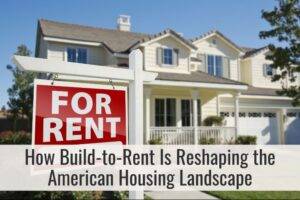
Build-to-Rent: The Corporate Takeover of American Housing

December 5, 2024 by Robbie English, Real Estate Broker Leave a Comment

The American dream of homeownership has long been a cornerstone of the nation’s economic and cultural identity. However, a growing trend is shifting the landscape of housing in ways that may threaten this ideal. The rise of the build-to-rent (BTR) model, driven predominantly by large corporations, is reshaping the housing market, raising concerns about its impact on homeownership opportunities and the broader implications for communities across the country.  I am Robbie English, Managing Broker and REALTOR at Uncommon Realty and I would love to dive into the corporate takeover of American housing with you.

Understanding the Build-to-Rent Model

At its core, the build-to-rent model involves large-scale development projects where properties are constructed specifically to be rented out rather than sold. This model has gained traction as institutional investors and real estate companies recognize the profitability of owning and managing rental properties. Unlike traditional rental units, which might include individual apartments or homes within a larger complex, BTR developments are often designed as entire communities or neighborhoods exclusively for rental purposes.

The Corporate Influence

The influence of large corporations in the BTR sector has grown significantly in recent years. Real estate investment trusts (REITs) and private equity firms have poured billions into this market, acquiring land, financing developments, and managing rental properties. These corporations are leveraging their financial resources and market expertise to build expansive rental communities that can offer attractive amenities and services, such as community centers, fitness facilities, and organized social activities.

One of the driving forces behind this corporate takeover is the pursuit of steady, long-term income. By owning and renting out large portfolios of residential properties, these companies can create a reliable revenue stream that is less susceptible to the economic fluctuations affecting other investment sectors. This strategy not only provides a buffer against market volatility but also positions these corporations as dominant players in the housing market.

Impact on Homeownership

The proliferation of BTR developments presents several challenges to the traditional homeownership model. For prospective homeowners, the rise of corporate-owned rental properties can limit opportunities to buy a home. As large corporations accumulate vast amounts of housing stock, the availability of affordable homes for sale decreases, driving up prices and making homeownership more elusive for many individuals and families.

Additionally, the emphasis on rental properties can contribute to a shift in housing priorities. In areas where BTR communities are prevalent, local housing markets may become increasingly skewed toward renting rather than buying. This shift not only affects individuals’ ability to purchase homes but can also influence housing policies and community planning, potentially prioritizing rental development over other housing needs.

Consequences for Local Communities

The impact of the BTR model extends beyond individual homeownership. Local communities may face several consequences as corporate entities take a larger role in the housing market. For instance, the presence of large corporate landlords can change the dynamics of neighborhood stability and cohesion. Unlike individual homeowners, corporate landlords may be less invested in the long-term well-being of the community, potentially leading to reduced engagement and support for local initiatives.

Moreover, the concentration of rental properties under corporate management can also affect the quality of housing. While some BTR developments offer high-quality amenities and well-maintained properties, others may prioritize profitability over maintenance and tenant satisfaction. This disparity can lead to varied living conditions within the same community, creating challenges for tenants and local authorities alike.

Potential Solutions and Policy Responses

Addressing the challenges posed by the build-to-rent model requires a multifaceted approach. Policymakers and community leaders must consider a range of strategies to balance the interests of large corporations with the needs of local residents. Potential solutions include:

  1. Affordable Housing Initiatives: Implementing policies that promote the development of affordable housing options alongside BTR communities can help ensure that homeownership remains accessible to a broader range of individuals.
  2. Regulations on Corporate Ownership: Establishing regulations to limit the concentration of rental properties owned by large corporations can help maintain a more balanced housing market and prevent any single entity from dominating local markets.
  3. Incentives for Homeownership: Offering incentives and support for first-time homebuyers can help counteract the effects of rising rental markets and provide more opportunities for individuals to achieve homeownership.
  4. Community Engagement: Encouraging community engagement and investment from corporate landlords can foster stronger local connections and ensure that BTR developments contribute positively to their neighborhoods.

The build-to-rent model represents a significant shift in the American housing market, with large corporations playing an increasingly dominant role. While this trend offers certain benefits, such as well-designed rental communities and steady income for investors, it also presents challenges for homeownership and local communities. By understanding these dynamics and exploring potential solutions, stakeholders can work towards a housing market that balances the needs of renters, homeowners, and communities alike. As the landscape of American housing continues to evolve, thoughtful and proactive approaches will be crucial in shaping a market that remains equitable and accessible for all.

Related posts:

The Best Home Security Systems to Keep Your Family SafeThe Best Home Security Systems to Keep Your Family Safe Austin Texas Real Estate: Why These Areas Are Perfect for Your Next HomeAustin Texas Real Estate: Why These Areas Are Perfect for Your Next Home How to Sell Your Home When You No Longer Live ThereHow to Sell Your Home When You No Longer Live There

Filed Under: blog, GBP Tagged With: Real Estate Advice

Leave a Reply Cancel reply

Your email address will not be published. Required fields are marked *

Download Real Estate App

Most Popular Searches

Contact Robbie English
About Robbie English
Start Your Home Search
First Time Home Buyer
Market Updates
Property Management
Home Buying
Pricing your home to sell
Selling your home
Selling your luxury home

Get My Sellers Guide Today

Get My Buyer Guide Today

Get My First Time Homebuyer Guide Today

Free EGuide Tips For Preparing Your House For Sale

Search By Category

Blog Article Topics

Absentee Owners • Austin Area Housing Market • Austin Real Estate • Austin Landlord Service • Build to Rent • Building A Home •  Cedar Park • Compensation • Distressed Homeowners • Downsizing • Financially Motivated • Find Your Place • First Time Home Buyers • For Sale By Owner • Greater Austin Housing Market • Green-Energy Efficiency • Homeowners Associations • Home Buying • Home Improvements • Home Pricing • Home Staging and Depersonalization • Home Values • Homeownership • Interest Rates • Investment and Vacation Rentals • Leander • Lifestyle • Living in Austin • Living in Cedar Park • Living in Central Texas • Living in San Antonio • Luxury Real Estate • Market Updates • Mortgage Financing • Moving to Austin • Moving to San Antonio • Moving to Texas • Multi-Generational Housing • My Advanced Education •  Negotiations • Off-Market Representation • Preparing for Closing • Probate and Estate Sales • Property Taxes • Real Estate • Refinancing Your Mortgage • Renting and Leasing •  Representation •  San Antonio Housing Market • San Antonio Real Estate • Selling Your Home • Selling Your Luxury Home • Short Term Rentals • Supply and Demand • Texas Property Management •  Trends

Blog Posts

Is Austin in a buyer's market or seller's market?

Is Austin in a buyer’s market or seller’s market?

How Old is the Roof? A Buyers Guide to Roof Inspections When Buying A Home

A Buyers Guide to Roof Inspections When Buying A Home

Insider's Guide to Finding Your Ideal Real Estate Agent: Unveiling the Secrets

The Best Choice to Sell Your Georgetown Home is Robbie English

Analyzing the Austin Housing Market: Are House Prices Dropping?

Are Home Prices Dropping?

How do I choose the best real estate agent for me? | Insider Guide

How do I choose the best real estate agent for me? | Insider Guide

The Benefits of Professional Property Management for Texas Rental Properties

The Benefits of Professional Property Management for Texas Rental Properties

Cedar Park TX Market Update

Cedar Park TX March 2025 Market Update

Robbie English, Broker and REALTOR

512-910-HOME (4663)

Uncommon Realty

Main:
5114 Balcones Woods Dr. Ste 307, Austin, TX 78759

Download My App
download my app

I look forward to representing you! -Robbie

Robbie English Texas Real Estate Education Expert     Unlock MLS  Austin Board of REALTORS  Texas REALTORS  National Association of REALTORS  Highland Lakes Association of REALTORS

Find Homes For Sale in: Austin TX • Bee Cave TX • Burnet TX • Cedar Park TX • Cottonwood Shores, TX • Georgetown TX • Granite Shoals TX •  Highland Haven • Highland Lakes • Horseshoe Bay, TX • Hutto TX • Jonestown TX • Lago Vista TX • Lakeway TX • Leander TX • Marble Falls, TX • Manor TX • Pflugerville TX • Round Rock TX

My website uses state-of-the-art property search, including an interactive map search, to find homes for sale in the Central Texas Hill Country.

  • Buy
  • Sell
  • Rent
  • App
  • Search
  • Manage
  • About
  • Contact

© Copyright 2026 · All Rights Reserved · Robbie English, Broker, Property Manager, and REALTOR, National Instructor, Speaker

Privacy Policy • DCMA • Texas Real Estate Commission Information About Brokerage Services • Texas Real Estate Commission Consumer Protection Notice • Web Accessibility Help
All information deemed correct but not guaranteed.