Thinking about swapping Austin’s rush for a bit more space and pine‑scented air? Bastrop’s market offers everything from historic downtown ramblers to sprawling acreage, and I’ll walk you through what matters most.
An analysis of 20 comments from Reddit and YouTube about Bastrop TX homes for sale found that 30% mentioned relocating to Bastrop.
What You’ll Find in the Bastrop Home Market
Bastrop’s listings cover a wide range of styles and prices. In November 2026, home prices and price per square foot vary by property and location. Har.com’s market snapshot shows a steady flow of new listings each month, from modest three-bedroom ranches to custom homes on half-acre lots.
New construction is appearing in master-planned communities like Seasons at Railhead, where homes sit on half-acre parcels and may include oversized RV garages for trucks or travel rigs. Older neighborhoods, including historic downtown Bastrop, have their own appeal: think brick exteriors, mature pine trees, and walkable streets with shops and cafés just minutes away.
Price points vary. A starter home with three bedrooms may list near $300,000, while a larger new build with four bedrooms may cost more. Redfin’s listings illustrate that range, from cottages to luxury lots.
Renters have options, too. The median rent is $1,443, and nearly half of residents still rent despite the high median home value.
Because Bastrop’s market includes both new builds and older homes, it helps to decide early whether you want a brand-new floor plan or are comfortable renovating a historic home.
When you compare neighborhoods, pay attention to community amenities. Some master-planned areas offer pools, sidewalks, and HOA-covered services, while larger-lot neighborhoods like Tahitian Village emphasize privacy, pine-covered views, and direct river access.
For a deeper look at how Austin-area buyers choose where to live, take a look at my guide to Austin homes for sale. It covers the same price-range considerations you’ll use when exploring Bastrop.
How Location and Property Setting Affect a Home Search
Where you live in Bastrop affects your commute, school access, and day-to-day routine. Bastrop is about 25 miles east of downtown Austin, and a typical drive on Highway 71 takes 30–45 minutes, depending on traffic.
Near the historic core, the Riverwalk district has a more walkable feel, with cafes, boutique shops, and the Colorado River nearby. Farther out, areas such as Tahitian Village and Seasons at Railhead tend to offer larger parcels and a more rural setting. You may need a car for groceries and other errands, though, so consider how that fits your routine.
Property taxes are another location factor. Tax rates and bills can vary by property location, so check the applicable rates for a specific home. See the official tax‑rate list for precise numbers.
It’s also worth checking flood risk for a specific property. Flood risk can vary by location, so review available information and ask about insurance requirements. Review floodplain information for details.
If you work in Austin, try the commute during peak hours before deciding. One resident near the downtown core told me the drive can stretch to an hour on a busy Thursday, while a neighbor in western Bastrop reports a smoother 35-minute trip.
As you compare locations, think through school drop-offs, grocery trips, and how often you’ll head into Austin for work. If time matters more to you than extra yard space, a short, predictable commute may be the better fit.
My Buda guide includes a handy commute‑time calculator that works just as well for Bastrop routes.
The Full Cost of Buying a Bastrop Home
When you’re budgeting for a Bastrop home, look beyond the list price. One cost that surprises many buyers moving to Bastrop County is property tax. The amount varies by property, so check the tax estimate for any home you’re considering.
You’ll also want to budget for homeowners insurance. Premiums vary depending on coverage and whether the property is in a flood-hazard zone.
Mortgage-interest rates can affect your monthly costs. A 30-year fixed loan’s principal-and-interest payment depends on the down payment, purchase price, and loan terms. Add taxes and insurance, and your total monthly costs will vary.
If you’re considering a master-planned community, check whether there are HOA fees. These typically cover common-area maintenance, pools, and sometimes trash service.
Closing costs add another 2–3% of the purchase price. These may include lender fees, title insurance, and an escrow for property taxes.
If you’re curious how Austin-area buyers balance these numbers, my affordable Austin neighborhoods guide breaks down the math step by step.
Property Details to Verify Before You Make an Offer
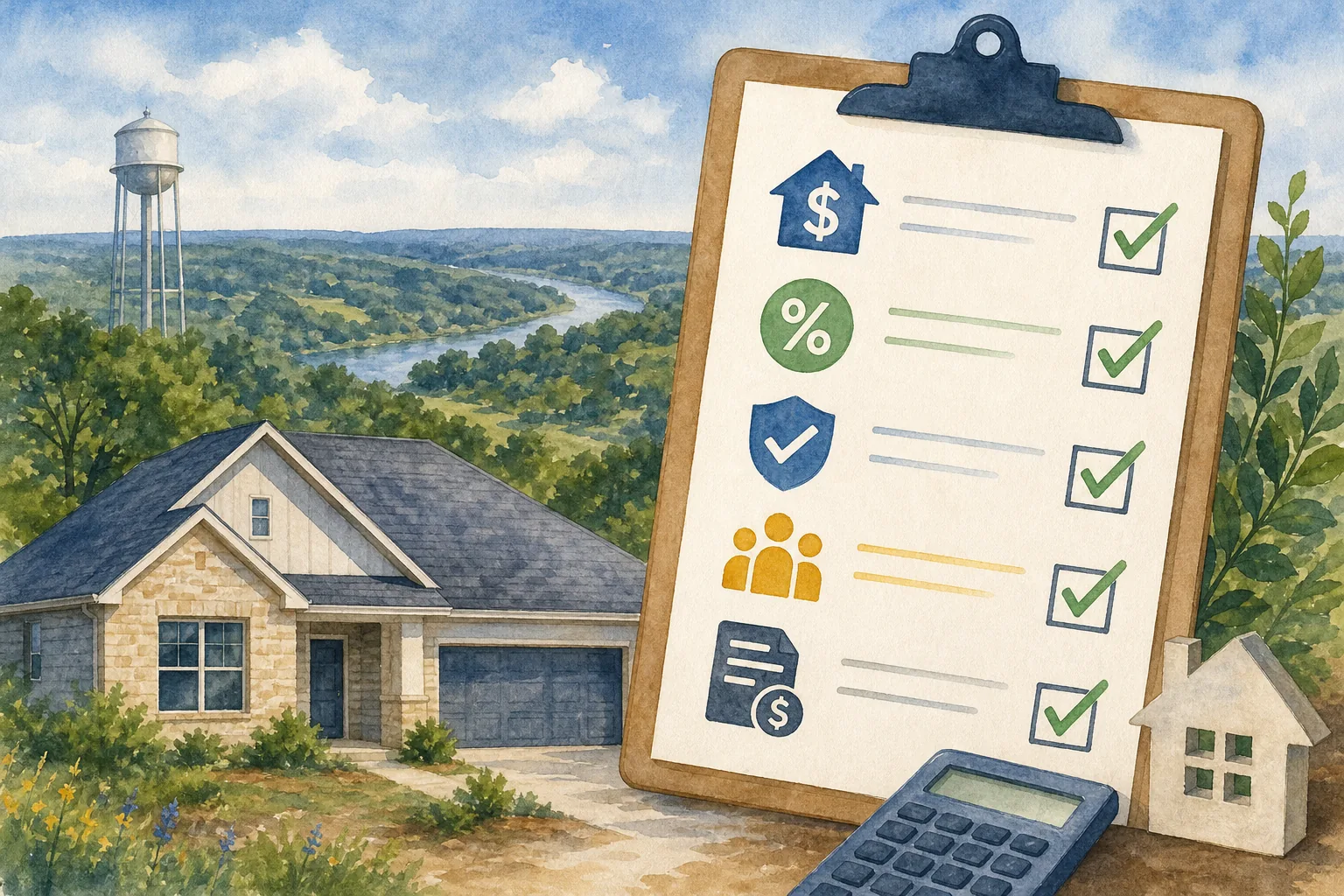
Before you put down an earnest money deposit, run a quick sanity check on the property’s specs.
First, confirm the lot size. Large parcels can be great for ranching or future subdivision, but they may also have floodplain considerations.
Second, check the home’s age and any recent upgrades. A 1972 rancher with original HVAC may need a new system, while a 2023 new build likely includes modern energy‑efficiency features.
Third, verify the presence of any easements or deed restrictions. Before adding a structure, check whether permits are required.
Fourth, ask for a recent home inspection report. Look for roof condition, foundation cracks, and the state of the septic system if the property isn’t on municipal sewer.
Fifth, confirm the flood‑risk status. Ask about available flood-hazard information and whether the address falls within a special flood-hazard area.
Sixth, understand utility availability. Rural parcels may rely on well water and propane, which adds ongoing maintenance costs.
Lastly, compare the asking price to recent comparable sales (the “comps”). My pricing approach never relies on a simple price‑per‑square‑foot calculation; I look at recent sales, adjustments for upgrades, and the buyer’s behavior in the area.
When you’re ready to move forward, I can help you pull the latest comps and walk you through the offer language.
Making Sense of Listings and the Buying Process
Online listings can feel overwhelming. Start by setting a clear budget that includes the full cost items we discussed earlier. Use a trusted search portal to filter for price, bedrooms, and lot size.
When a listing catches your eye, look at the property’s MLS description. Look for concrete details like “new roof 2022” or “recent kitchen remodel.” Vague phrases such as “nice home” are red flags that require extra due diligence.
Schedule a showing as soon as possible. In fast markets, homes can go under contract within days, so be prepared with a pre‑approval letter.
After you’ve toured the home, ask whether a seller’s disclosure statement is available and review it for potential repair concerns.
When you decide to make an offer, I draft a contract that reflects your priorities, whether that’s a quick closing, a repair credit, or an inspection contingency. My experience as a REALTOR and national instructor means I know the language that protects you while keeping the deal attractive to the seller.
Once the offer is accepted, the escrow process begins. You’ll work with a title company to verify ownership, order a title search, and secure flood or hazard insurance if needed.
Throughout escrow, I keep you informed about deadlines for inspections, appraisals, and loan documents. My goal is to keep the timeline smooth so you can move in without surprises.
When the closing day arrives, you’ll sign the final paperwork, pay closing costs, and receive the keys. Congratulations, you now own a piece of Bastrop.
Frequently Asked Questions About Bastrop TX Homes for Sale
What is the median home price in Bastrop?
The median home value sits around $339,600, according to recent market data.
How long does a typical closing take?
In Bastrop, a standard residential closing runs 30‑45 days from contract acceptance, assuming no title or financing hiccups.
Are there flood‑prone areas I should avoid?
Flood risk can vary by property. Check the specific property’s flood risk and insurance requirements before making a decision.
Do I need a homeowner’s association?
Only if you buy in a master‑planned community. HOA fees cover amenities like pools and common‑area maintenance, and the cost varies by community.
What financing options work best for out‑of‑state buyers?
Conventional loans may be an option, and the down payment can affect whether private-mortgage-insurance applies. You can also compare other loan options to see which fit your circumstances.
How can I find new‑construction homes in Bastrop?
Search for developments like Seasons at Railhead or Addleton. These communities often list directly on the builder’s website and offer incentives such as upgraded appliances or waived HOA fees for early buyers.
Conclusion
If you want a home that blends small‑town charm with easy access to Austin, Bastrop is worth a serious look. Reach out to me, Robbie English, REALTOR, Broker, and I’ll set up a tailored search that matches your budget and lifestyle.