You’ve found a home you love, but the seller’s contract is already pending. A backup offer lets you stay in the race without starting from scratch.
In this guide, I’ll break down what a backup offer really is, how it moves into first position, the key terms you’ll see, the upside and downside for both sides, and the Texas-specific rules to watch. If you’re looking at a home in Austin or elsewhere in Texas, understanding the timing can help you decide whether a backup offer makes sense for you.
What a Backup Offer Means in Real Estate
A backup offer is a signed purchase contract that sits behind the primary contract. It’s not a casual note; it’s a legally binding agreement that only takes effect when the first deal falls apart.
In Texas, the offer is submitted as a purchase contract with the TREC Addendum for “Back‑Up” Contract, which places it behind the existing contract. Under the current TREC form, the backup contract is binding once both sides sign, and the buyer delivers the earnest money and any option fee under Paragraph 5 of the contract, the same way as a regular offer. The addendum can also call for additional earnest money and an additional option fee after activation. Most performance dates don’t start until the buyer receives notice that the first contract has terminated.
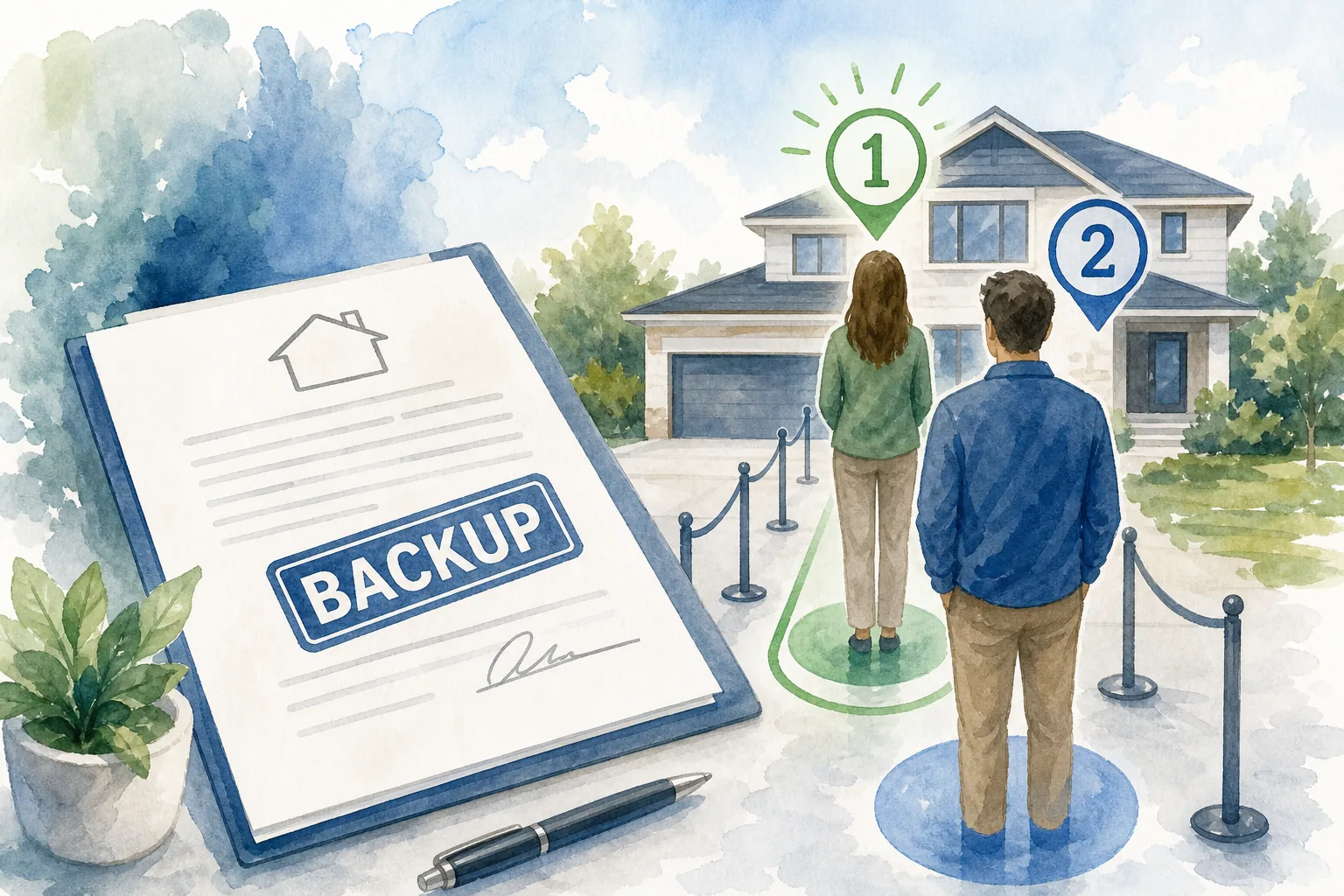
Because the backup sits in a queue, each buyer has a “priority” rank. Only one buyer can hold the spot at any time. If the first contract ends, the seller provides written notice, and the backup moves into primary status.
A backup offer is a purchase contract accepted by a seller who is already under contract; it takes effect if the primary deal ends.
How Long Can a Seller Take to Respond to My Offer? is a useful read if you’re waiting on a seller’s decision while your backup sits in line.
How a Backup Offer Moves Into First Position
When the primary contract terminates, the seller must deliver written notice to the backup buyer. That notice sets a new “effective date” for the backup contract. From that moment, most deadlines, including financing and closing, start counting. The option period is the big exception, which I explain below.
The earnest money is already with the title company, and if the addendum calls for additional earnest money after activation, it’s due within the number of days written in the addendum. No new offer letter is needed, and the buyer doesn’t have to renegotiate price or terms unless the original backup contained contingencies that the seller now wants to adjust.
The seller signs a backup addendum to the purchase contract, placing the backup buyer in second position behind the existing buyer. A backup offer does not compel the primary buyer to waive contingencies.
Once the notice is signed, the buyer should alert their lender immediately. Lenders often need a fresh appraisal order or updated loan documents, and the clock starts ticking the second the backup becomes primary.
Terms and Contingencies That Shape a Backup Offer
Backup contracts typically mirror the main purchase agreement but include a few special clauses:
- Priority language states the buyer’s rank behind the primary contract.
- Option period a window in which the backup buyer can terminate for any reason. Under the TREC addendum it starts on the backup contract’s original effective date, not the activation date, and keeps running after activation until it expires.
- Earnest money & option fee both are paid at signing. The option fee is non-refundable; earnest money is returned if the backup never activates.
- Contingency survival most backups keep the same inspection, appraisal, and financing contingencies, but those dates only become relevant after activation.
Note that the buyer’s unrestricted right to walk away only lasts through the option period. If you terminate within it, you generally give up the option fee but get the earnest money back. After it expires, walking away can put your earnest money at risk, so negotiate an option period long enough to cover the wait.
Under Contract Status in Multiple Listing Service explains why a property can still show as “accepting backup offers” even after a primary offer is under contract.

Potential Benefits and Risks for Buyers and Sellers
For buyers, the biggest upside is staying in line for a home they really want. If the first deal falls through, the backup buyer can close quickly because the price, inspections, and financing terms are already set.
But the buyer also ties up earnest money and an option fee while still hunting other homes. If the first contract doesn’t terminate by the date in the addendum, the backup ends and the earnest money is refunded, but the option fee is generally not.
Sellers gain a safety net. When a primary deal falls through, a backup contract may help reduce the time a home sits idle. It also gives sellers leverage; the primary buyer knows there’s a standby offer, which can encourage them to resolve issues faster.
On the downside for sellers, once a backup is accepted, a better offer that arrives later can only take a place behind the existing contracts unless the backup buyer agrees to release. That can limit negotiation power.
How to Handle Multiple Offers in Austin offers a good framework for weighing a backup against other offers you may be considering.
Texas and Austin Considerations Before You Agree
A signed backup addendum places your offer in second position behind the existing buyer.
In Austin, the fast-moving market means many sellers list a home as “under contract” but still show “accepting backup offers” on the MLS. That signals the seller’s desire for a safety net.
Because the option period starts on the backup contract’s original effective date, it can run out before your backup ever activates. Talk through the length of the option period before you sign, and make sure your lender can move quickly once the financing clock starts.
Also remember that a seller can accept more than one backup offer, so ask which position yours holds. If you want out, the option period is your window to terminate for any reason; after that, your earnest money may be at risk.
Before you sign, review the addendum with a real-estate attorney if you have any custom clauses. The seller cannot compel the primary buyer to waive contingencies.
What Does Under Contract Mean in Real Estate? provides more detail on the stages you’ll see on the MLS.
Frequently Asked Questions About Backup Offers
Can a backup offer become the primary contract?
Yes. When you receive notice that the first contract has terminated, the backup steps into first position and most deadlines run from that date. The option period is the exception, because it started when you signed the backup.
Do I have to pay the option fee if the backup never activates?
You pay the option fee when you sign, the same as a regular contract, and it is generally non-refundable, so you usually lose it if the primary contract closes and your backup never moves forward.
How long does a backup stay valid?
The addendum includes a date. If the first contract hasn’t terminated on or before that date, the backup contract terminates and your earnest money is refunded. Many buyers pick a date close to the first contract’s expected closing date.
Can I still look at other homes while I’m in backup?
Yes, you can keep looking. Just keep in mind that you can only terminate for any reason during your option period, which started when you signed the backup. After it expires, stepping away can put your earnest money at risk.
What happens to my earnest money if the primary deal closes?
The title company returns your earnest money in full. Only the option fee stays with the seller.
Do I need a buyer’s representation agreement before submitting a backup?
Since August 2024, agents working with buyers through the MLS generally need a written buyer agreement before touring a home, so you’ll likely have one in place already. Ask your Texas real-estate professional to explain what the agreement covers before you sign.
Conclusion
If you love a home that’s already under contract, a backup offer gives you a real shot at ownership without starting the hunt over. Talk to me, Robbie English, REALTOR, Broker, to draft a solid backup addendum and keep your financing on standby. As an Austin-based broker, I can help you understand how the process and timing apply to your Texas purchase.
If a backup offer is on your mind, reach out through my website and we can talk through whether it makes sense for you.
Robbie English, REALTOR, Broker at Uncommon Realty