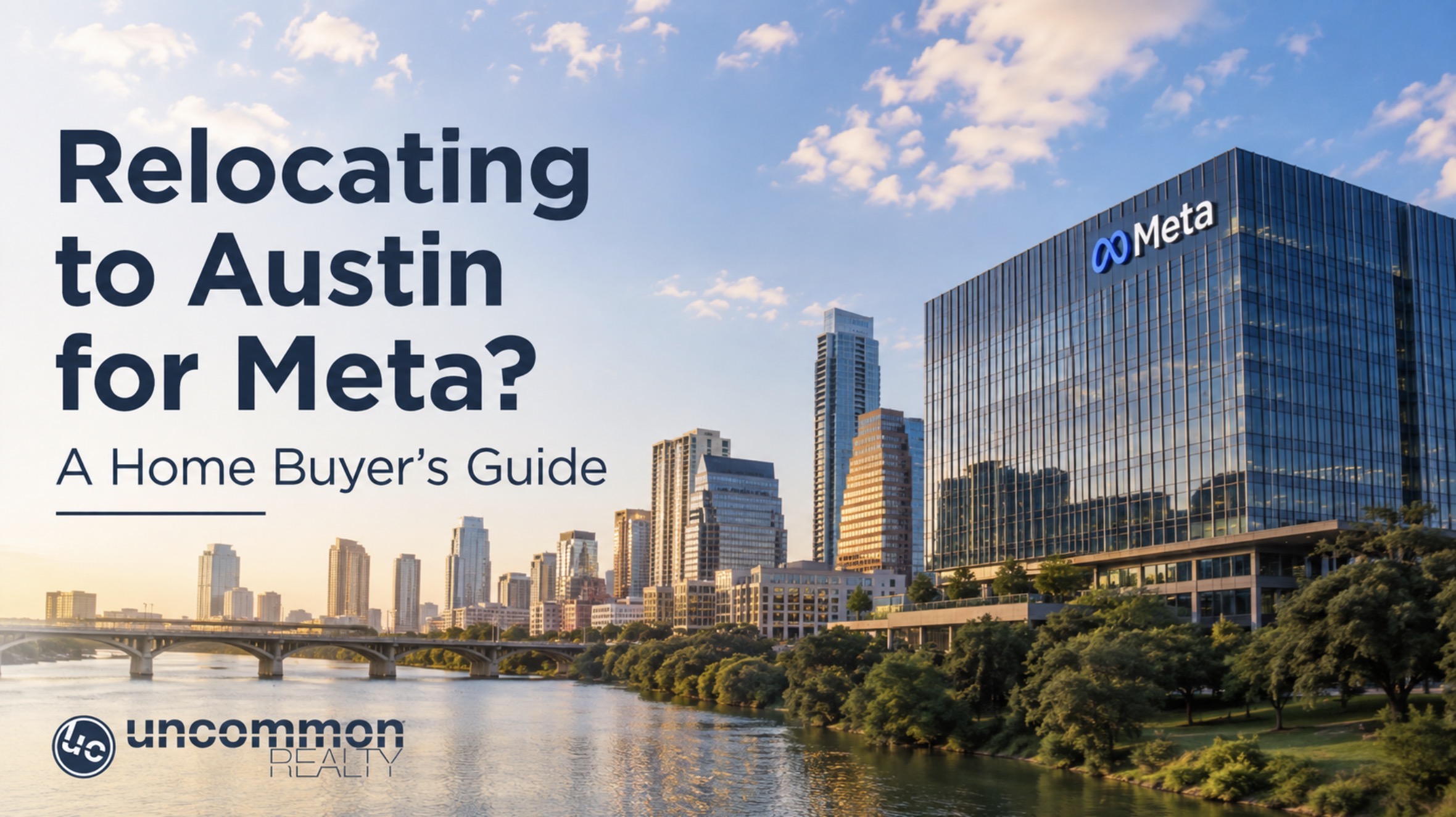
Meta relocations are different from the other tech moves I help with in Austin, and it’s worth saying plainly upfront: Meta’s Austin office sits downtown, not out in the suburbs, which means the whole conversation about commute, lifestyle, and price is a different one than it is for the other major employers here. Let’s talk through what that actually means for where you buy.
Too Long, Didn’t Read
- Meta’s Austin office is downtown at Third + Shoal, 607 West 3rd Street, in the heart of the city’s New Downtown district, a genuinely urban setting compared to the suburban campuses most other Austin employers use.
- Meta’s downtown footprint has shrunk from its original plans. The company still leases a substantial floor count at Third + Shoal but backed away from a much larger commitment at another downtown tower, worth knowing before you assume a fixed, ever-growing office presence.
- Downtown living puts you closest to the office but at a real price premium and less space per dollar than any suburban alternative.
- If your role is hybrid, which is common at Meta, a slightly longer commute from a more affordable neighborhood can make more financial sense than paying downtown prices for a two or three day a week office schedule.
- Confirm your actual in-office expectations with your manager before you commit to a location, since “hybrid” means very different things on different teams.
Is Downtown Austin the Right Call for a Meta Employee?
It depends almost entirely on how often you’re actually expected in the office and how much you value walkability over space. If you’re downtown five days a week, living close by removes a real daily cost, both in time and in the wear of a longer commute. If you’re hybrid two or three days a week, the math often favors a nearby neighborhood with more square footage for the money and a commute you only make a couple times weekly.
The Office Itself, and Why That History Matters
Meta occupies a significant portion of the Third + Shoal tower at 607 West 3rd Street, in the district Austin has taken to calling New Downtown, dense with other tech and finance offices, restaurants, and high-rise residential. It’s worth knowing that Meta’s Austin footprint has actually contracted from its original ambitions. The company leased a much larger amount of space at a separate downtown tower a few years ago and never fully occupied it, eventually putting that sublease on the market. That’s not a red flag about Meta’s Austin presence generally, hybrid work reshaped office needs industry-wide, but it does mean you shouldn’t assume the office location or size is permanently fixed. Confirm your actual reporting site with HR rather than relying on older news coverage or general assumptions. It’s a quick email, and it can save you from anchoring a major decision on outdated information.
What Downtown Living Actually Costs You, and Gets You
Downtown Austin condos and high-rise living put you a short walk or a quick rideshare from Third + Shoal, and you trade square footage and price for that convenience. It’s the most walkable option relative to Meta’s office by a wide margin, restaurants, Lady Bird Lake’s trail system, and downtown’s nightlife are all immediately accessible without a car. But per-square-foot pricing downtown runs well above what the same budget buys you in a neighborhood a short drive out, and most downtown condos come with an HOA that covers building amenities but adds a real monthly cost on top of your mortgage.
If proximity and walkability genuinely matter to your daily life, that premium can be worth it. If you’re mostly going to be working from home a few days a week regardless, it’s worth pricing out the alternative before assuming downtown is the obvious answer.
The Case for Living Further Out
Central Austin neighborhoods just outside downtown proper, and even some of the closer-in suburbs along the North Austin tech corridor, put you a reasonable rideshare or transit ride from Third + Shoal without downtown’s per-square-foot premium. For a hybrid schedule, this is often the more financially sensible choice, more house, a yard if you want one, and a commute you’re only making two or three times a week rather than daily.
The trade-off is losing some of downtown’s walkability and immediacy. You’ll likely need a car or a longer rideshare for the office days, and you won’t have restaurants and the lake trail system a five-minute walk from your door. For a lot of relocating buyers, that trade is worth it. For some, it isn’t. It genuinely depends on what your day-to-day actually looks like.
Neighborhoods just north and west of downtown proper tend to be the sweet spot for this trade-off, close enough for an easy rideshare on office days, far enough to get a meaningfully lower price per square foot and often an actual yard. It’s worth touring a few of these on your relocation trip specifically to see the difference in what your budget buys versus a downtown unit, side by side, before you decide.
How Relocation Packages Change the Calculus
Relocation packages vary widely, and the structure of yours should shape how fast you commit to a neighborhood. A lump-sum allowance gives you flexibility but puts the financial risk of a longer search or a slower sale of your old home on you. A fully managed relocation through a third-party firm often includes temporary housing and sometimes a guaranteed buyout on a home you’re selling elsewhere, which takes pressure off timing two transactions together, at the cost of less flexibility in how you use the funds.
Whichever type you have, ask early whether your signed offer letter alone is enough for a lender to move forward on pre-approval, or whether they’ll want documentation tied to an actual start date. Most lenders can work with a confirmed offer letter, but you need to raise it directly rather than assume, especially if you’re trying to close before your first day.
Common Misconceptions I Hear
The first is that everyone at Meta Austin works fully in-office downtown. In practice, hybrid arrangements are common, and how strictly they’re enforced varies by team and manager. Confirm your actual expectation rather than assuming based on the office’s existence downtown.
The second is that downtown Austin is the only reasonable option for a Meta employee. It’s the most convenient if you’re in-office often, but plenty of Meta employees live well outside downtown and simply factor the commute into a hybrid schedule. There’s no single right answer here.
Practical Application: Deciding Where to Look First
Start by getting a real answer on your expected in-office cadence, in writing if possible, before you tour anything. Then price out two scenarios side by side: a downtown condo close to Third + Shoal, and a house or townhome in a neighborhood a 15 to 20 minute drive out. Run your actual monthly payment on both, including any HOA dues downtown and property taxes on either option, before you decide which trade-off makes sense for your finances and your daily life.
If you’re relocating with a partner who works elsewhere in the city or remotely, factor their commute and preferences in too. A downtown condo that’s perfect for your two-block walk to the office might be a poor fit if your partner needs a car-dependent commute in the opposite direction.
Additional Considerations Before You Buy
Downtown high-rise condos come with their own due diligence beyond a typical single-family home purchase, HOA financial health, reserve funds, and any pending special assessments should all be reviewed before you make an offer, not after. I’ve written more on whether a downtown Austin condo is actually worth it, worth a read if you’re still weighing the trade-off. Ask your agent for the building’s HOA financials and recent meeting minutes as part of your due diligence.
If you’re coming from a market with rent control or very different HOA norms, budget time to actually understand what your monthly HOA dues cover here, amenities, maintenance, insurance, and reserves vary significantly building to building, and a low sticker price with high dues can end up costing more monthly than a higher sticker price with modest dues.
Parking is another downtown-specific detail that surprises out-of-state buyers. Many downtown Austin condos sell parking as a separate deeded space or an added monthly cost rather than including it automatically, so confirm exactly what’s included before you assume a listing price covers a reserved spot. If you’re planning to keep a car for weekend trips outside the city, factor this into your real monthly cost comparison against a suburban option where parking is simply part of the driveway.
Coming From Out of State: What Actually Surprises People
If you’re relocating from a major coastal market, Austin home prices, even downtown, will likely look reasonable by comparison, but don’t let that relief lead you to skip real due diligence. Texas has no state income tax, which is a genuine financial upside, but property tax rates run higher to compensate, and there’s no cap on how much they can rise year to year. Get the real effective tax rate on any specific property, downtown condo or suburban house alike, before you commit.
The other adjustment is pace. Austin real estate, downtown included, can move fast during strong buying windows. Get fully underwritten by a lender, not just pre-qualified, before you start touring seriously, so you can move quickly once you find the right place.
A Realistic Timeline
Most relocating buyers I work with give themselves too little time and too much time in the wrong places. A typical timeline from accepted offer to closing runs six to eight weeks if you’re moving efficiently, longer if you’re also selling a home elsewhere. Get pre-approved in week one, not week three. Use any relocation trip your package provides to tour seriously, not casually, ideally narrowing to two or three real contenders rather than a long wish list you won’t have time to revisit. And build in a buffer between your closing date and your actual start date if your offer letter and moving timeline allow it, movers and closings both run late more often than people expect.
Summary
Meta’s Austin office sits downtown at Third + Shoal, which makes this relocation decision genuinely different from a suburban tech campus move. Confirm your real in-office expectations before you decide between downtown convenience and suburban space, and price out both scenarios honestly rather than assuming one is obviously right.
Frequently Asked Questions
Where exactly is Meta’s Austin office?
Meta occupies space at Third + Shoal, 607 West 3rd Street, in downtown Austin’s New Downtown district.
Does Meta require employees to work in-office full time?
It varies by team and manager. Hybrid arrangements are common, but the actual cadence expected of you should be confirmed directly with your manager rather than assumed.
Is it better to live downtown or in the suburbs for a Meta job?
It depends on how often you’re actually in the office. Frequent in-office days favor downtown’s walkability despite the price premium. A hybrid schedule of two or three office days a week often favors a suburban neighborhood with more space for the money.
What should I check before buying a downtown Austin condo?
Review the building’s HOA financial health, reserve funds, and any pending special assessments before making an offer. A low purchase price with high or unstable HOA dues can end up costing more monthly than a pricier unit with a well-managed HOA.
Has Meta reduced its Austin office footprint?
Yes, Meta backed away from a much larger downtown lease commitment it held a few years ago while retaining a significant presence at Third + Shoal. Confirm your specific reporting location with HR rather than relying on older coverage.
Should I rent first or buy immediately when relocating for Meta?
If your in-office expectations and team are confirmed and stable, buying sooner avoids a second move. If there’s real uncertainty about your schedule or you’re unsure whether downtown or a suburban neighborhood fits your life better, a short-term rental lets you test both before committing to a mortgage.
Can I use my Meta offer letter to get pre-approved for a mortgage?
Often, yes. Most lenders will work with a signed offer letter and confirmed start date rather than requiring pay stubs from the new job, but confirm this directly with your specific lender rather than assuming it’s standard everywhere.
What should I check on a downtown Austin condo’s HOA before buying?
Ask for the building’s HOA financial statements, reserve fund balance, and any pending or recent special assessments. A building with underfunded reserves can mean a large unexpected bill down the road, even if the monthly dues look reasonable today.
If you’re weighing downtown against a more suburban option, it helps to see what the alternative actually looks like. Here’s an honest look at Austin’s higher-end housing options, where they’re located and what they actually cost, useful context whether you land downtown or further out. And once you’re ready to see real listings near Meta’s office, here’s a live search of homes near Meta’s Austin location.
Robbie English, REALTOR, Broker at Uncommon Realty.
You Might Also Find These Helpful
- search current homes for sale
- schedule a buyer consultation
- get pre-approved for a mortgage
- Don’t buy a lake house until you know this…
Worth a look if you’re still researching this: Hidden Neighborhoods In Austin Buyers Are Missing Infographic.