The button is not inherently unsafe or fraudulent. The risk is misunderstanding what the button does. Many buyers believe they are simply booking an appointment with the person who listed the home. Instead, they may be entering a lead-routing and agent-matching process, sharing their contact information, receiving calls or texts, and being asked to sign an agreement before entering the property.
I am Robbie English, managing broker of Uncommon Realty. This guide explains what happens after a Zillow tour request, who may contact you, what Texas buyers should expect before a showing, and how to avoid confusion if you already have an agent.
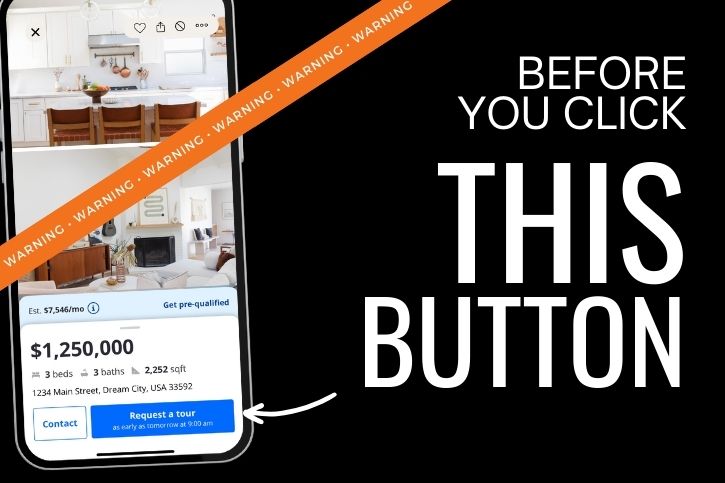
What Happens After You Click “Request a Tour” on Zillow?
Zillow presents the button as a convenient way to connect with a local real estate professional and begin touring homes. After selecting a preferred date and time, a buyer generally provides contact details and information about the home search.
Depending on the property, location, Zillow program, agent participation, and availability, the request may be handled in different ways. Zillow may:
- Connect you by phone with a local partner agent;
- Send the request directly to an available Premier Agent partner;
- Use a real-time touring process integrated with showing-scheduling technology;
- Send follow-up text messages or emails;
- Ask questions about your buying timeline and whether you already have an agent; or
- Send a touring agreement for electronic signature.
The agent who receives the connection may then contact the listing side, confirm whether the home is available, request the appointment, obtain showing instructions, and coordinate access.
The important distinction is that requesting a tour and confirming a tour are not always the same event.
Does Zillow’s “Request a Tour” Button Contact the Listing Agent?
Not necessarily.
Many consumers assume the button sends a message directly to the agent whose name appears on the listing. Zillow’s own consumer materials describe the process as connecting the buyer with a local agent. Its materials for real estate professionals also describe tour requests as buyer connections routed to Zillow partner agents.
The person who calls may be:
- A buyer’s agent affiliated with a Zillow partner team;
- An individual Premier Agent partner;
- A team member selected through the receiving brokerage’s routing rules;
- An agent who accepted the available tour connection; or
- In some circumstances, an agent or team associated with the listing brokerage.
That person may have no prior involvement with the property and may not work for the listing broker. Their immediate task is often to connect with you, determine your needs, and arrange access through the listing side.
Bottom line: Do not assume that the person contacting you is the listing agent, knows the seller, has toured the home before, or can answer every property-specific question without first contacting the listing side.
Why Does Zillow Connect Buyers With Other Agents?
Zillow operates a real estate marketplace and lead-generation ecosystem. Real estate agents and brokerages participate in Zillow advertising, referral, partner, or connection programs designed to introduce them to prospective buyers.
From Zillow’s perspective, a tour request indicates strong buyer interest. From the receiving agent’s perspective, the connection is an opportunity to provide the requested tour and potentially establish an ongoing agency relationship.
This does not automatically mean the agent is unqualified or acting improperly. Many excellent agents receive buyer opportunities through online platforms. The concern is whether the buyer understands the relationship before sharing information, entering a property, or signing an agreement.
A convenient button can make a commercial agent-matching process feel like a simple appointment calendar. Those are not the same thing.

What Information Are You Sharing?
To process a tour request, Zillow may ask for identifying and contact information, your preferred appointment time, your buying timeline, and whether you are already working with an agent. The connected agent may also receive information about the property you selected and aspects of your Zillow inquiry.
After the connection, you may receive:
- A telephone call;
- Text messages;
- Email follow-up;
- A link to the agent’s profile;
- Questions about financing or preapproval;
- Questions about other homes you want to see; or
- A request to sign a touring, non-representation, or buyer-representation agreement.
Before submitting the request, read the disclosures near the form and understand who may contact you and how your information may be used.
Is Your Requested Showing Time Automatically Confirmed?
Not always.
You may select a preferred time, but the listing agent, seller, occupant, showing service, or property-access rules may still need to approve it. The connected agent must also be available.
A delay or change can occur because:
- The seller declined the requested time;
- The property requires advance notice;
- The home is occupied by a tenant;
- The listing is already under contract;
- The property is temporarily unavailable;
- The partner agent cannot attend at that time;
- The showing instructions have not yet been received; or
- The online listing status is not perfectly synchronized with the source system.
Do not drive to the property until you have received a clear confirmation from the agent coordinating the showing.
Why Might You Be Asked to Sign an Agreement Before the Tour?
Real estate touring rules have changed. A buyer should no longer assume that an agent can simply unlock a home without documenting the relationship.
National real estate practice rules generally require a written agreement before an agent working with a buyer tours a home with that buyer. Texas law also changed effective January 1, 2026, requiring written buyer-representation agreements and allowing a written non-representation arrangement in qualifying situations where a license holder is showing property without representing the buyer.
Depending on the circumstances, the agent may present:
- A limited touring agreement;
- A non-representation agreement covering the showing;
- A property-specific buyer-representation agreement;
- A short-term buyer-representation agreement; or
- A broader exclusive buyer-representation agreement.
Zillow also offers a limited Touring Agreement in participating states and teams. Zillow describes that agreement as limited to touring activity and lasting seven days.
Do not sign merely because you are standing outside the house and feel rushed. Read the agreement and ask:
- Does the agent represent me, the seller, neither party, or someone else?
- How long does the agreement last?
- Does it apply to one property or every property?
- Is it exclusive?
- How is the broker compensated?
- Could I owe compensation directly?
- How can the agreement be terminated?
- Does it conflict with an agreement I already signed?
What If You Already Have a Real Estate Agent?
If you already have an agent, do not use Zillow’s “Request a Tour” button unless your agent specifically asks you to.
Send the listing link or address directly to your agent. Your agent can verify the listing status, review showing restrictions, schedule the appointment, research the property, and attend the tour with you.
Using the button after choosing an agent may create several problems:
- A second agent may believe you are seeking representation;
- You may receive repeated follow-up calls or texts;
- You may be asked to sign a second agreement;
- The agents may need to resolve who is authorized to work with you;
- Your existing agent may not receive the showing information; or
- You may accidentally create confusion about brokerage compensation.
Simply tell your agent, “I found this home on Zillow. Can you check it and schedule a tour?”
What If You Do Not Have an Agent Yet?
The button can introduce you to an agent, but convenience should not replace due diligence.
Before agreeing to work with the person who calls, consider asking:
- Are you the listing agent or a buyer’s agent?
- Which brokerage do you work for?
- How familiar are you with this neighborhood and price range?
- Have you personally toured this property?
- What agreement will I need to sign?
- How are you compensated?
- What services are included?
- Will you show me properties not promoted by Zillow?
- How do you handle conflicts involving your brokerage’s listings?
- May I review the agreement before the appointment?
You are evaluating the agent at the same time the agent is evaluating whether and how to work with you.

The Real Risks of Zillow’s “Request a Tour” Button
The biggest risks are not that the button exists. They arise when the buyer misunderstands what happens next.
1. You May Think You Contacted the Listing Agent
If you believe the caller represents the seller, you may misunderstand whose interests the agent can protect and what information the agent knows firsthand.
2. A Preferred Time May Feel Like a Confirmed Appointment
Showing access usually depends on the seller, listing agent, property restrictions, and the availability of the agent who will attend.
3. You May Be Asked to Sign Something Unexpectedly
Written agreements are now a normal part of the touring process, but the scope, duration, exclusivity, compensation, and termination terms matter.
4. You Could Create Confusion With Your Existing Agent
A Zillow connection does not automatically know about your prior conversations or agreements. Contact your own agent directly.
5. Speed May Replace Proper Agent Selection
The agent who responds fastest is not automatically the agent best qualified to advise you through a major purchase.
6. The Agent May Know Little About the Specific Home
A partner agent receiving a new request may need time to review disclosures, listing history, comparable properties, restrictions, and seller instructions.
7. Your Search May Become Confined to a Platform
A strong buyer’s agent should help you evaluate the broader market rather than merely reacting to homes you find on one website. Listing availability, status, and data can differ across consumer portals and source systems.
8. You May Reveal Too Much Too Soon
During an initial call, avoid casually disclosing your absolute maximum price, urgency, negotiating position, or personal circumstances before you understand whom the agent represents and how the information will be used.
Is Zillow’s “Request a Tour” Button a Scam?
No. The feature is a legitimate Zillow service intended to connect prospective buyers with agents who can help arrange a tour.
However, legitimate does not mean self-explanatory. Buyers should understand that:
- The connected agent may not be the listing agent;
- The request may function as a new-buyer lead for a participating agent or team;
- The selected time may still require confirmation;
- The agent may hope to represent you beyond the first showing; and
- A written agreement may be required before the tour.
The best protection is not avoiding technology. It is knowing what the technology is doing.
How to Use Zillow’s Tour Feature More Safely
- Determine whether you already have an agent. If you do, send the listing to that agent.
- Read the disclosure around the button. Do not assume it says “contact the listing agent.”
- Ask who is calling. Confirm the person’s name, brokerage, role, and relationship to the listing.
- Do not treat your preferred time as confirmed. Wait for explicit confirmation.
- Request agreements in advance. Review the scope, duration, compensation, and termination provisions.
- Verify the license holder. Texas buyers can use the Texas Real Estate Commission’s public license-holder search.
- Avoid signing overlapping agreements. Tell the agent about any prior agreement before the showing.
- Ask what preparation the agent will provide. A tour should involve more than opening a door.
- Keep your personal safety in mind. Confirm the agent and meeting details before arriving.
- Choose representation intentionally. Do not let a button make that decision by default.
The Better Way to Schedule a Home Tour
The cleanest process is to select a buyer’s agent before you begin requesting individual tours.
A buyer’s agent can:
- Confirm whether the property is actually available;
- Review listing details and showing restrictions;
- Schedule the appointment through the appropriate channel;
- Research comparable properties and listing history;
- Identify disclosures or documents available before the tour;
- Coordinate several homes into an efficient route;
- Explain representation and compensation before you arrive;
- Help you evaluate the property rather than merely access it; and
- Advise you about an offer if the home is a good fit.
There is nothing wrong with using Zillow to discover properties. The mistake is allowing a property-search portal to select your professional relationship without stopping to evaluate the person who will advise you.
How I Handle Tour Requests for My Buyer Clients
When a buyer sends me a home they found online, I do more than request a lockbox appointment.
Before the showing, my team and I may review:
- The current listing status;
- Price and status changes;
- Time on market;
- Available seller disclosures;
- Property history;
- Comparable sales and competing inventory;
- Potential restrictions or special conditions;
- Showing instructions and offer deadlines; and
- Whether the property aligns with the buyer’s stated priorities.
This preparation allows the showing to become an informed evaluation rather than a quick walk through a house with someone the buyer met minutes earlier.
What Should You Do After a Zillow Agent Calls?
You do not need to be confrontational. A few direct questions will clarify the situation:
“Are you the listing agent, or were you connected to me as a buyer’s agent?”
“Is the showing confirmed, or are you still requesting the appointment?”
“What agreement would I need to sign before we tour?”
“Does the agreement apply only to this property and tour, or is it an exclusive representation agreement?”
“How would your brokerage be compensated if I purchase a home?”
A professional agent should be willing to answer these questions clearly.
Key Takeaways
- Zillow’s “Request a Tour” button may connect you with a buyer’s agent rather than the listing agent.
- Your selected time may be a request, not a confirmed appointment.
- The agent who calls may view the inquiry as the beginning of a potential client relationship.
- Texas buyers should expect the agent to document representation or qualifying non-representation before a residential showing.
- Read any touring or buyer-representation agreement before signing.
- If you already have an agent, send the property directly to that agent.
- Zillow is useful for finding homes, but buyers should choose their representation intentionally.
Frequently Asked Questions About Zillow’s “Request a Tour” Button
What happens when I request a tour on Zillow?
You select a preferred time and provide contact information. Zillow may then connect your inquiry with a local partner agent who contacts you and attempts to schedule the showing.
Does “Request a Tour” contact the listing agent?
Not necessarily. Zillow may connect you with a buyer’s agent or partner agent rather than the agent who listed the property.
Why did an agent I do not know call me?
Your tour request may have been routed to a participating Zillow partner agent or team that accepts buyer connections in that area.
Is the time I selected automatically confirmed?
Not always. The property, seller, listing agent, showing system, and attending agent must still be available and may need to approve the request.
Is Zillow’s “Request a Tour” button a scam?
No. It is a legitimate Zillow service, but buyers should understand that it may begin an agent-matching and lead-routing process rather than merely book an appointment with the listing agent.
Will I have to sign a buyer agreement?
You may be asked to sign a touring, non-representation, or buyer-representation agreement before entering the home. Review its scope, duration, exclusivity, compensation, and termination terms.
What is Zillow’s Touring Agreement?
Zillow describes its Touring Agreement as a limited agreement covering touring activity for seven days. Availability and implementation may vary by state, agent, and participating team.
Can I use Request a Tour if I already have an agent?
You should generally contact your existing agent directly. Using the button may create a second agent connection and confusion about representation.
Does clicking the button make the Zillow agent my agent?
The click itself does not necessarily create a full agency relationship, but your later conduct and any agreement you sign can establish or define the relationship.
Does the connected agent work for the seller?
Often the connected agent is seeking to work with the buyer, but you should ask the agent to identify whom the agent represents before discussing confidential information.
Can I choose a different agent after the tour?
That depends on any agreement you signed. Review its duration, exclusivity, property scope, compensation obligations, and termination provisions.
What is the safest way to schedule a tour?
Choose and interview a buyer’s agent first, complete the appropriate written agreement, and send that agent the homes you want to see.
Want to Tour a Home in Texas Without the Confusion?
You can use Zillow and other real estate websites to identify homes that interest you, then send those properties directly to a broker you have intentionally chosen.
Robbie English and the Uncommon Realty team can verify availability, explain the required agreements, research the property, coordinate the showing, and help you evaluate the home with your interests in mind.















Leave a Reply