Seeing “MUD” on a Texas property tax bill can feel confusing. It isn’t a hidden fee, it’s a tax that funds the water, sewer, and road infrastructure for the neighborhood you’re buying into. Below is a clear breakdown of what a MUD tax is, how it’s calculated, what it pays for, and what it means for your purchase.
What Is a MUD Tax and Why Does It Exist?
A Municipal Utility District (MUD) is a special‑purpose district created by the state to provide essential utilities and infrastructure in areas that lie outside city limits. Wikipedia describes a MUD as a political subdivision that can issue tax‑exempt bonds to finance water, sewage, drainage, and road projects.
The district is governed by a board of directors elected by the property owners within its boundaries. Those owners vote on bond issuances and set the tax rate needed to repay the debt. Because the bonds are paid back over many years, often 15 to 30, the tax can stay on the bill for a long time. A MUD tax appears alongside school, county, and city taxes on a single statement.
In new‑construction neighborhoods, the MUD tax is usually higher at the start because the bonds are fresh. As the debt shrinks, the tax rate drops, and in some cases it disappears once the bonds are fully repaid.
How MUD Taxes Are Calculated and Collected
Each year the MUD board sets a tax rate based on the total bond debt, operating costs, and the assessed value of the homes in the district. The rate is expressed as a percentage of property value, similar to other local taxes. Homeowners pay the MUD portion through the same property‑tax bill they receive from the county tax assessor‑collector.
The bill breaks down every taxing unit, school, county, city, and any special districts like the MUD. If you have a mortgage, the lender usually collects the tax through an escrow account, so you don’t have to remember a separate payment.
Each taxing unit holds a public hearing on its proposed budget and tax rate. The information is posted on the county’s “Truth in Taxation” website, where you can compare the “no‑new‑revenue” rate with the proposed rate. You can use property-tax information to understand how the system works and review the impact of any rate change before it’s approved.
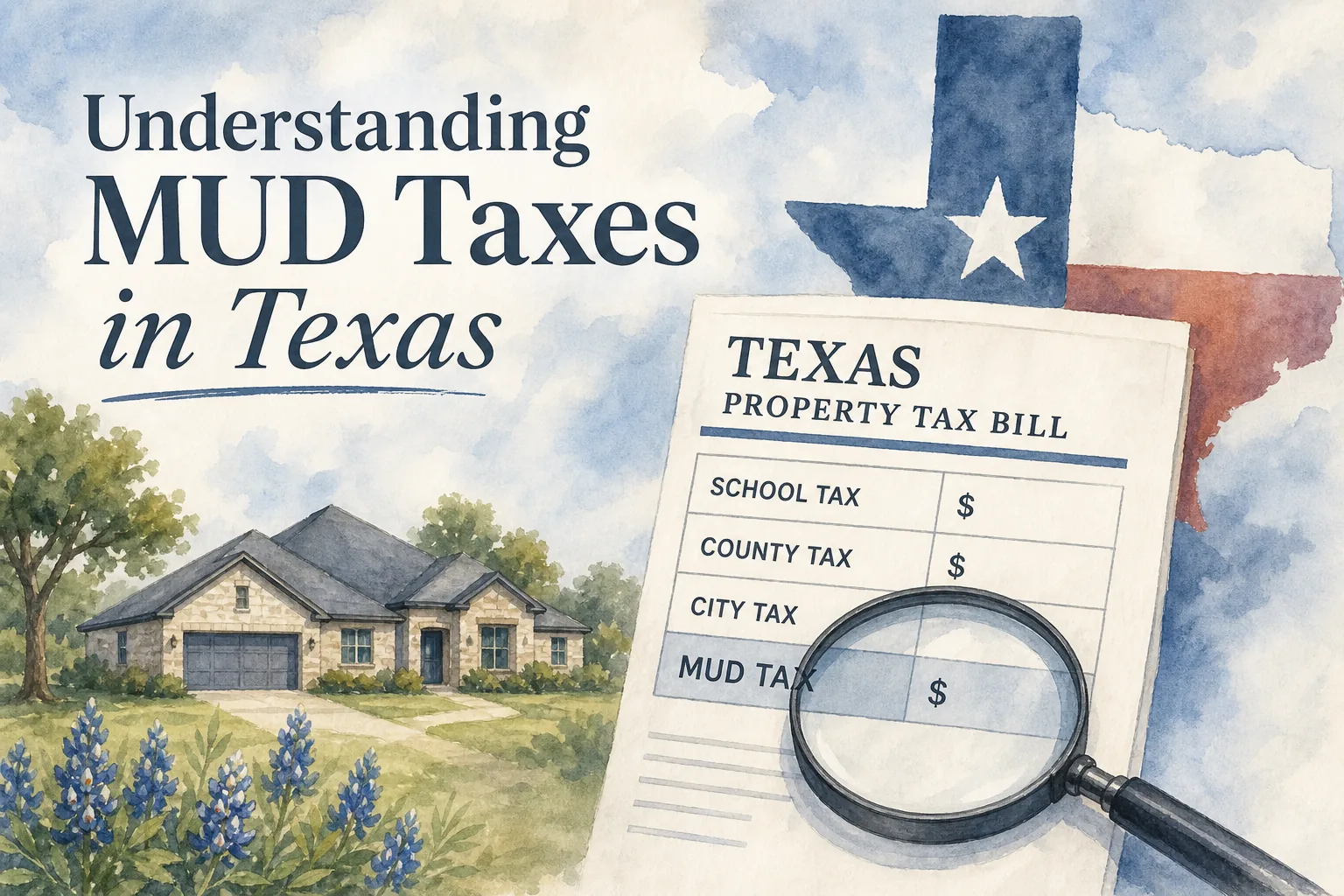
Because the MUD tax is part of the overall property tax bill, it’s automatically included in the escrow payment your lender calculates. That means the tax shows up in your monthly mortgage payment, not as a separate bill.
In practice, the MUD tax is calculated by multiplying the tax rate by the home’s appraised value. The annual amount depends on the applicable rate and the property’s value.
For buyers, the key takeaway is that the MUD tax is a real, recurring cost that can affect loan eligibility. Homes for Sale in Hutto, TX often list the MUD tax amount alongside the asking price, so you can budget accurately.
What MUD Taxes Pay For, and How They Compare With City Taxes
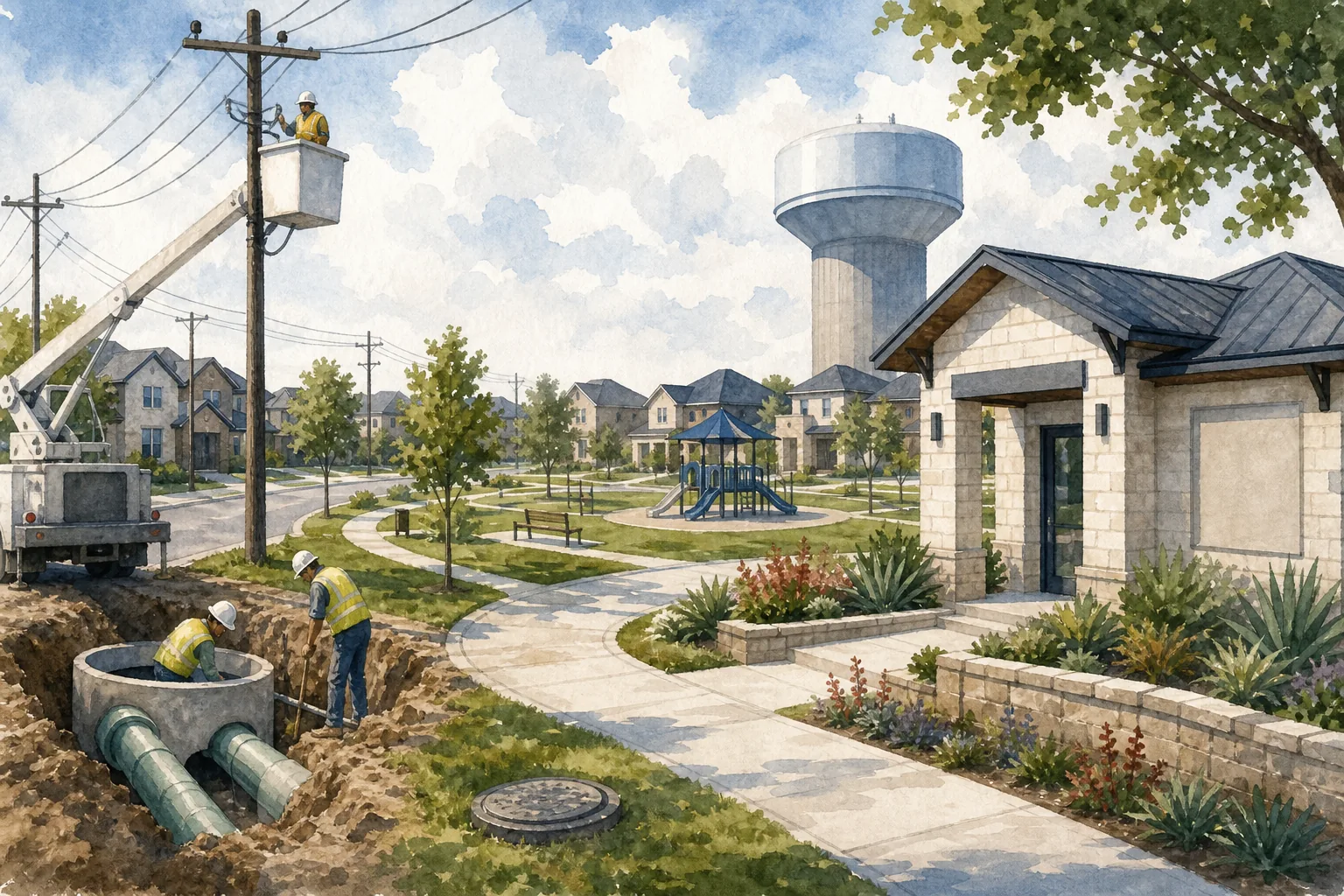
The money you pay through a MUD tax goes directly to the district’s budget. Primary uses include building and maintaining water lines, sewer treatment plants, storm‑drain systems, and internal roads. Some districts also fund parks, recreation facilities, and even fire protection services.
Unlike city taxes, which fund a broad range of municipal services (police, fire, libraries, etc.), a MUD focuses on the utilities needed to make the development livable. That focus can mean higher rates for water and sewer, but you won’t see a city’s general‑purpose spending reflected in your bill.
Below is a side‑by‑side view of how MUD taxes and city taxes may differ in the same county. Exact rates vary by district and city.
| Tax Component | MUD District | City Tax |
|---|---|---|
| Water & Sewer | Varies | Varies |
| Road Maintenance | Varies | Varies |
| Parks & Recreation | Varies | Varies |
| Total Effective Rate | Varies | Varies |
The table shows that a MUD can have a slightly higher overall rate, but the services are tailored to the community’s needs. If you compare two homes side‑by‑side, one in a MUD and one inside city limits, you’ll see the MUD home often carries a modest premium for water and sewer infrastructure. Homes for Sale in Dripping Springs, TX include the MUD tax amount, so buyers can see the exact impact on their yearly cost.
How a MUD Tax Affects Your Home Purchase
When you apply for a mortgage, the lender looks at your debt‑to‑income (DTI) ratio. The MUD tax adds to your monthly housing cost, so a higher MUD rate can push your DTI higher and affect loan approval.
For example, a buyer qualifying for a loan with a 30% DTI might be approved if the MUD tax is manageable. If the same property’s MUD tax increases substantially, the DTI could exceed the lender’s limit, and the loan may be denied or require a larger down payment.
Beyond qualification, the MUD tax impacts your long‑term cash flow. A higher tax means a higher monthly escrow payment, which reduces the amount you can allocate to savings or renovations.
Because MUD taxes are part of the official property tax bill, they’re also considered when you claim homestead exemptions. How Does Escrow Work? explains how these adjustments appear in your escrow statement.
Many buyers discover the MUD tax only after the purchase, which can lead to surprise expenses. Asking the seller for the latest MUD tax statement and reviewing the district’s bond amortization schedule can reveal whether the tax is likely to decrease over time.
How to Check for a MUD Before You Buy
The first step is to request the property’s tax certificate from the title company or the seller’s agent. The certificate lists every taxing unit, including any MUD.
Next, look up the MUD district on the county appraisal website. Most counties have a searchable map where you can enter the parcel number and see the district’s name, tax rate, and bond balance.
Finally, review the district’s annual bond‑payoff schedule, which is usually posted on the MUD’s own website or on the county’s “Truth in Taxation” portal. This schedule shows how many years of debt remain, giving you a sense of how long the tax will stay at its current level.
If the district’s bond is near the end of its term, you can expect the MUD tax to drop soon. If it’s early in the repayment cycle, the tax may stay high for a decade or more.
Working with a knowledgeable REALTOR, like me, can simplify this research. I can pull the latest tax certificate and walk you through the numbers before you sign an offer.
Conclusion: Check the MUD Tax Before You Make an Offer
Make sure you understand the MUD tax amount, how long it will last, and how it fits into your overall budget. If the numbers work for you, move forward confidently; if not, consider a home outside the district or negotiate the price to offset the added cost.
Ready to explore homes with clear tax information? Browse the latest listings in Hutto and see the MUD tax disclosed up front.
Ready to put this into practice? Robbie English, REALTOR, Broker was built for exactly this.