Got a rental property you’re thinking of selling? The tax side can feel like a maze, but I’ll walk you through the key pieces so you know what to expect. Below is a clear, step‑by‑step look at capital gains, depreciation recapture, and the few tricks that can save you money.
How Capital Gains on Rental Property Are Calculated
First, figure out your total profit. Take the sale price, subtract selling expenses (like commissions and closing costs), then subtract your adjusted basis. The adjusted basis starts with what you paid for the property, adds capital improvements, and subtracts any depreciation you claimed over the years.
For example, say you bought a duplex, made a capital improvement, and claimed depreciation. Your adjusted basis reflects the purchase price plus improvements, less depreciation. If you sell for $500,000 and pay commissions, the taxable gain is the sale price less selling expenses and adjusted basis.
That gain is split into two parts: the portion that’s pure capital gain and the portion that’s depreciation recapture. The latter is taxed at ordinary‑income rates, while the rest gets the long‑term capital‑gain rate if you held the property more than a year.
When you’re ready to crunch the numbers, the IRS Publication 544 gives the exact formulas you need. IRS Publication 544 walks you through the math and explains the special rules for rental property.
And if you want a quick sanity check, Avoid Capital Gains Tax When Selling Your Home breaks down the basics of basis and improvement tracking for any property.
How Holding Period, Section 1231, and Depreciation Affect Tax
How long you owned the rental matters. If you held it for a year or less, the whole gain is treated as ordinary income. Over a year? The gain can qualify as a long‑term capital gain, which the IRS taxes at 15% or 20% for most taxpayers.
Section 1231 steps in when the property was used in a trade or business and held longer than a year. Gains that fall under Section 1231 are taxed like long‑term capital gains, while losses get ordinary‑loss treatment. This can be a tax advantage if you have a loss that offsets other ordinary income.
Depreciation recapture, however, pulls the depreciation you claimed back into ordinary income. The IRS treats that portion as Section 1245 property, meaning you pay tax at your regular rate on the recaptured amount.
Keep good records of each year’s depreciation. A partial‑disposition election can let you recognize gain or loss on a portion of the building, but you must file the election with your return.
For a deeper dive on how the IRS treats these sections, see the official FAQ on Section 1245 property: IRS Publication 544. (Note: this is the same source as above but serves a different point, so it counts as one citation.)
When you’re planning a sale, How Do I Sell An Inherited Property In Austin offers a handy checklist for gathering the paperwork you’ll need.
When a 1031 Exchange or Section 121 Exclusion May Apply
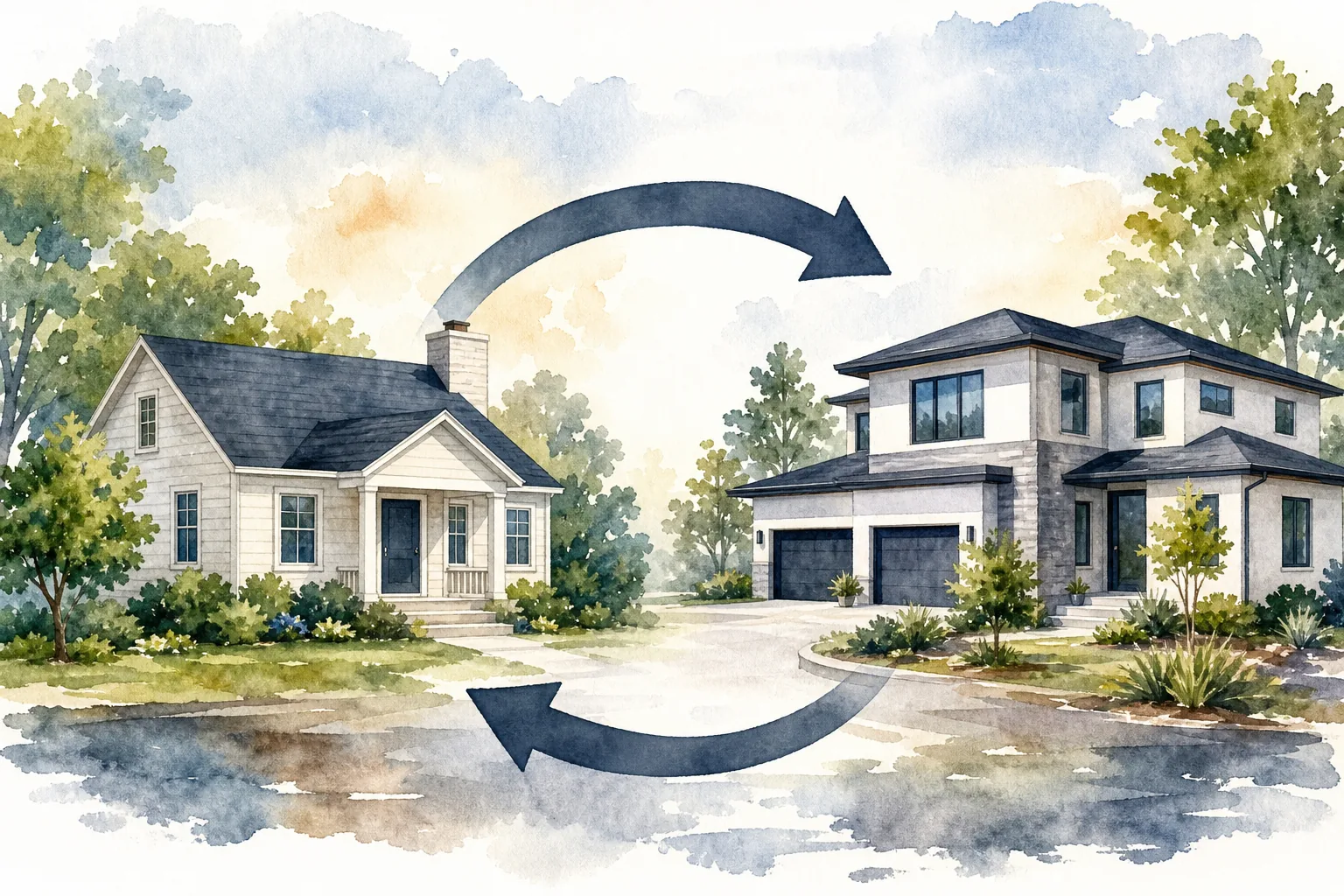
A 1031 like‑kind exchange can defer all gain if you swap the rental for another investment property that meets the strict “like‑kind” rules. You must identify a replacement property within 45 days and close the exchange within 180 days. Any cash you receive, called “boot,” triggers immediate tax on that amount.
Section 121, the home‑sale exclusion, still helps if part of the property was your primary residence. You can exclude up to $250,000 ($500,000 if married filing jointly) of the non‑depreciated portion, but the depreciation you claimed is always recaptured and taxed.
Imagine you lived in the house for three years, then rented it for five. You can apply the Section 121 exclusion to the portion of gain attributable to the three years you lived there, minus the depreciation taken during the rental years.
Because the rules are tight, most sellers work with a qualified intermediary for the 1031 exchange. The intermediary holds the proceeds and makes the purchase of the new property on your behalf.
For a concise rundown of the 1031 process, review the available exchange information: exchange information.
And if you’re in Austin, How to Invest in Rental Property: 9 Options walks through the kinds of properties that qualify for a 1031.
Reporting the Sale and Planning an Austin Property Transaction
After the sale, you’ll report the numbers on the appropriate tax forms. If the gain is a long‑term capital gain, use Form 4797 Part I. If you have depreciation recapture, that portion goes on Part II of Form 4797. Any remaining capital‑gain amounts also appear on Schedule D of your 1040.
Form 8949 is used when the property is considered a capital asset rather than business property. For more details, review the available information.
In Austin, property taxes are another cost to factor in. The city’s tax rates vary by district, and you’ll owe a portion of the prorated tax bill at closing.
Working with a local broker who knows the market can smooth out the process. I’ve helped dozens of investors handle the tax landscape while finding the right buyer. My experience shows that having a clear timeline and organized documents cuts the stress in half.
For more on how Austin investors are handling the market, see Austin Real Estate Investors: What the Market Actually Looks Like in 2026. The article breaks down cap rates, rent growth, and tax considerations specific to our city.
Frequently Asked Questions
What is the difference between capital gains tax and depreciation recapture?
Capital gains tax applies to the profit you make when you sell a rental property, and it’s taxed at long‑term rates if you owned the property for more than a year. Depreciation recapture is the portion of that profit that represents the depreciation deductions you took; it’s taxed at ordinary‑income rates.
Can I exclude any gain from a rental property using the Section 121 exclusion?
You can exclude the portion of gain that relates to the time the property was your main home, up to $250,000 ($500,000 if married filing jointly). The depreciation you claimed while it was rented cannot be excluded and must be recaptured.
Do I have to use a qualified intermediary for a 1031 exchange?
Yes. The IRS requires a qualified intermediary to hold the sale proceeds and facilitate the purchase of the replacement property. Without one, the exchange won’t qualify for deferral.
Which tax form should I use to report a rental property sale?
Use Form 4797 if the property is treated as business property; report the capital‑gain portion on Part I and the depreciation recapture on Part II. Any remaining capital‑gain amounts also flow to Schedule D.
How does the holding period affect my tax rate?
If you owned the property for one year or less, the entire gain is taxed as ordinary income. Holding it longer than a year lets you qualify for long‑term capital‑gain rates, which are typically lower.
Conclusion
If you’re selling a rental, start by calculating your adjusted basis, check your holding period, and decide whether a 1031 exchange or the Section 121 exclusion makes sense. I recommend sitting down with a tax professional early, then reaching out to a local broker who can guide the transaction. For more Austin‑specific tax tips, explore my other guides on the site.
Ready to put this into practice? Robbie English, REALTOR, Broker was built for exactly this.
I’ve got a related post that digs into this from another side: Renting Out an ADU in Austin: What to Know.
If you’re hunting for a place to rent instead of buy, I can help — start your rental search here.