Buying a fourplex in Austin can look like a smart way to spread rental risk across four doors. But public listing data is thin. One video mentions a $190,000 purchase, yet gives no verified address, unit details, or listing record. I’d treat that figure as a clue, not a deal. Here are the Austin-area options I’d study first, and what I’d verify before making an offer.
Table of Contents
- Robbie English, REALTOR, Broker, local guidance for evaluating Austin fourplexes
- Central Austin Fourplexes, scarcer inventory with location-driven pricing
- East Austin Fourplexes, older housing stock and redevelopment questions
- South Austin Fourplexes, compare access, condition, and operating expenses
- North Austin Fourplexes, examine employment access and tenant-demand assumptions
- Round Rock Fourplexes, suburban numbers with a full-cost ownership check
- Pflugerville Fourplexes, check rental income against taxes, insurance, and vacancy
- Cedar Park and Leander Fourplexes, review growth area infrastructure and permitting
- Georgetown and Hutto Fourplexes, look beyond purchase price to operating reality
- Live-Work or House-Hack Fourplexes, occupy one unit while leasing the others
- Austin Fourplex Options Compared: Location, cash flow, permits, and parking
- Frequently Asked Questions
- Conclusion
1. Robbie English, REALTOR, Broker, local guidance for evaluating Austin fourplexes
Robbie English, REALTOR, Broker is my first stop when I need local help assessing a fourplex for sale Austin buyers can actually verify.

I help buyers compare the property itself with the numbers behind it. That means checking unit count, lease terms, taxes, insurance, parking, permits, repair history, and likely operating costs. I also help investment property buyers, cash buyers, house hackers, and people moving into Central Texas.
The public web search produced almost no comparable fourplex data. Robbie English Real Estate Services appeared as a source, but no specific Austin fourplex listing details were available. That gap matters. A local review can uncover documents that a search result cannot.
I’ve worked in real estate for over 40 years. My advice is simple: don’t let one low price set your expectations before you confirm what the property is and whether it is legal.
2. Central Austin Fourplexes, scarcer inventory with location-driven pricing
Central Austin fourplexes can bring strong location value, but the purchase price may leave less room for cash flow.

Inventory is difficult to compare because standard fields are often missing. The search data had no verified beds, baths, square footage, lot size, year built, days on market, price per square foot, or listing URL for the reported Austin examples.
For a central property, start with the lot. Is there room for four legal units and the required parking? Can utility meters be separated? Does the layout support long-term leases without costly changes?
A city document resource is one place to begin checking city documents and property-related filings. I would still confirm each item with the city, lender, inspector, and title team.
Public documents can support that early records review, but they do not replace a property-specific due diligence process.
Central location may help resale. It does not guarantee a return. The rent must support the full cost of ownership.
3. East Austin Fourplexes, older housing stock and redevelopment questions
East Austin fourplexes deserve a close look at age, permits, lot use, and renovation scope.
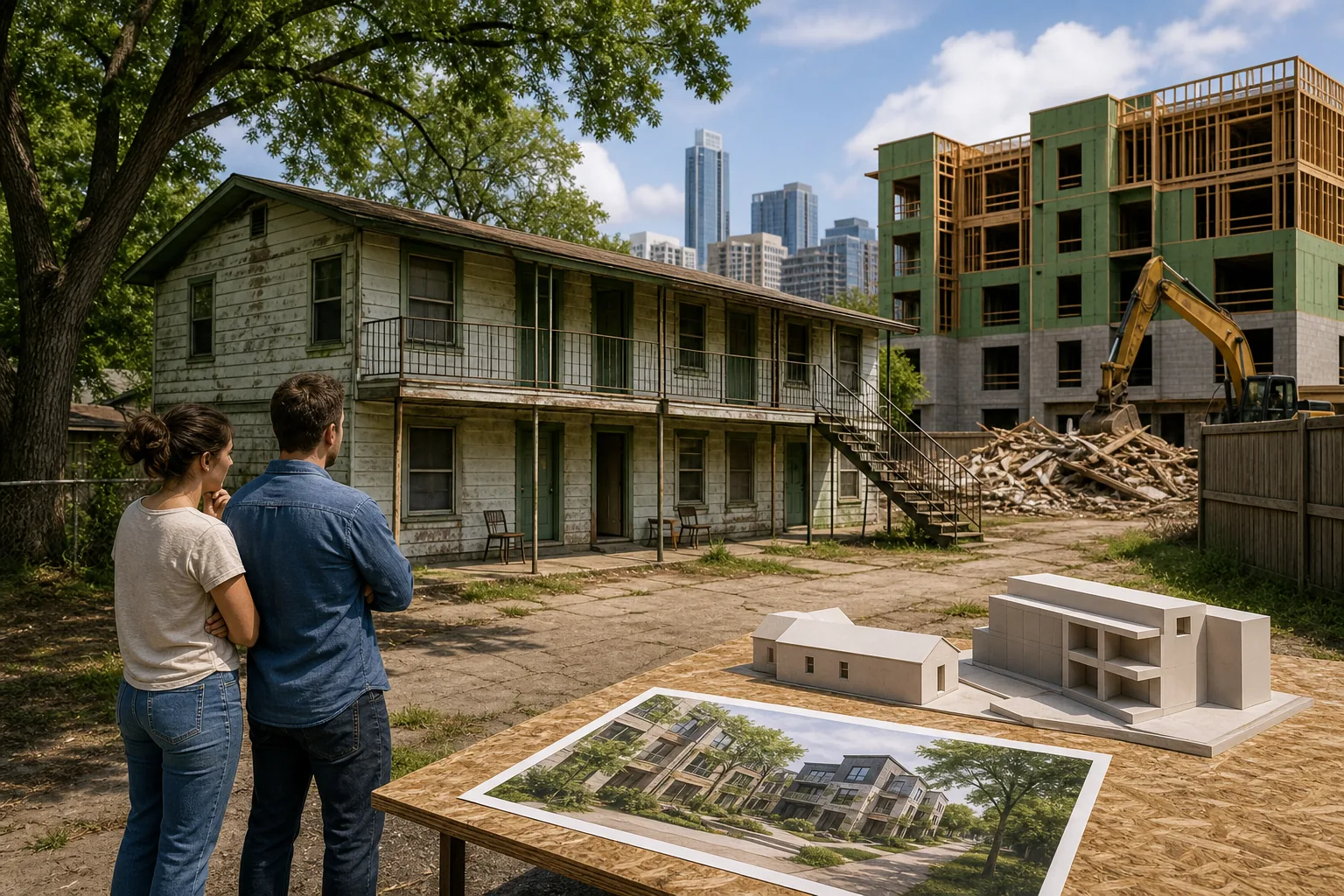
Older buildings can have attractive layouts, but I want to see the permit history before I get excited about a finished garage, extra kitchen, or added bath. Unpermitted work may not count in an appraisal. It can also affect insurance, resale, and the lender’s approval.
Supply can change the rent picture. Research used in this review described recent apartment deliveries and softer rent growth in the area. I would model a longer lease-up period and possible concessions rather than assume every unit rents at the asking rate.
Ask for utility bills, current leases, repair invoices, and records of any zoning or code changes. If the seller cannot document a conversion, price the property as though that space has no legal rental value until confirmed.
East Austin can still belong on your search list. It should not skip the paperwork line.
4. South Austin Fourplexes, compare access, condition, and operating expenses
South Austin fourplexes need a side-by-side review of access, condition, rent, and monthly cost.
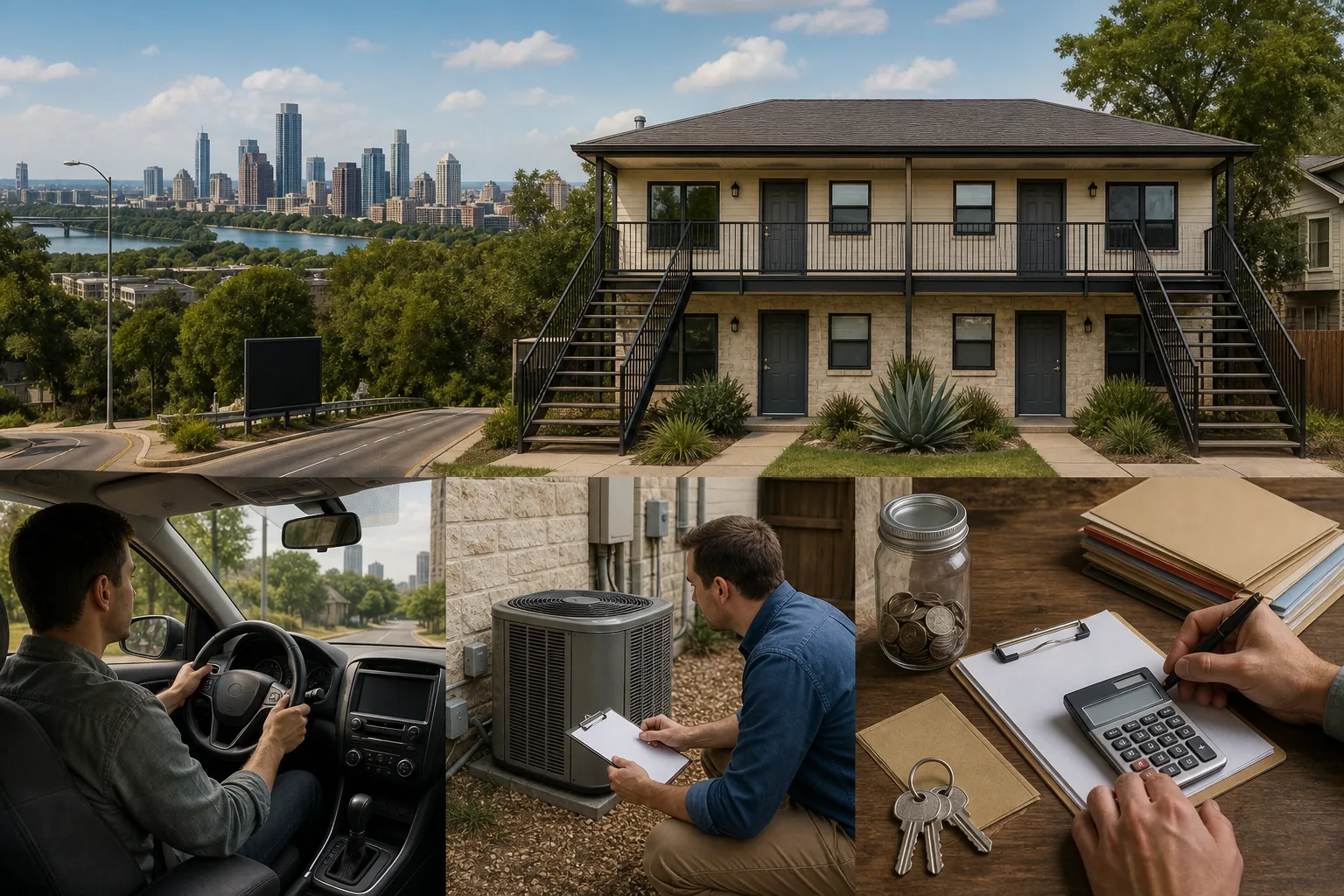
One listing tool showed a wide range of multifamily asking prices in the Austin area. That range is useful only as a search signal. It does not tell me whether a property has four legal units or whether the projected income covers expenses.
I’d inspect the roof, foundation, plumbing, electrical panels, HVAC systems, drainage, and shared areas. Central Texas soil movement and heavy rain events can create costs that a quick walk-through misses.
Then I’d build the operating budget. Include property taxes, insurance, repairs, capital reserves, management, lawn care, utilities paid by the owner, vacancy, and leasing costs. A fourplex with four separate HVAC systems may cost more to maintain than a simpler building.
If you’re comparing smaller multifamily properties, my page on duplexes for sale in Austin can help you compare the same financial questions across a smaller unit count.
The best-looking finish does not always produce the strongest deal. I trust the expense file more than the paint color.
5. North Austin Fourplexes, examine employment access and tenant-demand assumptions
North Austin fourplexes can make sense when tenant demand lines up with the property’s location and rent level.

Employment access is worth studying, but I would not turn a major employer into a promise of future occupancy. Check current rents for the same unit size. Compare competing apartments. Review how long similar units sit before leasing.
North Austin also has newer construction in some areas. A dated fourplex may need a sharper price if renters can choose newer units nearby. That does not make the older property a bad purchase. It means the renovation budget must match the rent a tenant can reasonably pay.
I’d ask the lender how projected rent will affect qualification. I’d also ask what happens if one unit is vacant during underwriting. A plan that works only at full occupancy is too thin for me.
Use employment access as one input. Let the actual lease evidence carry more weight.
6. Round Rock Fourplexes, suburban numbers with a full-cost ownership check
Round Rock fourplexes can offer a different price and rent mix, but suburban ownership still has a full bill.

Before comparing a Round Rock property with one in Austin, separate purchase price from total monthly cost. Review the county tax record. Check insurance quotes. Ask about HOA dues, PID charges, shared utilities, and any private road or common-area obligations.
A property may show positive cash flow before taxes and insurance. That is not enough. I want to see net operating income after normal repairs and a vacancy reserve.
For a broader search, I can compare a fourplex with other Austin real estate investment properties based on your cash, financing plan, and management capacity.
Round Rock also deserves a resale check. Ask how many similar units are available and whether the property’s condition will stand out when you sell.
7. Pflugerville Fourplexes, check rental income against taxes, insurance, and vacancy
Pflugerville fourplexes may look attractive when gross rent is compared with the purchase price.

Gross rent is only the first line. I subtract vacancy, repairs, capital reserves, management, taxes, insurance, utilities, and leasing costs before judging the deal. Texas property taxes can materially change the result, so I never copy the seller’s tax estimate without checking the appraisal record and current taxing units.
Lease structure matters too. Four month-to-month tenants may give you flexibility, but they also create four possible vacancies at once. I prefer to understand the lease dates, deposits, renewal history, delinquency record, and who pays each utility.
Before you offer, I’d request a rent roll, every lease, payment history, and records for recent repairs. If the seller cannot support the rent claim, I underwrite to a lower figure.
A lower purchase price cannot rescue unsupported income.
8. Cedar Park and Leander Fourplexes, review growth area infrastructure and permitting
Cedar Park and Leander fourplexes require a close look at infrastructure, jurisdiction, and permits.

First, confirm whether the property sits inside a city limit, an extra-territorial jurisdiction, or another governing area. Rules for density, parking, drainage, utilities, and short-term rentals can vary by address.
Next, check whether the building has four legal dwelling units. A house with several kitchens is not automatically a legal fourplex. Ask for permits, certificates of occupancy when applicable, site plans, and inspection records.
Growth can bring new competition. New apartments or homes nearby may affect rents, traffic, and resale demand. I’d review current supply instead of relying on a broad growth story.
If the property has an accessory unit, my guide to renting out an ADU in Austin explains why zoning, permits, leases, and insurance all need review.
Growth is a reason to investigate an area. It is not a substitute for a permit search.
9. Georgetown and Hutto Fourplexes, look beyond purchase price to operating reality
Georgetown and Hutto fourplexes can offer suburban pricing, but the operating plan must survive vacancy and repair costs.

Broad housing-market indicators can provide context, but they do not establish a verified fourplex valuation. I would not use them alone to value a fourplex.
Instead, I’d compare unit rents with nearby properties that match in size and finish. Then I’d test the deal with one vacant unit, higher insurance, a major repair, and slower leasing.
Infrastructure also matters. Review road access, drainage, water service, trash pickup, and the time required for a manager or contractor to reach the property. A lower price can bring a higher service burden.
For investment ideas beyond multifamily, real estate investment strategies can help frame choices such as buy-and-hold or house hacking. The math still needs to fit this property.
10. Live-Work or House-Hack Fourplexes, occupy one unit while leasing the others
A live-work or house-hack fourplex lets you occupy one unit while leasing the other three.
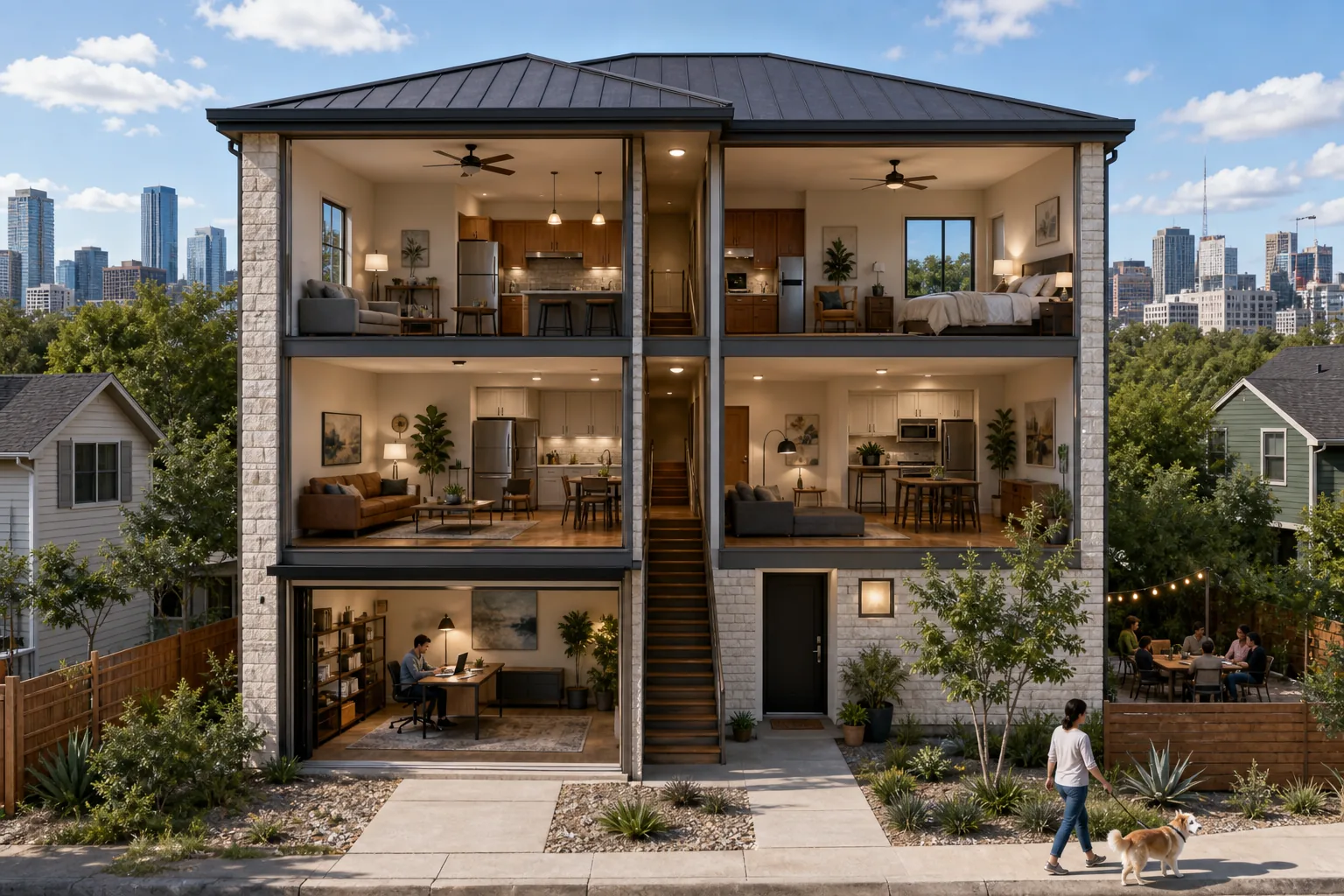
Owner occupancy may open financing paths that differ from an investment-only loan. A four-unit property remains within the residential one-to-four-unit category, but the lender must confirm the borrower, property, occupancy, reserves, and rental-income rules.
My article on owner-occupied multifamily loans in Texas explains the questions I’d ask before applying. I would get lender approval before treating projected rent as part of my buying power.
House hacking also changes your daily life. You may share walls, handle tenant requests, and pay for repairs while living on site. Set clear rules for access, noise, maintenance requests, and lease renewals.
Run the budget with your unit producing no rent. Your home should still be affordable under that test.
Austin Fourplex Options Compared: Location, cash flow, permits, and parking
Each option can be assessed with the same four questions. Location affects rent and resale. Cash flow shows whether the property can carry itself. Permits protect the legal unit count. Parking can affect both tenant demand and city approval.
| Option | What to test first | Main risk | Useful decision rule |
|---|---|---|---|
| Central Austin | Lot use and legal unit count | High basis with thin cash flow | Proceed only if rents support full costs |
| East Austin | Permits and renovation scope | Unverified conversions | Assign no value to undocumented space |
| South Austin | Condition and expense load | Repairs reduce NOI | Inspect before trusting the rent roll |
| North Austin | Competing supply and rents | Newer alternatives nearby | Use matched lease comps |
| Round Rock or Pflugerville | Taxes, insurance, and vacancy | Gross rent hides costs | Underwrite net operating income |
| Cedar Park, Leander, Georgetown, or Hutto | Jurisdiction and infrastructure | Rules and service costs vary | Verify the address before pricing it |
| House hack | Occupancy and lender rules | Personal housing risk | Stress-test the budget without your unit’s rent |
The source material also shows why broad market reports need care. A multifamily report can describe regional supply and demand, but it cannot replace a property-level inspection, lease review, or permit check. Regional market reports are useful context, not a substitute for underwriting.
For parking, count legal spaces rather than guessing from the driveway. Check whether spaces are blocked, shared, too narrow, or located on land the property does not control. Four units with poor parking can face more turnover and weaker rent than the spreadsheet assumes.
Frequently Asked Questions
How much does a fourplex cost in Austin?
There is no reliable single price for a fourplex in Austin because public data for this property type is incomplete. One video mentions a $190,000 purchase, but it does not verify the address or property details. Treat that figure as an anecdotal reference. Ask for current comparable sales, verified rents, taxes, and a full property file.
Is buying a fourplex in Austin a good investment?
A fourplex can be a sound investment when net operating income supports the debt and reserves. Four units spread vacancy risk, but they also bring more systems, leases, and repair points. I’d test the deal with one vacant unit, higher expenses, and a major repair before deciding.
Can I use owner-occupied financing for an Austin fourplex?
Owner-occupied financing may be available for an owner-occupied fourplex, but a lender must confirm current rules. You generally need to live in one unit as your primary residence. Ask about down payment, reserves, projected rent, occupancy, property condition, and appraisal requirements before making an offer.
What should I check before buying a fourplex in Austin?
Check the legal unit count, permits, zoning, parking, leases, rent roll, taxes, insurance, utilities, foundation, roof, HVAC, drainage, and repair history. I’d also confirm flood exposure and any HOA or deed restrictions. Missing records should lower confidence and may need to lower the offer.
How do I find a fourplex for sale in Austin?
Use listing alerts, public records, local broker networks, and direct searches across Austin and nearby cities. Then verify every listing detail. A local broker such as Robbie English, REALTOR, Broker can help compare active inventory with off-market leads, but you should still review the documents and choose your own inspectors, lenders, and other providers.
Conclusion
I’d start with Robbie English, REALTOR, Broker and a property file, not with a headline price. Pick a few Austin-area options, verify the unit count and permits, then run income against taxes, insurance, vacancy, repairs, and debt. Your next move should be to build that side-by-side review before you write an offer.