What is a property easement? It’s a legal right to use part of someone else’s land for a stated purpose, such as crossing a driveway or maintaining a utility line. In Texas, the details can affect where you build, how you reach a property, and what a buyer needs to review before closing.
An analysis of 53 comments and questions from YouTube and Quora about property easements found that 28% asked about different easement definitions and categories.
Too Long; Didn’t Read
- An easement is a right to use part of someone else’s land for a stated purpose. It doesn’t transfer ownership.
- Most easements start with a written grant or reservation, but some can arise from long use, necessity, or a court decision.
- The document’s route, width, purpose, and limits matter more than a line on a map.
- An easement can limit fences, structures, or drainage changes on the affected strip.
- Before buying, compare the easement document, the survey, and the land itself, and take legal questions to a Texas real estate attorney.
What a Property Easement Is and Who Holds the Rights
An easement gives someone a limited right to use land they don’t own, or in some cases to limit how that land can be used. It doesn’t transfer ownership of the land itself. A recorded utility easement, for example, may let a utility provider reach equipment on a property while the owner still owns the ground around it.
Real estate documents often call the property that benefits from an easement the dominant estate. The property carrying the burden is the servient estate. If one property has the right to use a shared driveway across its neighbor’s land, the first property receives the benefit and the second carries the burden.
Those labels describe the land, not a judgment about either owner. Rights depend on the easement’s terms. The holder may be a neighboring owner, a public body, or a utility. Some easements benefit a particular property and may pass to later owners with that property. Others benefit a named person or organization rather than a nearby parcel.
An easement also differs from a license. A license is generally permission to do something on another person’s land, while an easement is a property right. A written agreement’s wording and the facts around its creation matter, so the label alone doesn’t settle every legal question.
When I help someone buy or sell in the Greater Austin area, I treat the easement’s actual terms as more important than the shorthand on a map. A line marked “utility” may not tell you which work is allowed or how much land it affects.
How Easements Are Created and the Main Types to Recognize
An express grant is a common, direct way to create an easement. The landowner grants a stated right in a written document. A deed may also reserve an easement when land is transferred. The document should say what the right is for and identify the affected land clearly.
Not every easement starts with a signed grant. Depending on the facts and applicable law, an easement may arise by implication, necessity, prescription, or a court’s decision. For instance, a claim based on long use isn’t automatic just because someone has driven across a neighbor’s land for years. The type of use and the legal requirements need careful review.
Whatever the label, check the actual deed and records for the parcel in question.
These terms describe different parts of an easement:
- Appurtenant: The right benefits a particular parcel and is tied to that land.
- In gross: The right benefits a person or organization rather than a neighboring parcel.
- Affirmative: It allows a specific use, such as crossing land or reaching equipment.
- Negative: It limits a particular use of the burdened land.
These labels can overlap. A utility easement might be in gross and affirmative. A conservation easement may restrict certain uses. Public access, drainage, access roads, and utility corridors are other forms you may see in property documents.
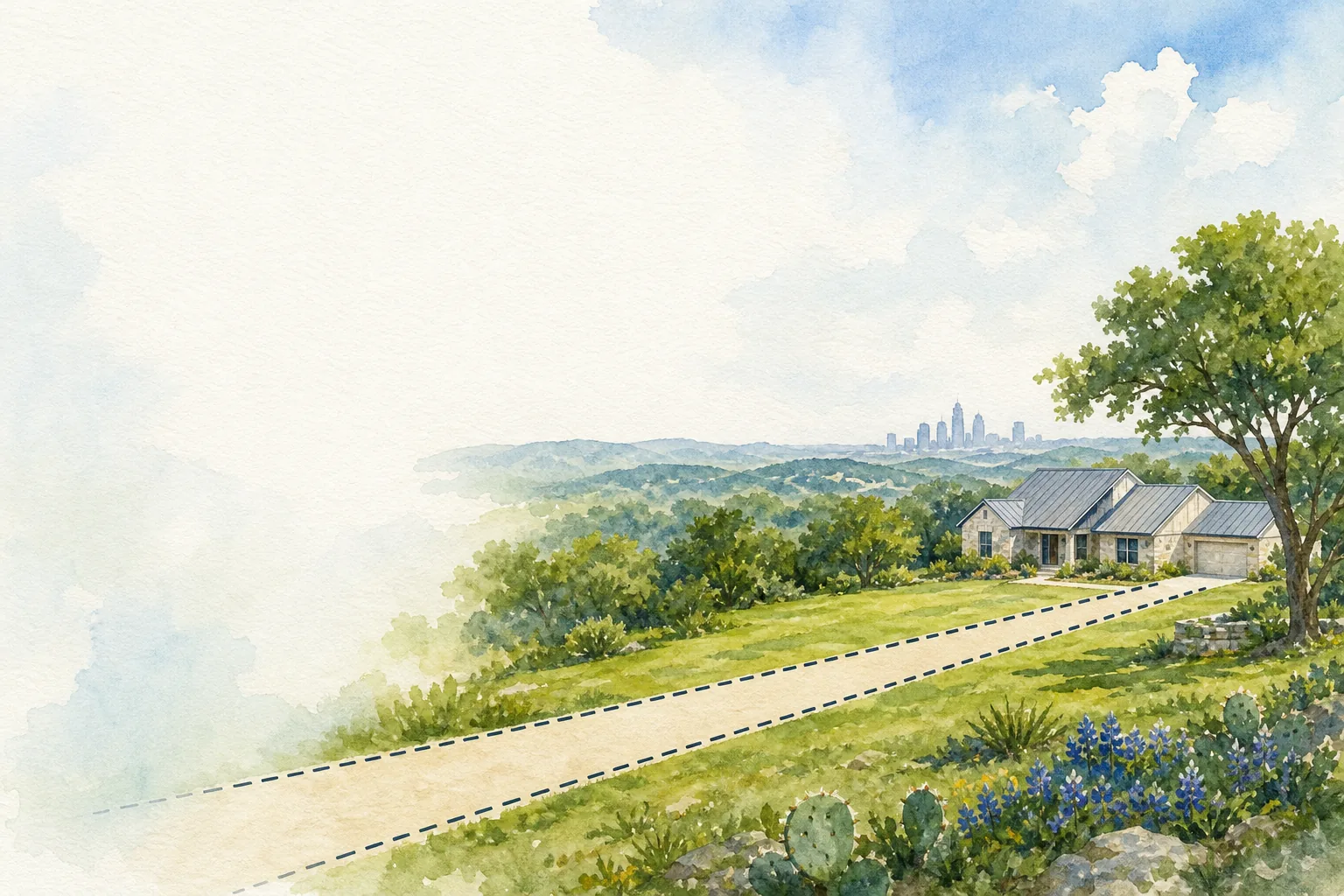
When I’m reviewing land with a buyer, I want to know the right’s purpose before assuming what it permits. A path across a tract may look like a simple driveway, but its legal basis and allowed use could be quite different. For more context on land due diligence, see my guide to buying land in Texas.
How Easement Boundaries Are Described, Surveyed, and Recorded
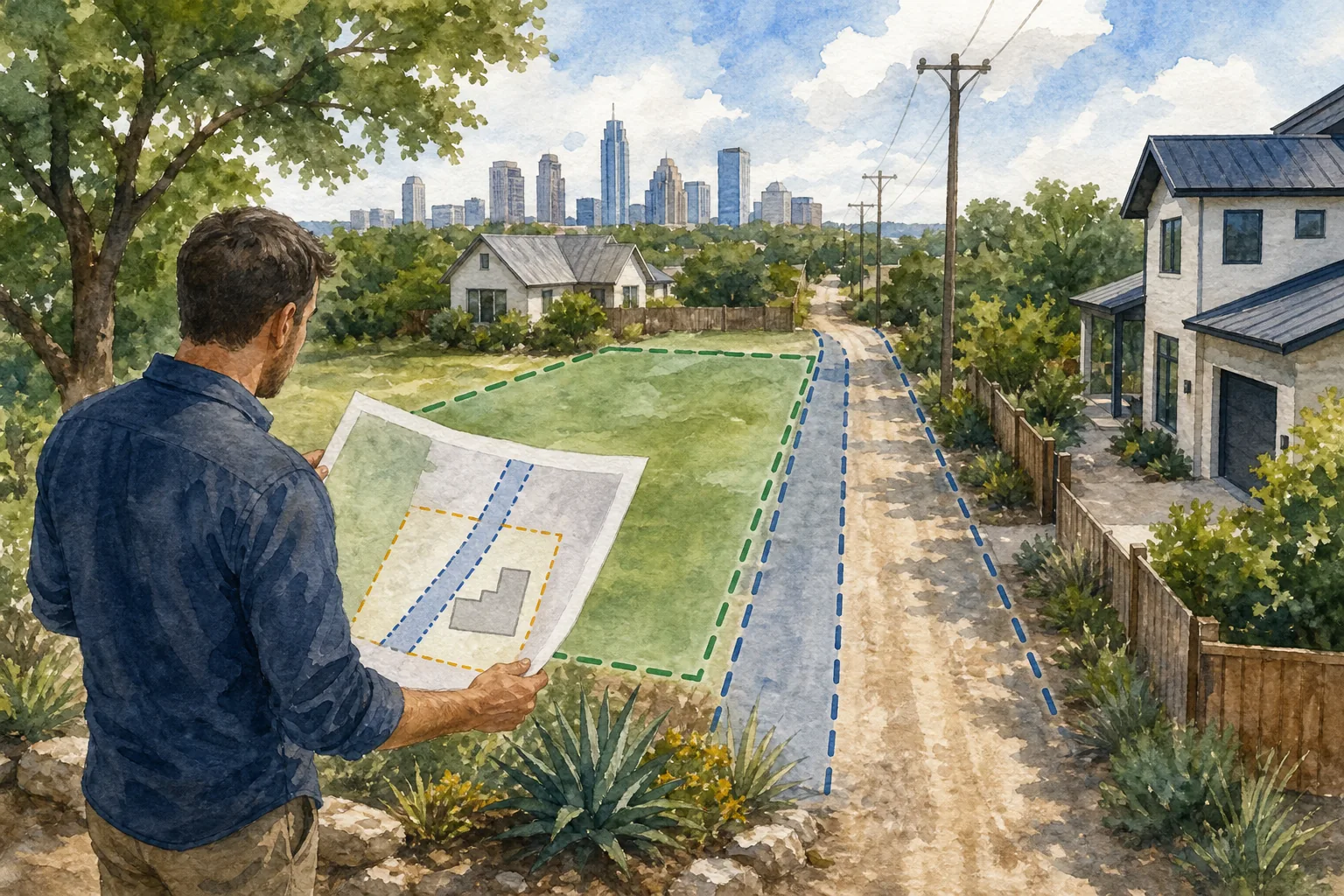
An easement should make clear where it applies. A document may describe a strip by width and direction, refer to a recorded plat, or include a legal description and drawing. A broad phrase such as “access across the property” can leave room for disagreement if the route or scope isn’t clear.
When you review the paperwork, look for the route, width, purpose, and any limits on use. Check whether the document says who can enter, what work is allowed, and who must maintain the area. If there’s an attached exhibit, make sure it matches the land described in the deed and the property under review.
A survey can help show how an easement’s described location relates to fences, buildings, drives, and parcel lines. But a survey doesn’t by itself prove that a right exists or explain all of its legal terms. I explain the difference in my article on reading a property survey in Texas.
Recorded easements may appear in the county real property records, but the search can take more than a quick glance at a survey. A title review may identify recorded documents that affect the parcel. Some rights or claims can also depend on use and other facts, rather than a document that’s easy to spot in the file.
For an easement created by agreement, the parties generally need a written instrument that clearly describes the right and the land. They should confirm the signing and recording requirements for the specific document. In Texas, county property records are kept by the county clerk, but filing steps and document requirements should be checked with the clerk or a Texas real estate attorney.
Review the document, survey, and physical layout rather than treating any one as the whole answer. A marked route on a survey can help you ask better questions. It can’t replace reading the agreement that created the easement.
If you’re new to survey documents, my overview of what a real estate survey means for Texas home buyers explains what a survey can show and where its limits are.
How an Easement Can Affect Property Use, Ownership, and a Sale
An easement can limit what you do on a defined part of your property. It may affect where you place a fence, add a structure, change drainage, or allow a vehicle to pass. The effect depends on the document and the right it grants. Don’t assume that every easement blocks all building, or that a small-looking line has no effect.
Think of a utility corridor running along the side of a lot. The owner may still use the area, but the easement could allow access for repair or restrict certain improvements there. Before planning work, check the terms and ask the relevant party or a qualified professional what the document permits.
Rights and duties can run in both directions. The easement holder must stay within the rights granted or otherwise established. The landowner shouldn’t interfere with a valid right. Maintenance duties may be set by the written agreement; when they aren’t clear, don’t assume a neighbor must pay for every repair or that you must cover it all.
When a property is listed for sale, a known easement can raise questions about access, use, or the buyer’s plans. Recorded documents may appear in title materials, and a buyer may want to review how the right affects the intended use. For sellers, a known easement or related dispute may also be relevant to disclosure; I cover that topic in my guide to what to disclose when selling a home.
An easement doesn’t automatically mean a property can’t be financed or sold. A lender or title insurer may review the documents and the property’s access, but the result depends on the specific transaction. If the easement is hard to locate, conflicts with a planned improvement, or affects the only route to the property, raise the issue early with the title team and a Texas real estate attorney.
Negotiating, Modifying, or Ending an Easement
If you need a new easement, start by agreeing on the exact right, its location, and who will use it. Put the key terms in writing. For an access route, that means settling where it runs and what kinds of travel it allows. For utility access, the document should address the work and entry rights the parties intend to grant.
It’s also wise to address upkeep, repair costs, notice before entry, gates, and restoration after work. These terms can prevent a small issue from turning into a lasting neighbor dispute. A Texas real estate attorney can prepare or review the agreement and advise on signing and recording.
Changing an existing easement usually calls for more than a friendly conversation. If the holder and affected owner agree, they can ask an attorney to prepare a written amendment or replacement document. A court may be involved if the parties disagree or if a claim depends on contested facts. Don’t move a fence or block a route while assuming the right has changed.
An easement may end under the terms of its document or through another legal basis. The specific rules depend on the easement and the facts. Nonuse alone shouldn’t be treated as proof that it has ended. Before relying on a claimed termination, get the records reviewed and seek legal advice.
With over 40 years of experience, I’ve learned to separate what a map seems to show from what the documents actually allow. My role is to help clients buying or selling in the Greater Austin area understand the real estate questions and coordinate next steps. I’m not a lawyer, so I refer legal questions about an easement’s validity or enforcement to a Texas real estate attorney.
Frequently Asked Questions
Does every easement have to be recorded in Texas?
No, not every claimed easement comes from a recorded document. Many written easements are recorded so future owners can find notice of the right, but some claims may arise through legal rules and specific facts. A title search is useful, but it may not answer every question about long-term use or an implied right.
Can I build on a utility easement?
It depends on the easement’s terms and the proposed work. Some documents restrict structures or allow access for utility work, while others may set different limits. Before building a fence, shed, or other improvement, review the recorded instrument and ask the party with the easement or a Texas real estate attorney about the exact site.
Does an easement transfer when a property is sold?
An easement tied to a parcel may generally benefit or burden later owners, but the result depends on how the right was created and what the documents say. An easement that benefits a specific person or organization may work differently. Review the deed and easement instrument rather than assuming every right transfers the same way.
Can a neighbor create an easement just by using my land?
Use alone doesn’t automatically create an easement. A prescriptive claim depends on the nature and history of the use, along with the legal rules that apply. Permission can matter. If a neighbor has used a path or drive across your land, don’t try to resolve the legal question by blocking it without first getting advice.
What should I check before buying a property with an easement?
Read the easement document and identify its location, purpose, users, and stated limits. Compare it with the survey and the property’s current layout. Then consider whether it affects your planned use or access. If terms are unclear or a dispute exists, ask a Texas real estate attorney to review the documents before you rely on an assumption.
Conclusion
Before buying or changing a property with an easement, read the document and compare its terms with the land on the ground. If you’re weighing a purchase or sale in the Austin area, I can help you identify the real estate questions to raise with the title team and your attorney. Robbie English, REALTOR, Broker at Uncommon Realty.