I’m Robbie English, REALTOR, Broker, and I know land deals can feel like a maze. This guide walks you through every step, so you can move forward with confidence.
Step 1: Define Your Land’s Purpose and Set a Full Budget
First, decide what you’ll do with the parcel. Are you building a home, raising cattle, or holding it for future resale? Write down the core goal, the timeline, and any must‑have features such as road frontage or proximity to schools.
Next, calculate the total cash you’ll need. Include the purchase price, closing costs, title insurance, any required surveys, and a cushion for unexpected fees. Texas has no state property tax, but each county sets its own rates. County property tax resources let you see current rates and estimate your annual bill. For more detail on how rates are calculated and what buyers should budget, see my guide to property taxes in Texas.
Once you have a clear number, compare it to your financing options. Raw land often requires a larger down payment than an improved lot. Knowing the full out‑of‑pocket amount helps you stay within your comfort zone.
Key Takeaway: A realistic budget that includes all hidden costs prevents surprises later in the process.
Step 2: Find a Parcel and Confirm Its Legal Access
Start with a map of the region you like. Listing sites show what is for sale, and the county appraisal district website shows each parcel’s owner, acreage and tax record. When you spot a promising lot, verify that a public road actually reaches it. A driveway that looks solid on satellite images might be a private easement that’s not recorded.
If you’re not sure how to read the legal description, work with an agent who specializes in land. Buying Land: How Do I Find The Right Buyer’s Agent? explains why a knowledgeable REALTOR can save you time and money.
Ask the seller for a copy of the recorded deed and any easement documents. A quick title search at the county clerk will reveal whether the access road is legally granted.

When the access is confirmed, you can move on to the next step without worrying about a landlocked surprise.
Step 3: Check the Deed, Survey, Title, and Property Restrictions
Get a current survey from a licensed Texas surveyor. The survey will map exact boundaries, any encroachments, and the location of easements. It also shows flood‑plain lines and utility corridors. My guide on how to read a property survey in Texas explains what those details can tell you.
Review the deed for any recorded restrictions. Some parcels come with homeowner‑association rules, mineral‑rights reservations, or conservation easements that limit what you can build.
Hire a title company that knows rural transactions. They’ll issue a title report and can provide title insurance, which protects you if a hidden lien surfaces later.
Once the survey, title, and restrictions all line up, you’ve cleared the biggest legal hurdle.
Step 4: Verify Water, Utilities, Septic, and Building Feasibility
Contact the local utility district to see if electricity, water, and natural gas are already routed to the parcel. If they’re not, ask about the cost to bring service in. Some rural areas rely on a private well and septic system.
For septic, check the applicable local permitting requirements before planning a system.
Hire a soil engineer to run a percolation test. If the soil absorbs water too slowly, you’ll need a more expensive treatment system or a different site.
Finally, check what rules apply to building. Inside city limits, zoning decides what you can put on the lot. Outside them, Texas counties generally can’t zone, but deed restrictions, subdivision rules and a nearby city’s extraterritorial jurisdiction can still limit what you build, so check with both the city and the county.
Pro Tip: Ask the utility district for a written estimate of hookup costs. Having that number in hand strengthens your negotiation.
Step 5: Investigate Flood Risk, Drainage, and Land Conditions
Even a beautiful hill‑top lot can sit in a hidden flood plain. Pull the FEMA flood map for the parcel and look for any “Special Flood Hazard Area” markings.
Next, walk the property after a rainstorm. Notice where water pools and how quickly it drains. Poor drainage can raise grading costs dramatically.
Soil quality matters for both building foundations and agricultural use. Consider soil texture, bearing capacity, and erosion risk when evaluating the property.
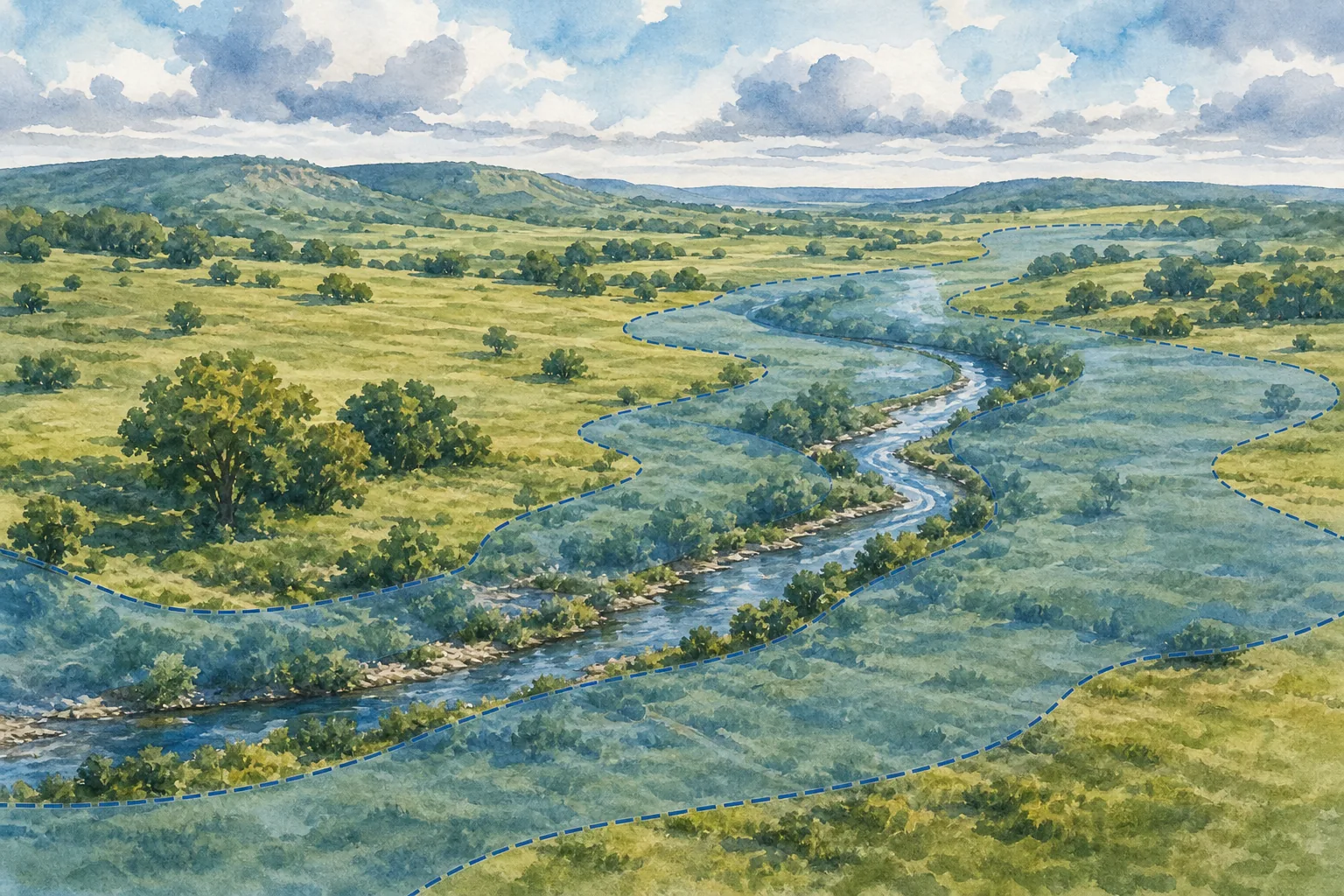
When the flood and drainage analysis checks out, you’ve removed the most common surprise that trips up first‑time buyers.
Step 6: Make an Offer, Complete Due Diligence, and Close
Draft a purchase agreement that spells out price, earnest money, and any contingencies, for example, “subject to satisfactory survey” or “subject to financing.”
Include a due‑diligence window of at least 10‑15 days. During that time, you can verify the survey, run a Phase I environmental assessment, and confirm utilities.
When all conditions are met, the seller signs the deed, the title company records it, and you pay the closing costs. If you’re financing, the lender will order a final appraisal before releasing the funds.
That’s the whole journey. With each step checked off, you’ll own Texas land that matches your vision.
Frequently Asked Questions
What is the minimum down payment for Texas land?
The down payment varies by lender, with raw land generally requiring more than improved lots.
Do I need a real‑estate agent to buy land?
While you can go solo, a land‑specialized REALTOR helps you handle legal access, zoning, and title issues that many buyers overlook.
How long does the closing process usually take?
For a cash deal, closing can happen in a few days. When financing is involved, expect 30‑60 days, depending on the lender’s underwriting timeline.
Can I build a house on raw land immediately?
Not always. You must first secure utilities, obtain a septic permit, and meet any zoning or subdivision requirements before construction can start.
What taxes will I owe after I buy?
Texas doesn’t charge a deed transfer tax, so your ongoing cost is annual property tax based on the local rates where the land sits. Check your county’s property tax resources to estimate your yearly bill.
Is a title insurance policy necessary?
Yes. Title insurance protects you from hidden liens, boundary disputes, or previous owners’ claims that could surface after you close.
Ready to take the next step? Reach out to me, Robbie English, REALTOR, Broker, and let’s start hunting the perfect parcel for you.