I get asked about Austin City Limits Music Festival every fall, usually by clients who are looking at homes near Zilker Park and want to know what festival weekends actually feel like from a resident’s perspective. So I put together this guide to walk through what ACL Fest is, how it uses Zilker Park, and what it’s genuinely like to live in the neighborhoods around it. This isn’t a ticket guide or a lineup preview. It’s a real estate perspective on one of the most talked-about events on the Austin calendar.
TLDR (Too Long; Didn’t Read): Your Guide to ACL Music Festival in Austin
- Austin City Limits Music Festival takes place every year in Zilker Park, typically in early October, spread across two consecutive three-day weekends
- The festival started in 2002 and is produced by C3 Presents, drawing roughly 450,000 attendees combined across both weekends in recent years
- There is no camping at Zilker Park during ACL, so most attendees stay in nearby hotels, short-term rentals, or with local hosts and use shuttles, rideshare, or the hike-and-bike trail to get to the grounds
- Zilker Park closes to the public for setup and teardown around each festival weekend, and streets like Barton Springs Road and Stratford Drive close to through traffic from Thursday night into early Monday morning
- Living near Zilker means two lively weekends a year with extra noise, foot traffic, and parking restrictions, balanced against year-round access to one of Austin’s most-used green spaces
What Austin City Limits Music Festival Actually Is
Austin City Limits Music Festival, known locally as ACL Fest, started in 2002 as a single weekend event held in Zilker Park. It’s produced by C3 Presents, the same company behind Lollapalooza, and it took its name from the long-running PBS music show Austin City Limits, which has taped performances in Austin since the 1970s. As the festival grew, demand eventually outpaced what a single weekend could hold, and the event expanded to two consecutive three-day weekends. That’s the format it still runs today: the same stages, the same footprint in the park, and largely the same production, repeated back to back so more people can attend without expanding the physical size of the event.
The festival is held annually, typically in early October, though I’d encourage anyone planning around it to check the current year’s official dates rather than assume they repeat exactly. Attendance has climbed steadily over the years, and recent totals across both weekends have landed somewhere north of 450,000 people combined. That scale is worth understanding if you’re evaluating a home near the park, because it shapes traffic patterns, noise, and neighborhood access for a defined stretch each fall.
The Festival Grounds and Experience
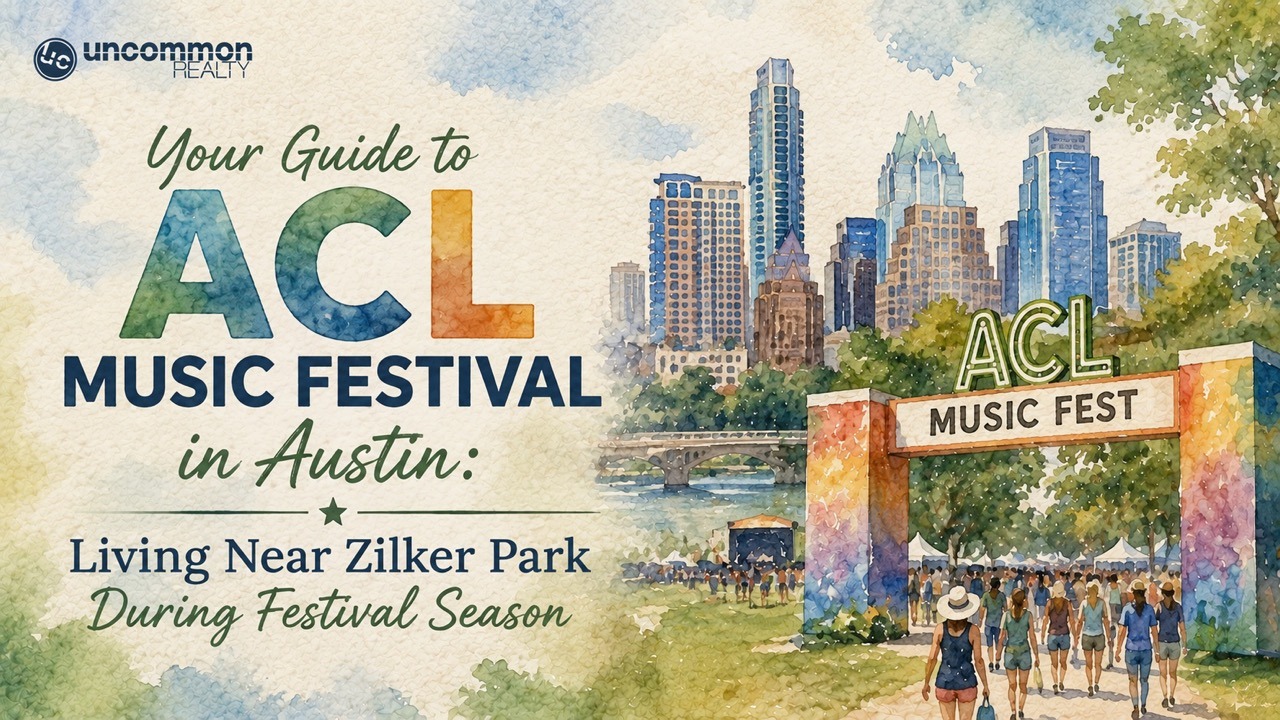
Zilker Park is a large, centrally located green space just south of downtown Austin and the Colorado River, and it hosts multiple stages, food and merchandise vendors, art installations, and shaded areas across its grounds during the festival. The park’s natural topography, with its open lawns and gentle slopes, is part of what makes it work as a festival site. It also sits close enough to downtown and South Congress that many attendees walk or bike in rather than drive.
Unlike some destination music festivals held on rural land, there’s no camping option at Zilker Park. It’s a public park inside city limits, surrounded by residential streets, so the festival operates as a day event across each of its six days rather than an overnight camping experience. Most out-of-town visitors stay in hotels or short-term rentals in Austin and commute to the park each day, which is a meaningful distinction if you’re picturing what the event looks like on the ground.
Getting to Zilker Park During ACL
The festival organizers actively discourage driving and parking near the park, and for good reason. There is no festival parking at Zilker Park itself or in the surrounding residential streets. Instead, attendees typically rely on rideshare drop-off zones set up a distance from the main entrances, paid parking lots and shuttles from spots around the city, or the Ann and Roy Butler Hike-and-Bike Trail for those staying close enough to walk or bike in.
For residents, this means the streets closest to the park see a mix of festival foot traffic, rideshare congestion near drop-off points, and enforced no-parking zones on event days. Barton Springs Road typically closes to through traffic between MoPac and South Lamar Boulevard from Thursday night through early Monday morning on both festival weekends, and Stratford Drive closes for the same stretch. Other streets bordering the park close midday Friday and stay closed through the weekend. If you’re driving across town on a festival Saturday, especially in the afternoon or evening, it’s worth building in extra time for the Barton Springs corridor and the general MoPac area.
What It’s Like to Live Near Zilker During Festival Weekends
I work with buyers looking at homes in Zilker, Barton Hills, Travis Heights, and Bouldin Creek fairly often, and the honest answer on ACL Fest is that it’s a short, predictable disruption twice a year, not a year-round condition. Here’s what residents in those areas generally experience during the two festival weekends:
- Noise: Sound carries from the stages, particularly in the evenings, and it’s noticeable in homes closest to the park. It tapers off the farther you get from Zilker and is limited to the festival hours each day.
- Street access: Some streets bordering the park close to through traffic, and neighborhood associations typically publish guidance each year on which entrances and exits stay open for residents.
- Parking enforcement: No-parking zones are posted and actively enforced on event days to prevent festival attendees from parking in residential areas, which actually helps keep neighborhood streets clearer for residents than you might expect.
- Foot and rideshare traffic: Streets near drop-off zones and trail access points see more pedestrian and vehicle activity than a typical weekend.
Neighborhood associations in Barton Hills and nearby areas typically distribute festival-specific information each year, including exact closure dates, resident access instructions, and parking permit details where applicable. If you’re already living in the area or considering a move there, keeping an eye on those neighborhood updates each fall is the most reliable way to plan around the two festival weekends.
Why People Want to Live Near Zilker Park Anyway
Two festival weekends a year are a small trade-off against what Zilker Park offers the other 51 weeks. It’s one of the most used public spaces in Austin, with hike-and-bike trails, sports fields, Barton Springs Pool, and direct river access, all within walking or biking distance for homes in Zilker, Travis Heights, and Barton Hills. That combination of green space and proximity to downtown, South Congress, and South Lamar is a big part of what keeps demand strong for homes in these pockets of the city.
Travis Heights and Bouldin Creek both sit close enough to the park to benefit from that access while offering their own distinct character, tree-lined streets, and mix of home styles. Barton Hills sits directly across Barton Creek from the festival grounds and offers some of the most direct park access of any neighborhood in the city. Each of these areas has its own housing stock, price range, and street-level feel, so if you’re weighing a move to the area, it’s worth walking the specific streets during both a regular week and, if timing allows, a festival weekend before making a decision.
Practical Tips If You’re Living Near Zilker During ACL
- Check the official festival website or your neighborhood association’s page each year for exact closure dates rather than assuming they match a previous year.
- Plan grocery runs, deliveries, and appointments around the Thursday through Monday closure windows on both weekends.
- If you have guests visiting during ACL, share the closure map with them in advance so they know which routes stay open to reach your home.
- Consider renting out a spare room or parking space during the festival if you’re comfortable with short-term guests. It’s a common way residents offset the inconvenience, since demand for nearby lodging spikes.
- If noise is a concern, ask a local resident or your real estate agent how a specific block or street has historically fared during past festival weekends, since the distance from the stages makes a real difference.
Thinking About Buying Near Zilker Park
If ACL Fest has you curious about the neighborhoods around Zilker Park rather than just the festival itself, that’s a conversation I have often. Homes near the park carry a certain appeal tied to green space access, trail connectivity, and proximity to downtown, and understanding how a property sits relative to festival grounds, road closures, and noise patterns is part of evaluating it properly. I’ve spent my career working the Austin market and walking these specific streets, and I can point out how a block behaves on a normal Tuesday versus a festival Saturday before you ever make an offer.
You can read more about my background on my about page, and learn about the brokerage I work with at Uncommon Realty. Whether you’re relocating to Austin for the first time or you already live here and are considering a move closer to Zilker Park, I’m happy to walk you through what ownership near the festival grounds actually looks like, month by month, not just during the two weeks in October when the stages go up.
Robbie English, REALTOR, Broker at Uncommon Realty.
You Might Also Find These Helpful
- explore homes for sale in Austin
- search current listings
- Best Neighborhoods In Cedar Park TX
- Austin Real Estate I-35 Dividing Line
I touched on a related piece of this here too: Is Now a Good Time to Buy in Austin? What Moves Affordability.