I get asked about Circuit of the Americas more than almost any other Austin landmark, and not just from race fans. Buyers, sellers, and people relocating for work all want to understand how this track fits into the bigger picture of southeast Austin. I put this guide together to walk through what COTA actually is, what race weekend does to the surrounding area, and what the residential landscape near the track looks like today. I work as a broker here in Austin, so I spend a lot of time in this part of the metro and wanted to share what I know in one place.
TLDR (Too Long; Didn’t Read): Your Guide to F1 Weekend at COTA in Austin
- Circuit of the Americas sits on roughly 900 acres in southeast Travis County near Elroy and Del Valle, and it opened in 2012 as the first purpose-built F1 track in the United States.
- The F1 United States Grand Prix lands at COTA every fall, and the same venue also hosts MotoGP, endurance racing, and concerts at its amphitheater throughout the year.
- Race weekend brings heavier traffic on the roads feeding the track, especially on race day, and I recommend building extra time into any trip out that way.
- Short-term rental and hotel demand across the Austin area rises well ahead of the race, and booking early makes a real difference in price and availability.
- The neighborhoods surrounding COTA sit inside a part of southeast Travis County that has grown steadily alongside major employers and new development in the area.
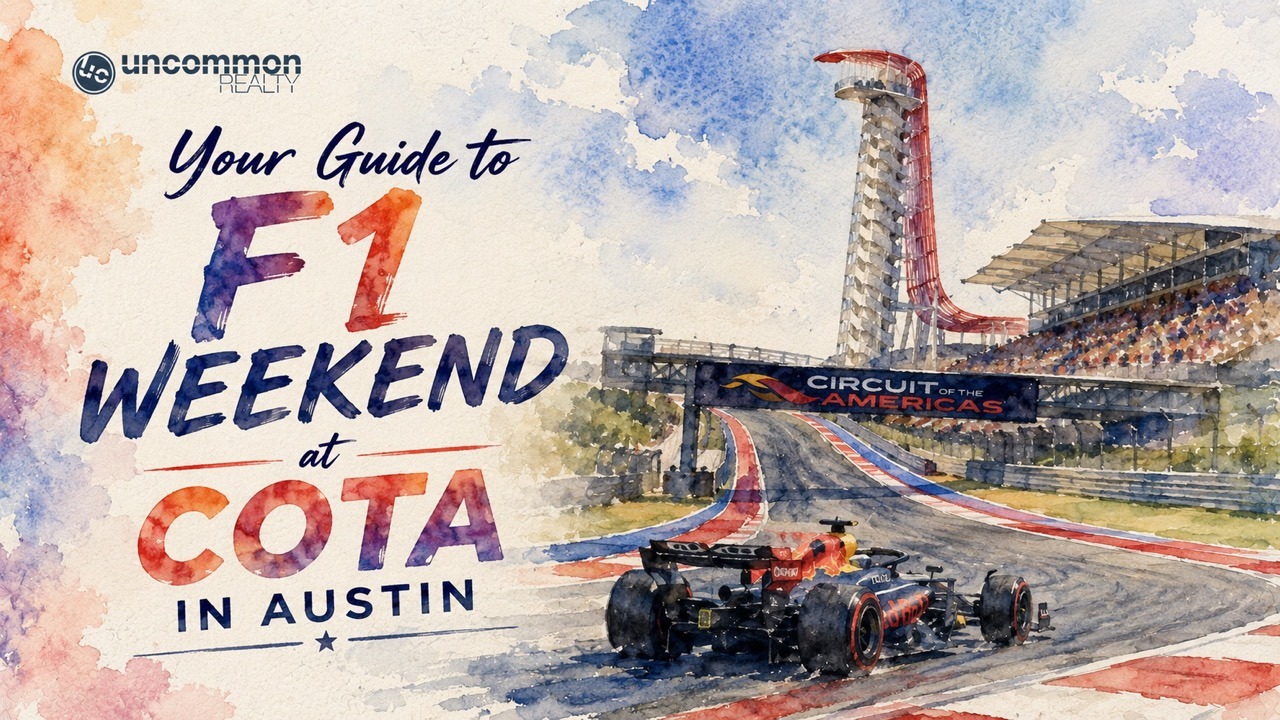
What Circuit of the Americas Is
Circuit of the Americas sits on roughly 900 acres in the southeastern part of Travis County, near the small communities of Elroy and Del Valle. The address is 9201 Circuit of the Americas Blvd, Austin, TX 78617, though the track itself sits outside the city’s core in unincorporated Travis County. German architect Hermann Tilke designed the 3.4-mile, 20-turn layout, and the property opened in October 2012 after investors led by Tavo Hellmund secured the deal to bring Formula 1 back to the United States.
The track can hold roughly 100,000 spectators on a race weekend, and the grounds include more than a racing surface. There is a 251-foot observation tower that has become a visual landmark for the area, an amphitheater that holds around 14,000 people for concerts, and over 100,000 square feet of indoor event space used for everything from corporate functions to trade shows. COTA hosts the Formula One United States Grand Prix, MotoGP, the FIA World Endurance Championship, and IMSA WeatherTech SportsCar Championship races across the calendar, along with driving experiences, karting, and a regular lineup of concerts that run independent of the racing schedule.
When Race Weekend Happens
The Formula 1 United States Grand Prix typically lands at COTA in October each year, though the exact weekend shifts a bit from season to season as the F1 calendar gets set. If you’re planning a visit, a purchase, or a stay in the area around race time, I’d check the current F1 calendar directly rather than relying on a fixed date, since the sanctioning body sets it fresh each year.
Race Weekend at COTA: What Actually Happens
A Grand Prix weekend at COTA runs across three or four days, typically Thursday through Sunday, with practice sessions, qualifying, and support races building up to the main event on Sunday. The crowd grows each day, and Sunday draws the largest number of people to the grounds and to the roads around them. Beyond the racing itself, COTA’s campus fills with fan zones, vendor areas, and concerts that run in the evenings after the on-track sessions wrap up.
The scale of the event reaches well past the track gates. Race week turns into one of the busier stretches on the Austin hospitality calendar, and businesses across the metro, not just those near COTA, see a bump in activity from visitors who fly in for the weekend and spend several days in town.
Traffic and Getting to the Track
Traffic around COTA gets heaviest on Sunday, race day itself. Thursday through Saturday tend to move more easily since the crowds build gradually across the week. On Sunday, I’d plan for extended drive times on the roads feeding the venue, particularly on Highway 130 and the surface streets that connect to the track entrances. COTA runs shuttle and parking operations to help manage the flow, and rideshare services operate throughout the weekend, though wait times after the race stretch out as tens of thousands of people try to leave at once.
If you live in the area or work nearby, race weekend is worth marking on the calendar even if you have no interest in attending. Grocery runs, errands, and commutes near the track take longer during those few days, and planning around it saves a lot of frustration.
Race Weekend and Austin’s Short-Term Rental Market
F1 week stands out as one of the biggest demand events of the year for short-term rentals across the Austin area. Listings across the metro, not just near COTA, fill up months in advance, and it’s common for a large share of available inventory to book out well before race week arrives. Hotels within a wide radius of the track raise rates substantially compared to a typical weekend, and travelers who wait until the last minute usually pay a premium or find limited options.
For homeowners in the area, this creates a predictable seasonal pattern worth understanding, whether you’re weighing a short-term rental as part of a property’s use or simply budgeting for a weekend when guest traffic and visitor activity pick up across the region.
The Residential Picture Near COTA
The area around Circuit of the Americas sits within southeast Travis County, a part of the metro that has changed a lot over the past several years. Del Valle and Elroy are unincorporated communities near the track, and the broader southeast Austin zip codes, including 78744, 78745, and 78747, surround this stretch of the county. Home values in these zip codes have moved up over recent years alongside new construction and infrastructure investment in the area.
New development has followed the growth. A project known as The Row sits at the southwest corner of Highway 71 and Highway 130 in Del Valle, planned across roughly 314 acres with entitlements for millions of square feet of mixed-use space, including homes, retail, and hotel uses. Whisper Valley, another large-scale development in the area, has built out several hundred homes toward a long-term plan for thousands more, along with a large planned park. These projects reflect a broader pattern of construction activity across southeast Travis County rather than any single catalyst.
Why This Part of the County Keeps Growing
Southeast Travis County sits close to Austin-Bergstrom International Airport, which shapes a lot of the commercial and logistics activity in the area. Tesla’s Gigafactory Texas, a manufacturing facility spanning well over 2,000 acres near the airport, has been one of the larger employers to set up in this part of the county, and its presence has coincided with additional housing construction, road improvements, and commercial development nearby. Del Valle ISD has expanded its facilities, including a second high school, to keep pace with enrollment growth in the district.
None of this growth traces back to any single factor, including COTA itself. The track predates most of this development by close to a decade, and the two trends, motorsport tourism and residential and industrial growth, have largely run on parallel tracks rather than driving each other directly. Still, anyone looking at property in this part of the county benefits from understanding both pieces of the picture: the recurring visitor activity that comes with COTA’s event calendar, and the longer-term development tied to employers and infrastructure in the area.
Planning Ahead, Whether You’re a Fan or a Neighbor
If you’re coming to Austin for a race weekend, I’d book accommodations early, expect Sunday traffic to run heavier than the rest of the week, and build a buffer into your travel plans getting to and from the track. If you already live in southeast Travis County or you’re considering a move to this part of the metro, it helps to know the calendar. COTA hosts events well beyond the Grand Prix, including MotoGP, endurance racing, and a steady lineup of concerts, so traffic and visitor activity near the track pick up at multiple points across the year, not just in the fall.
I work with buyers and sellers across this part of Austin regularly, and questions about COTA, the airport, and the employers nearby come up often in those conversations. If you want to talk through what a property near this corridor looks like day to day, outside of race week, I’m glad to walk through it with you. You can read more about my background on my about page, and more about the brokerage I work with at Uncommon Realty. I also keep a broader overview of the Austin market updated if you want more context on the metro as a whole.
Circuit of the Americas has become a fixture of the Austin area, both as a global sports venue and as a landmark that shapes how people think about this corner of Travis County. Whether you’re planning a race weekend trip or looking at property nearby, understanding both sides of it, the event calendar and the ground it sits on, gives you a clearer picture of what to expect.
Robbie English, REALTOR, Broker at Uncommon Realty.
You Might Also Find These Helpful
- explore homes for sale in Austin
- search current listings
- Is Cedar Park, Texas a Good Place to Live?
- Cedar Park’s Fastest-Growing Neighborhoods
I touched on a related piece of this here too: Advanced Property Search For Austin Infographic.