Burnet is the Burnet County seat, about 50 miles northwest of Austin, and it draws a different kind of retiree than the lake towns around it. It isn’t waterfront — Lake Buchanan and Inks Lake are both a short drive away, not in town — but that matters less than most buyers expect once they see what Burnet actually has: a hospital in town, established housing built for downsizing, and an economy that doesn’t slow down between lake seasons.
I’m Robbie English, broker at Uncommon Highland Lakes Realty, and I’ve worked this market long enough to know retirees ask different questions than a typical buyer. Where’s the nearest hospital. Is there a single-story option nearby. What happens here once the lake crowds thin out. Burnet answers those questions better than most of the towns around it, and it’s worth laying out why.
TLDR: Retiring in Burnet, TX
- Burnet has its own full-service hospital, Ascension Seton Highland Lakes, a 25-bed facility with 24/7 emergency care and a Level IV Trauma Center — most Highland Lakes towns depend on a drive to Marble Falls or Llano for that.
- The hospital campus runs cardiology, cardiac and pulmonary rehab, spine care, and imaging, backed by cardiovascular, surgical, neuro, orthopedic, and trauma specialists.
- Burnet already has established senior housing in town, including Country Oaks at Hamilton Creek and Pafford Place, so retiree-focused support isn’t something new here.
- Burnet is the county seat, about 50 miles from Austin, and its economy runs on the courthouse, schools, healthcare, and everyday commerce rather than tourism, so it holds steady through the winter instead of quieting down between lake seasons.
- It’s not a lake town. Lake Buchanan and Inks Lake are a short drive out, not in town, which tends to mean a lower cost of entry and more room than the resort towns closer to the water.
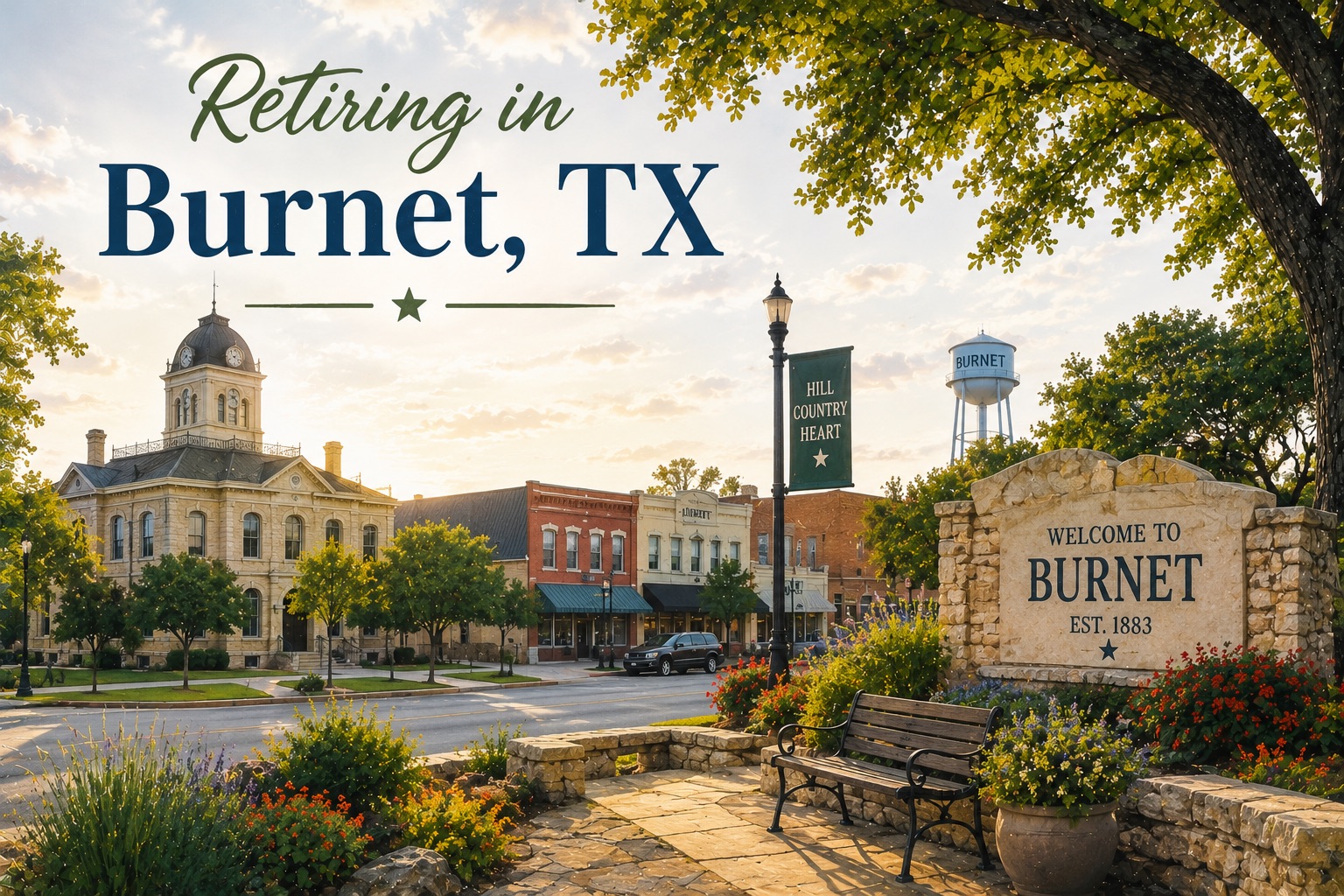
The hospital most Highland Lakes retirees don’t get
This is the detail that separates Burnet from almost everywhere else in the Highland Lakes: it has its own hospital. Ascension Seton Highland Lakes sits at 3201 S Water St, right in town, a 25-bed general hospital with 24/7 emergency care and a Level IV Trauma Center. Retirees in Kingsland, Horseshoe Bay, or Cottonwood Shores are driving to Marble Falls or Llano for that same level of care. In Burnet, it’s a few minutes from most neighborhoods.
The hospital runs an ICU and specialty services including cardiology, cardiac and pulmonary rehab, spine care, and imaging, with cardiovascular, surgical, neuro, orthopedic, and trauma specialists on staff. For a retiree managing a heart condition, recovering from a joint replacement, or wanting routine cardiology care without a 45-minute drive, that’s a real difference from what you’d find in most of the smaller towns nearby.
Housing already built for downsizing
Burnet already has infrastructure for this stage of life, not a plan to build some someday. Country Oaks at Hamilton Creek, off West Jackson Street, and Pafford Place, out on County Road 340 near the hospital, both operate as established assisted living communities in town. Most retirees moving to Burnet won’t need assisted living. I bring these up because their presence tells you something: this town already has retiree-focused support built into it, which isn’t true of a lot of the smaller Highland Lakes towns.
On the real estate side, Burnet’s housing stock tends to fit what downsizing retirees are actually looking for: single-story homes on the outskirts of town, smaller footprints near the historic square, and acreage listings if space matters more than square footage. I can walk you through what makes a floor plan work long-term — wide doorways, no stairs, primary bedroom on the main level — rather than have you discover a problem six months after closing.
A town whose economy doesn’t run on tourists
Burnet holds the official “Bluebonnet Capital of Texas” title, granted by the state legislature in 1981, and every April the fields around town back it up. The bigger factor for retirees is less scenic and more practical: Burnet is the county seat, and its economy runs on the courthouse, the schools, healthcare, and local commerce, not lake traffic. Towns built around vacation demand tend to go quiet once summer ends. Burnet doesn’t, because its everyday business isn’t tied to the season.
Lake Buchanan and Inks Lake are both a short drive from town if you want the water, and Longhorn Cavern State Park and Inks Lake State Park give you real hiking and paddling without an Austin-traffic drive to get there. Austin itself is close enough for a specialist appointment or an occasional day trip, about 50 miles out.
A social life that isn’t hard to build
The retirees I work with in Burnet tend to want the same thing: a real town center, not a subdivision that empties out during the week. The historic square still functions as the hub for local events, the farmers market, and the bluebonnet festival every spring, and that kind of regular activity makes it easier to build a social circle here than in a bigger, more spread-out city. This tends to appeal to people who want that in-town connection without giving up the acreage and privacy that drew them to the Hill Country in the first place.
How I Can Help
I’ve spent years working the Burnet market, and I know which neighborhoods sit closest to the hospital, which builders do single-story right, and which streets put you walking distance to the square. If you’re weighing Burnet against a true lake town, I can walk you through that comparison honestly, including where Burnet comes up short. Start with the current Burnet, TX homes for sale, or schedule a consultation and we’ll talk through what actually matters for your move.